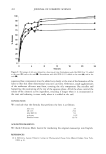
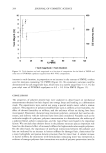
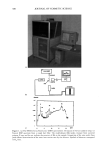
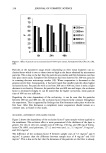
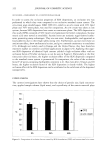
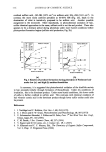
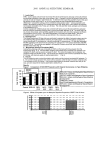
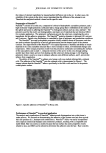
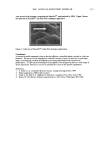
262 JOURNAL OF COSMETIC SCIENCE 100 90 80 70 6o 50 40 3o 2o 10 0 0 4 8 12 16 20 24 Time (h) Figure 9. Percentage of Aloe vera released as a function of time: Formulation with Abil EM 90 at 5% added at the start (•) and at the end (I). Formulation with Abil WE 09 5% added at the start ('), and at the end (0). aqueous-phase components must be added very slowly at the start of the formation of the latex so that this three-dimensional structure can form. Otherwise, small agglomerates of the surfactant silicones may form, covering the oily components like micelies and hampering the positioning of the rest of the aqueous phase. All of the above control the release of the cosmetic active ingredient, retaining it longer when it is incorporated at the start and releasing it more easily when it is added at the end. CONCLUSION We conclude that the formula that performs the best is as follows: Aloe vera: 2% DC 245: 23% Abil EM 90: 5% n-decane: 0.3% Distilled water: 69.7% ACKNOWLEDGMENTS We thank Christine Marie Laurin for translating the original manuscript into English. REFERENCES (1) J. McGinity, Aqueous Polymeric Coatings for Pharmaceutical Dosage Forma (Marcel Dekker, New York, 1989), p. 63.

SILICONE VEHICLES FOR ALOE VERA 263 (2) (3) (4) (5) (6) (7) (8) (9) (10) (1]) (]2) (13) (14) (15) (16) j. Vanderhoff and M.S. E1-Aasser, Pharmaceatical Dosage Forms: Disperse System, H.A. Lieberman, M.M. Rieger, and S. Banker, Eds. (Marcel Dekker, New York, 1988). R. Gurny, Formes Pharmaceatiqaes Noavelles, P. Buri, F. Puisieux, E. Doelker, and J.P. Benoit, (Tech- nique et Documentation, Cap 16, Paris, 1985). R. Bodmeier, and O. Paeratakul, Drug release from laminated polymeric films prepared from aqueous latexes,J. Pharm. Sci, 79, 32 (1990). J. L. Haslam, T. Higucui, and A. R. Mlodozeniec, Drug delivery system utilizing thermoserring gels, U.S. patent No. 4,478,822 (1984). V. Gallardo, Y. Zouaki, A. Parera, and M. A. Ruiz, Employment of a cellulosic polymer as carrier of diethylamine salicylate in topical formulations, React. Fanct. Polym., 43, 351 (2000). R. H. Davis, The conductor-orchestra concept of Aloe vera, Cosmet. Toiletr., 3, 21 (1996). C. M. Nolan, J. W. Kyle, H. Watanabe, and W. S. Sly. Binding of insulin-like growth factor II (Igf II) by human cation-independent mannose-6-phosphate receptor/Igf receptor expressed in receptor deficient mouse L cells, Cell. Regal., 1, 197 (1990). P. Delaveau, Le genre aloes, ActaMites Pharmaceatiqaes, 336, 66 (1995). J. W. Vanderhoff, M. S. E1-Aasser, and J. Ugelstad, Polymer Emulsification Process, U.S. Patent No. 4,177,177 (1979). M. J. Fresno, M. M. Jimenez, and E. SellEs, Galenic and dermopharmaceutical effectiveness study of an emulsifier pharmaceutical with retinoic acid, Drag. Der. Ind. Pharm., 24, 73 (1998). A. Buntigard, P. Hamayer, and J. Metzelaars, Emulsiones W/O: Separacion de fases con disolventes para determinaci6n del pH, NCP, 222, 5 (1997). P. Sanz, Fisicoqa/mica para Farmacia y Biologia (Masson-Salvat, Barcelona, 1992), p. 726. C. Provost, H. Herbors, and R. Kinget, Transparent oil-water gels: Study of some physico-chemical and biopharmaceutical characteristics. Part 3: Viscosity and conductivity measurements, Pharm. Ind., 50, 1190 (1988). J. Carbajo, and M. L. Espejo, Las siliconas: El futuro cosm&ico, El Farmacdatico, 99, 59 (1991). H.Q. Feng, Microstructure analysis of segmented copolymers containing polydimethilsiloxane by solid-state high-dissolution NMR, Macromolec Chem. PhyJ., 194, 2257 (1993).
Purchased for the exclusive use of nofirst nolast (unknown)
From: SCC Media Library & Resource Center (library.scconline.org)