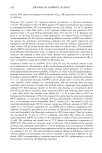
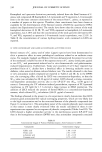
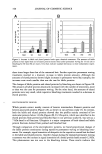
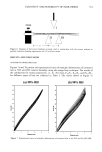
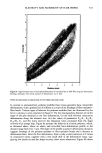
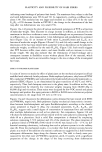
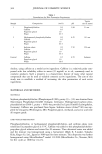
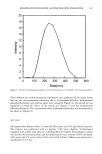
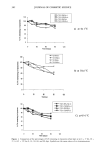
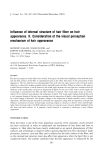
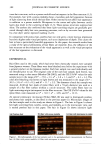
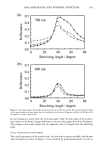
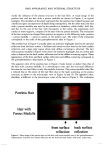
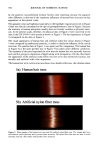
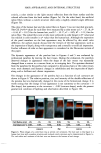
388 JOURNAL OF COSMETIC SCIENCE inner hair structure, such as a porous medulla and micropores in the fiber structure (1,2). For example, hair with a porous medulla shows a lusterless and dull appearance because of light scattering from inside the hair fiber. Other internal factors affect hair appearance in addition to a porous medulla. Micropores in the cortex and splits between cuticle layers also result in the scattering of light (3-5). These porous structures suppress hair shine. The authors also confirmed that these light-scattering origins are gradually gen- erated through daily hair care grooming processes, such as by excessive heat generated by a hot dryer and/or repeated washing (1,2,5). In comparison with porous hair, poreless hair not only gives a more lustrous impression but also a higher order visual perception, such as an impression of depth. This causes the hair to have a particularly beautiful appearance. In this paper, the research results from a study of the optical phenomena of hair fibers are reported. Also, the influence of the hair structure on the evaluation of the visual appearance as well as the visual perception of the hair appearance is discussed. EXPERIMENTAL Hair fibers used in this study, which had never been chemically treated, were sampled from Japanese women. These fibers were then bleached once before the experiment with a general product on the Japanese market. Each hair sample was used individually and not blended prior to use. The original color of the each hair sample, dark brown, was measured using a color meter (Minolta CM-2002), and the CIE L*a*b* values for each sample were in the range of L* = 25.8 + 3.1, a* = 3.6 + 1.1, and b* -- 6.4 + 3.4. The color after bleaching was brown to light brown and was measured in the range of L* = 30.2 + 3.0, a* = 6.2 + 0.3, and b* = 11.7 + 2.2. The diameter of each hair sample was measured. Artificial hair made of nylon fibers with a 70-pm diameter was used as a sample of a flat fiber surface without a cuticle structure. The nylon fibers have no light-scattering origin (micropores) in the fiber structure. The CIE L*a*b* values for the nylon fibers were measured as L* = 30.17, a* = 4.85, and b* = 12.13. An optical stereoscopic microscope (Nikon SMZ-10) was used to distinguish poreless and porous hair samples, as described in the previous paper (1). Microscopic images of the hair sample used in this study are shown in Figure 1. The hair in Figure la shows low light scattering from cuticles, cortex, and medulla, as in the microscopic view, and is named poreless hair in this paper. The hair in Figure lb shows intensive light I a) Poreless hair lb) Hair with porous medulla I c) Hair with micropores in cortex I I } I I 100 I•m 100 gm 100 Figure 1. Microphotographs of the hair samples used in the goniophotometric measurements. (a) Poreless hair. (b) Hair with porous medulla. (c) Hair with micropores in cortex.

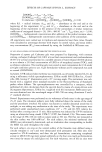
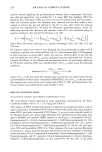
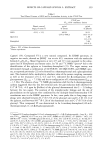
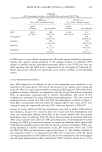
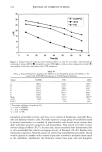
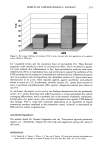
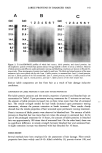
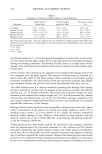
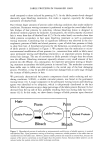
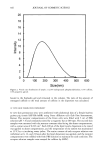
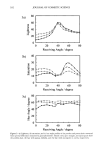
HAIR APPEARANCE AND INTERNAL STRUCTURE 389 scattering at the center of the fibers and is characterized as hair with a porous medulla, according to the previous articles (1,2). The poreless hair and the hair with porous medulla shown in this paper originated from the same person: the poreless hair was obtained from the hair with a porous medulla by treating it with a solution of 4% malic acid, 10% benzyloxyethanol, and 15% ethanol. The internal hair structure was swollen by the solution, and then the pores were reduced (1,2,5). However, the average diameter of the poreless hair and the hair with porous medulla was not significantly changed, at 78 l•m. It was confirmed by SEM that the surface roughness of these two hair samples was not apparently different. Fibers with micropores in the cortex are shown in Figure lc, and the existence of the pores was confirmed in the cortex by SEM and TEM observations reported previously (4). The average diameter of the hair with micropores in the cortex was 81 l•m. The origin of this hair was different from that of the poreless hair and the hair with porous medulla defined above. This kind of porous structure is generated by the cumulative hair damage caused by chemical treatments and repeated washing (3,5). This kind of damage leads not only to the generation of the internal porous structure, but also to the surface roughness. It was observed by SEM, actually, that the surface roughness of this hair was larger than that of the previous two hair samples mentioned above. Optical properties of the hair samples (tresses) were measured using a spectral gonio- photometer (Murakami Color Tech. Lab. GCMS-3) equipped with a halogen lamp. The incident angle was fixed at 45 degrees for all measurements. The spectral reflectance of visible light (390-730 nm) was measured at receiving angles from 0 to 80 degrees. Each spectral reflectance was converted to lightness, saturation, and hue angle by the CIE color system using standard illumination, D65. The visual appearance of the hair samples was evaluated by professional panels, in order to consider the relationship among the hair structure, optical properties, and subjective visual impressions. A pair of hair tresses of different appearance was observed by the members of the panel to obtain their perceived impressions for each of the hair tresses. The members of the panel were selected from professional beauticians and researchers in hair care science. The hair tresses were observed under both static conditions (without hair movement) and dynamic conditions (with hair movement). In the case of the dynamic conditions, the form of the hair tresses was repeatedly moved from convex to concave form by the swinging motion of the tress. Computer software, Mathematica ©, version 2.2 for Macintosh © by Wolfram Research, Inc., was used for the calculation of the light locus from light source to viewpoint via a plate as a model of the hair fiber. The geometrical condition and the equations used for the calculations are summarized in the Appendix section of this paper. RESULTS GONIOPHOTOMETRICAL MEASUREMENTS Spectral goniophotometric measurements were conducted to obtain the optical proper- ties of the hair samples with and without porous structures. The goniophotometric profile of reflectance against the receiving angle generally consists of double peaks or a
Purchased for the exclusive use of nofirst nolast (unknown)
From: SCC Media Library & Resource Center (library.scconline.org)