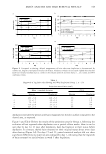
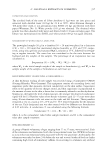
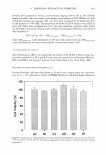
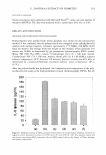
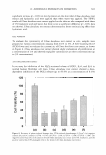
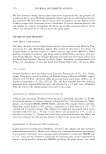
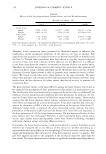
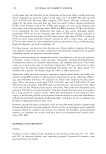
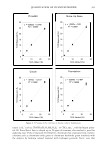
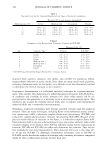
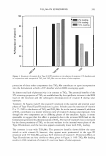
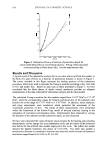
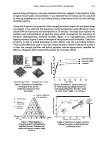
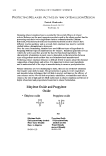
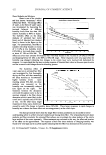
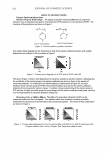
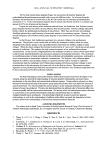
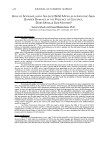
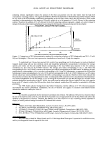
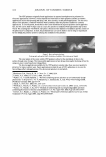
U. DA VIDIANA EXTRACTS IN COSMETICS 363 STATISTICAL ANALYSIS Statistical analyses were performed with Microsoft Excel™, using one-way analysis of variance (ANOV A). The data were analyzed with a significance level of p 0.05. RES UL TS AND DISCUSSION ISOLATION AND PURIFICATION OF POLYSACCHARIDE Polysaccharides were purified from U !mus davidiana root extract by the precipitation method. It was confirmed that the polysaccharide was composed of the carbohydrates by analysis with nuclear magnetic resonance spectrometry ( 13 C NMR, 100 MHz, D20) (data not shown). The average molecular weight of the obtained Ulmus davidiana root extract was 20,000, as determined by gel permeation chromatography (GPC system: Water TM 150C Plus GPC column: Ultrahydrogel 250 (7 .8 x 300 mm, waters), Ultrahydrogel 500 (7 .8 x 300 mm, waters) eluent: pH 4.0, 0.1 M NaNO3 aqueous solution temperature: 30°C flow rate: 0.9 ml/min). Intrinsic viscosity was 89.3 dl/g, as determined by a Cannon-Ubbelohde viscometer (solvent: water temperature: 20° ± 0.2°C). After the polysaccharide was hydrolyzed, the components and composition of the poly saccharides were analyzed by high-performance liquid chromatography (HPLC, Bio-LC 200 180 .-.. 160 E 140 ....... 120 ._, Q) 100 80 Q) co 60 40 20 0 (a) (b) (c) (d) (e) (f) Figure 6. Inhibitory activity of H2O2-activated release of 11-6 in normal human fibroblast cell Jines: (a) negative control (b) positive control (c) 0.05% (d) 0.1 % (e) 0.25% (f) 1.0%. The negative control and the positive control were H2O2-untreated cells and H2O2-treated cells in the absence of U Imus davidiana root extract, respectively.

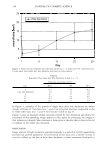
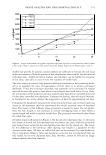
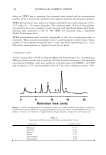
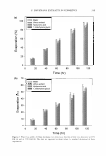
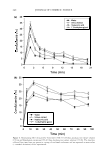
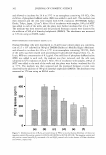
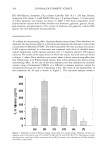
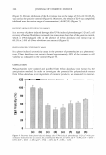
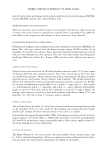
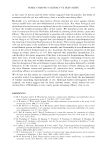
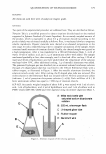
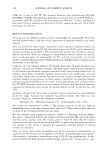
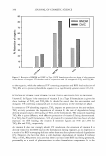
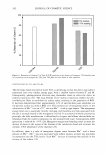
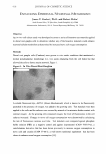
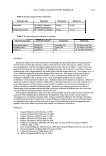
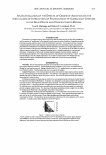
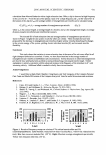
364 JOURNAL OF COSMETIC SCIENCE DX-300 (Dionex, Sunnyvale, CA) column: CarboPac PAI (4.5 x 250 mm, Dionex, Sunnyvale, CA) eluent: 16 mM NaOH flow rate: 1.0 ml/min) (Figure 1). Constituents of U Imus davidiana root extract are shown in Table I. The main components of the polysaccharide extracts from U Imus davidiana are rhamnose, galactose, glucose, fucose, galactosamine, and glucosamine. The content of rhamnose and galactose is above 90% against the total hydrolyzed monosaccharides. MOISTURIZING EFFECT To confirm the moisturizing effect of polysaccharide extracts from U Imus davidiana, we measured the water loss profile in a desiccator and measured the moisture content with a Corneometer CM820 and TEWL. The water loss profile of U !mus davidiana root extract (1.0% aqueous solurion) in a desiccator was compared with those of distilled water, sodium hyaluronate (1.0% aqueous solution), and 1, 3-burylene glycol (1.0% aqueous solution). The results of the experiments in which the extract was used alone are shown in Figure 2, where U Imus davidiana root extract shows a better moisturizing effect than that of hyaluronic acid. Polysaccharide extracts from U Imus davidiana also show a strong moisturizing effect. In the case of the skin hydration test that measures the moisture content using a Corneometer CM820, it is difficult to measure moisture content for several hours because the rate of evaporation is fast. The result of the measurement of skin hydration for 20 min is shown in Figure 3. The statistical analysis reveals a 350 300 - E 250 -- 200 Q) UJ m Q) 150 Q) co 100 50 0 (a) (b) (c) (d) (e) (f) Figure 7. Inhibitory activity of H2O2-activated release of 11-8 in normal human fibroblast ce11 1ines: (a) negative control (b) positive control (c) 0.0025% (d) 0.025% (e) 0.05% (f) 0.25%. The negative control and the positive control were H2O2-untreated ce11s and H2O2-treated ce11s in the absence of Ulmus davidiana root extract, respectively.
Purchased for the exclusive use of nofirst nolast (unknown)
From: SCC Media Library & Resource Center (library.scconline.org)