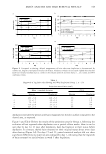
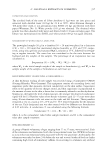
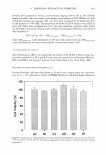
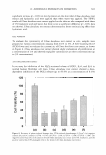
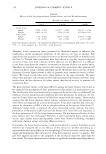
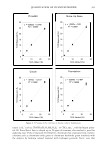
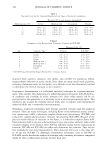
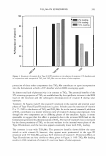
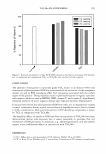
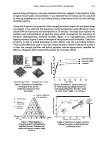
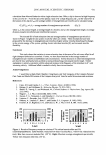
2006 ANNUAL SCIENTIFIC SEMINAR 427 The No Salt contour phase diagram (Figure 4a) was used as the baseline diagram for understanding the mechanisms associated with various salt addition orders. As is known from the literature, the mechanisms of coacervation in the No Salt system are ion-exchange and hydrophobic association (3-5). In the contour phase diagrams that do contain salt (4b and 4c) there is a constant salt amount (0.05%) for all points on the diagram. Despite the inter-mixing of the surfactant and salt layers, the Surfactant, Salt, Polymer contour phase diagram ( 4b) does not show a strong influence from micelle growth. Polymer collapse ( described below) is likely the predominant mechanism of coacervation. There may also be some ion-exchange shielding indicated by a small lessening of coacervate amount in ion-exchange regions. However, the overall Surfactant, Salt, Polymer contour phase diagram is very similar to the No Salt contour phase diagram. In the Polymer, Salt, Surfactant experiment (4c), polymer collapse is the predominant mechanism. The polymer is inter-mixed with salt before the surfactant is added, which can cause shielding of the cationic groups on the expanded polymer chain from one another, leading to chain collapse. When the chains collapse they become localized areas of "super-salts" which may attract greater amounts of surfactant. This explains the high coacervate amount at low surfactant/low polymer concentrations. In the case of a collapsed polymer, the surfactant is bound to a more curved region which could sterically shield hydrophobic tail associations among bound surfactant molecules. This could lead to resolubilization due to bound surfactant tail-free surfactant tail hydrophobic associations, indicated by a loss in coacervation at intermediate surfactant concentrations. The Polymer, Salt, Surfactant phase diagram ( 4c) shows a more dramatic change in coacervate amount with an increase in surfactant concentration than the Surfactant, Salt, Polymer phase diagram ( 4b) because polymer collapse is more prominent due to the inter-mixing of polymer and salt as the first two layers. The increase in phase separation at low polymer/high surfactant concentrations in the Polymer, Salt, Surfactant experiment may be due to structuring of the free surfactant molecules. CONCLUSIONS The high-throughput screening formulation method that had previously been developed in our research group has allowed the understanding of structure-property relationships and coacervation mechanisms in the semi-dilute and concentrated surfactant regimes. Using synthetic polymers we have determined that the positioning of the cationic group along the polymer chain can impact the amount of coacervate formed. The more available the cationic group is to the surfactant molecules, the greater the amount of coacervate produced. We have also determined that the addition order of materials affects the coacervate profile and the coacervation mechanism. Pre-mixing of the salt and polymer causes a decrease in coacervation at low polymer/intermediate surfactant concentrations due to a polymer collapse/resolubilization mechanism. This knowledge of polymer structure-coacervate property relationships, as well as the understanding of addition order effects can guide the formulator to better products and a better understanding of interactions among formulation materials. ACKNOWLEDGEMENTS The authors wish to thank Tony Convertine of the McCormick Research Group (The University of Southern Mississippi) and Rhodia, Inc. for supplies and The Society of Cosmetic Chemists for funding. REFERENCES 1. Wang, X. Li, Y. Li, J. Wang, J. Wang, Y. Guo, Z. Yan, H.J. Phys. Chem. B 109, 10807-10812, (2005). 2. Convertine, A. J. Sumerlin, B. S. Thomas, D. B. Lowe, A. B. McCormick, C. L. Macromolecules 36, 4679-4681, (2003). 3. Goddard, E. D. In Interactions of Surfactants with Polymers and Proteins Goddard, E. D. Ananthapadmanabhan, K. P., Eds. CRC Press: Boca Raton, FL pp 123-170, (1993). 4. Hayakawa, K. Kwak, J.C. T. J. Phys. Chem. 81, 506-509, (1983). 5. Wang, C. Tam, K. C. Langmuir 18, 6484-6490, (2002).

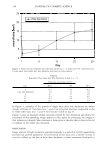
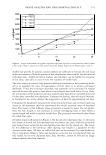
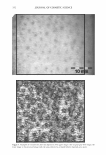
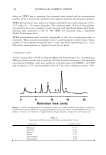
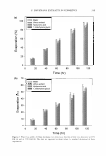
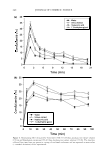
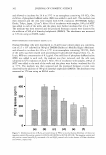
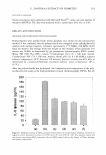
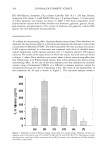
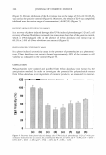
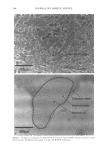
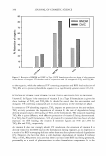
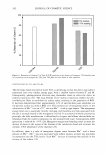
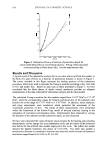
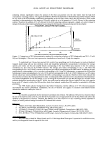
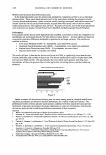
428 JOURNAL OF COSMETIC SCIENCE ROLE OF SODIUM LAURYL SULFATE (SLS) MICELLES IN INDUCING SKIN BARRIER DAMAGE IN THE PRESENCE OF GLYCEROL: DOES MICELLE SIZE MAT TER? Saswata Ghosh and Daniel Blankschtein, Ph.D. Department of Chemical Engineering, MIT, Cambridge, MA 02139 Introduction and Significance Surfactants commonly encountered in skin-care formulations are known to reduce the barrier properties of the skin. It is well-accepted that surfactants have to first penetrate into the skin barrier before they can reduce skin barrier properties. Therefore, if a formulator can minimize surfactant-skin penetration, this should also minimize the ability of the surfactant to reduce the skin barrier properties. Surfactants and other hydrophilic chemicals can penetrate into the skin barrier through aqueous pores in the stratum corneum (SC). [JJ These aqueous pores in the SC provide the primary skin barrier penetration and transport pathway for hydrophilic chemicals which would otherwise not be able to penetrate into the skin barrier through the lipoidal, hydrophobic pathways that exist in the SC. 121 Sodium Lauryl Sulfate (SLS), an anionic surfactant and a model skin irritant, disrupts the skin barrier upon coming in contact with it. SLS monomers self-assemble to form micelles at concentrations above the Critical Micelle Concentration (CMC). We Ill and others l 3 J have observed that the SLS-induced barrier disruption is dose-dependent, and increases with an increase in the total SLS concentration above the CMC. This important observation contradicts the well-accepted Monomer Penetration Model (A,{PM), which attempts to explain surfactant-skin penetration by considering solely the surfactant monomers which can penetrate the skin barrier through the aqueous pores in the SC. The MPM does not account for the possibility that surfactant micelles can also contribute to surfactant-skin penetration, because it considers the micelles to be too large to penetrate through the aqueous pores in the SC. Our recent SLS-skin penetration studies indicate that the aqueous pores in the SC increase in size upon coming in contact with SLS, such that the average pore radius is greater than the SLS micelle radius. Therefore, SLS micelles, contrary to the view put forward by the MPM, are not sterically hindered from penetrating into the skin barrier through these pores. Furthermore, our studies conclusively show that the contribution of the SLS micelles to SLS-skin penetration dominates that of the SLS monomers at concentrations above the CMC, which are typically encountered in skin-care formulations. Therefore, strategies to reduce the contribution of SLS micelles to SLS-skin penetration can si gn ificantly reduce the amount of SLS that can penetrate into the skin barrier and induce skin irritation. In this paper, we have investigated such a practical strategy, using mixtures of Glycerol (a well-known humectant) and SLS, and have found that the addition of Glycerol eliminates almost completely the contribution of the SLS micelles to SLS-skin penetration. Experimental and Theoretical Framework Excised pig skin samples were hydrated in Franz Diffusion Cells (FDCs). Subsequently, the donor compartments of the FDCs were filled with solutions of SLS, SLS+l0 wt% Glycerol, 10wt% Glycerol, and Phosphate Buffered Saline (PBS, the control). The skin barrier properties were quantified by measuring the electrical current across the skin at appropriate voltage signals. In short, the higher the measured skin electrical current for identical voltage signals, the lower is the skin resistance, and hence, the greater is the reduction in the skin barrier properties. The skin permeability characteristics were quantified by measuring the transdermal permeability of mannitol upon exposure to these contacting solutions. Mannitol is a hydrophilic probe that traverses the SC through the same aqueous pores that allow the transport of the current-carrying ions. The amounts of SLS that may penetrate into the skin barrier from the SLS contacting solutions described above were quantified through skin radioactivity assays utilizing 14 C-SLS. For a detailed description of the experimental protocol, see Moore et alY1 A theoretical hindered-transport description ofmannitol and ion transport through the aqueous pores in the SC enabled us to determine: (i) the average aqueous pore radius, and (ii) the aqueous pore number density. For a detailed description of the hindered-transport model, sec Tang et al.l4l Two-Photon Fluorescence Microscopy (TPM) was used to directly visualize the effect of SLS and SLS+ 10wt% Glycerol on excised pig skin samples in FDCs. For detailed descriptions of the TPM apparatus and the skin imaging procedure implemented in our studies, see Yu et al.l5 1 . Dynamic Light Scattering (DLS) was used to determine the average SLS micelle size in SLS solutions with and without 10 wi°/o Glycerol. Surface Tensiometry (ST) was used to determine CMC values for SLS in the presence and in the absence of 10 wt% Glycerol. Results and Discussion The results of our skin radioactivity assays using 14 C-SLS in SLS and in SLS+ l0wto/o Glycerol contacting solutions are shown in Figure 1, which plots the concentration of SLS in the skin barrier (triangles and diamonds) versus the total SLS concentration in the contacting solutions. Clearly, since the triangles, which correspond to SLS concentrations in the skin barrier that are significantly lower than those which correspond to the diamonds, it follows that the presence of Glycerol in the SLS
Purchased for the exclusive use of nofirst nolast (unknown)
From: SCC Media Library & Resource Center (library.scconline.org)