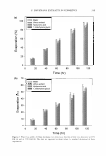
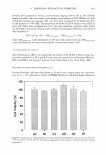
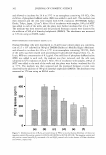
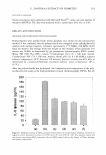
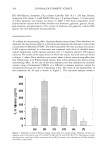
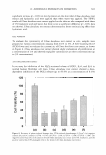
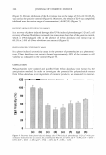
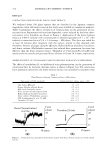
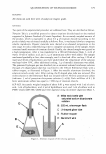
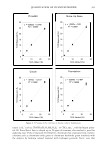
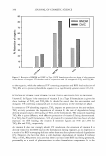
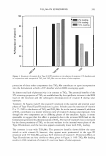
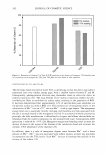
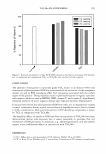
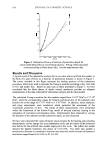
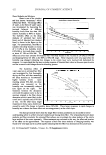
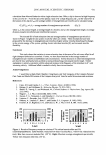
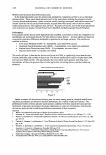
2006 ANNUAL SCIENTIFIC SEMINAR 417 Results and Discussion- The role of the epidermal neural network in maintaining the general health and well being of the skin is becoming more widely appreciated [3,4]. Recent investigations have shown that as a person ages, the density and function of epidermal innervations decreases resulting in changes in the skin's ability to handle general daily stresses such as thermoregulation, sensory perception, and inflammation and immune response [3,5]. These changes are also dependent on a variety of extrinsic factors such as solar exposure, environmental pollution and temperature among others. While increasing the number of epidermal nerve branches might be one potential way to improve the skin's nerve cell functions, another way would be to improve the ability of the existing nerves to work better. Dorsal root ganglia were treated with various test products to see if cellular metabolism could be enhanced. Using the above described testing protocol, two test products, I% of an aqueous extract of Rhodia/a rosea (active content, 0.0 I%), previously shown to enhance oxygen respiration in human white adipocytes and a I% aqueous extract of lysed Sacchaormyces cerevesiae (active content 0.25%) were shown to increase nerve cell oxygen consumption compared to PBS and I% creatine and statistically comparable to IO micromoles of isoproterenol [6]. References 1. Huang CC et al., Selective enhancement of P-type calcium currents by isoproterenol in the rat amygdale. J Neurosci 1998 18: 2276-2282. 2. Low PA et al., The effect of age on energy metabolism and resistance to ischaemic conduction failure in rat peripheral nerve. J Physiol 1986 374: 263-271. 3. Besne I et al., Effect of age and anatomical site on density of sensory innervation in human epidermis. Arch Dermatol 2002 138: 1445-1450. 4. Peter E. Nerves in the skin: from anatomy to function. Eur Soc Dermatol Res 2005 125(S): A88. 5. Lauria Get al., Epidermal innervation changes with aging, topographic location and in sensory neuropathy. J Neuro Sci 1999 164: 172-178. 6. Gruber JV et al., Rhodia/a rosea: the influence of an adaptogen on cutaneous cellular metabolisms. Cosmet Sci Tech 2006, In Press.

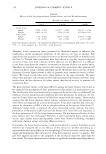
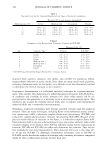
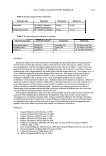
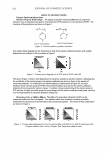
418 JOURNAL OF COSMETIC SCIENCE HAIR COLORING: THE NEXT GENERATION? Keith C. Brown, Ph.D. Background. The technology used in most present day hair coloring products was first discovered and used in the latter part of the 191h Century. Although it has undergone many and often significant incremental developments in the intervening years which have resulted in much improved performance and consumer satisfaction, the fact remains that the basic chemistry has remained unchanged for more than one hundred years. This long term success resides in two clear advantages which outweigh by far any problems that a user may associate with the products. Firstly, the process relies on the coupling, or reaction together, of two single ring aromatics inside the hair shaft to produce a significantly larger dye molecule. The smaller reactants readily penetrate hair, the larger dye molecule is much less able to diffuse out and so the resulting coloring is relatively permanent. Secondly, the coupling reaction is initiated oxidatively, preferably by hydrogen peroxide, which can also simultaneously lighten the hairs' natural color. Therefore the process is able to produce shades which are either lighter or darker than the user's original color. The technical and patent literature describes a variety of alternative processes for coloring hair. However, few of these have made it to the market, and even fewer have proven to be commercial successes. Probably the most significant of these was the introduction of semipermanent dye products in the late l 950's. In these products hair was colored by dyes that diffused into the hair from the product. No chemistry was involved, and the dyes diffused out of the hair at a similar rate resulting in the need for reapplication of the dyes at frequent intervals. In addition, hydrogen peroxide was not used, and indeed many of the dyes do not tolerate peroxide, so the color produced was additive to the original hair color and therefore darker. Only if the hair was bleached prior to the dyeing step could lighter colors be obtained. Although these products were quite successful for several decades, the introduction of similar products based on oxidative coupling technology in the 1980's has seriously eroded their market share. This presentation will evaluate a number of alternative dyeing processes and chemistries, and discuss them in the light of present day performance and market needs. Literature Review. While not intended to be an exhaustive review, chemistries will be divided into those that employ coupling, those that tolerate or employ peroxide, and those that use neither. In many cases, especially in the patent literature, several companies claim similar processes using different reactants only one exemplary citation is given. Table 1: Dyeing using coupling chemistry. Reaction tvpe Reactants Peroxide Tolerant Reference Schiff Base lsatin + amines No 1. US Patent 4921503 ( carbonyl + amine) Diiminoisoindoline + No 2. US Patent 6077320 amines Active methylene Indoles + aldehydes No 3. US Patent 4932977 + carbonyl Barbituric acid + No 4. US Patent 6770102 aldehydes lndane dione + No 5. US Patent 6790239 aldehydes
Purchased for the exclusive use of nofirst nolast (unknown)
From: SCC Media Library & Resource Center (library.scconline.org)