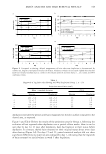
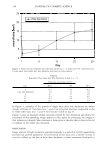
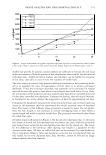
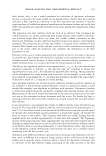
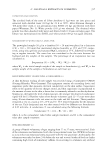
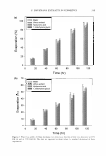
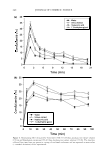
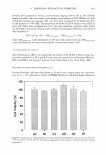
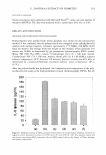
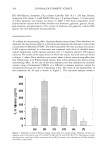
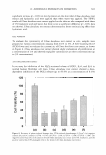
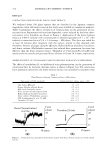
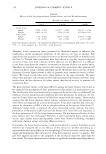
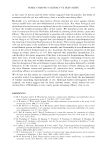
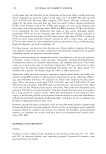
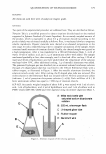
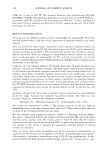
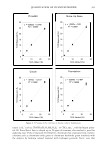
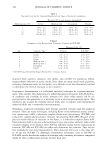
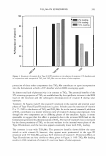
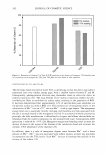
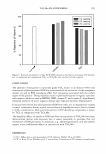
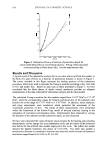
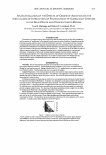
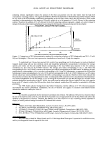
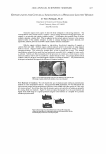
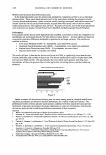
IMAGE ANALYSIS AND HAIR REMOVAL EFFICACY 351 8000 -.---..... ---....:;-_-_-...:::...:::...:::..::: -------------------------, ----+-Hair 1 7000 ----+- Hair 2 6000 ---•--- Hair 3 1--------------------------,------1 ---•---Hair4 "§" 5000 -+-----------------------�.__---=- -- --1 ..2:i -S 4000 ____________________ .__---, ______ _ � � ....1 3000 +---------------z::::;:;,,�-------..,...C ✓--:::--,______ ---1 -✓ - --�� .... .,.. .-·- 2000 ---------- �-------=�..::..;;_--=---.....:-..;;..•_'•-----------1 -·. J ·: �- � � - -· .- - , - , - 1000 --ft------=---=-----::,-_:....,_:--"--'------------------1 ❖.,. -:.·: -;.� - ·:. J . - O +a�-------li.-=----------.---------r--------� 8 15 Day 22 29 Figure 4. Length measurement of regrown single hairs after wax depilation in one volunteer. Hairs broken at the surface (hairs 1 and 2) are visible earlier than hairs broken deeper in the follicle (hairs 3 and 4). modify hair growth. In general, natural markers are sufficient to relocate the test areas under investigation. Often the pattern of hair distribution alone enables identification of individual hairs. Additional tattoo markers and templates can be helpful for relocation of test areas, especially in cases of very low numbers of visible hairs. The main target of cosmetic hair-growth-inhibiting treatments or hair-removing meth ods is to lengthen the time of reappearance of body hairs or to achieve permanent depilation. Using the techniques described, hair regrowth can be measured in regular intervals to assess the point in time when it has achieved the initial status. In our study, the initial status of the projection area was reached eight days after a controlled shave and 18 days after controlled wax depilation. Compared to shaving, the plucking of the hairs, as described in our study, delayed the reappearance of hairs by approximately ten days. Comparing the parameters measured, the projection area of hairs and not hair length was chosen as the parameter that best represented the overall regrowth status of depilated hairs. The reason is that different image processing is needed to assess the two param eters. For hair length, it was necessary to remove overlapping hairs or hairs below a certain length and width to exclude invalid data. The projection area was calculated from all visible hair parts. A further reason is illustrated in Figure 2. On the day after depilation (day 2), the mean hair length of shaved and wax-depilated hair was almost the same, while the projection area showed lower values for the wax-depilated site than for the shaved site. The reason for this difference is the following: After shaving, hair length is a parameter for the closeness of the shave. All hairs are still visible and can be measured. For wax depilation, this is completely different. After wax depilation, only very few non-depilated hairs are still visible, but not the depilated hairs, that, therefore, cannot be detected by image analysis shortly after hair removal.

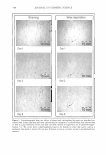
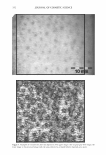
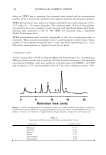
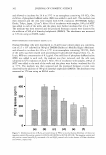
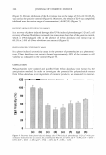
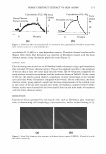
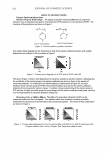
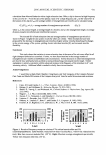
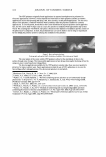
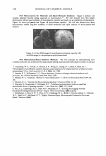
352 JOURNAL OF COSMETIC SCIENCE Figure 5. Examples of irritated skin after wax depilation. The upper image is the original grey-level image the lower image is the processed image with the areas detected as irritated follicles (hatched grey spots).
Purchased for the exclusive use of nofirst nolast (unknown)
From: SCC Media Library & Resource Center (library.scconline.org)