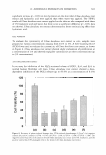
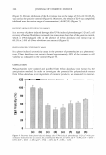
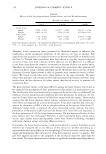
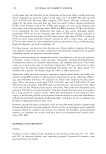
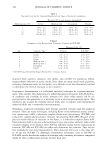
382 JOURNAL OF COSMETIC SCIENCE Table I Recovery Tests for the Titanium Dioxide in Four Types of Cosmetic Formulations Recovery (%) in each cosmetic formulation Added amounts ( % ) Cream Make-up base Foundation Powder 1 98.0 ± 3.0 103.0 ± 5.0 96.0 ± 9.0 97.0 ± 4.0 5 99.2 ± 4.6 96.6 ± 9.0 104.8 ± 6.0 101.6 ± 4.2 10 96.6 ± 5.5 104.7 ± 6.5 97.2±4.2 102.5 ± 7.4 25 103.8 ± 3.0 102.8 ± 4.4 96.4 ± 3.6 96.8 ± 3.9 Table II Comparison of the Results from Volumetric Titration and ICP-AES Measured Ti02 (%) No. Cosmetic Type Titration ICP-AESa Cream 2.9 ± 0.12 2.8 ± 0.10 2 Lotion 5.4 ± 0.21 5.1 ± 0.15 3 Cream 4.7 ± 0.19 4.9 ± 0.14 4 Make-up base 1 4.8 ± 0.17 4.7 ± 0.16 5 Make-up base 2 4.8 ± 0.14 4.5 ± 0.15 6 Foundation 10.6 ± 0.26 10.8 ± 0.32 7 Powder 12.4 ± 0.34 12.9 ± 0.40 "ICP-AES was performed by Anapex Research Inc. (Yusung, Korea) ongrnate from cosmetic colorants, iron oxides, also interfere by producing yellow orange-colored solutions in acidic media. Since there are many metal oxide pigments, including chromium oxides or iron oxides, it is difficult to use the colorimetric method to determine the level of titanium in the cosmetics. Gravimetric determination is a traditional analytical technique for titanium measure ment. This involves the production of a yellow flocculent precipitate, Ti(C6H502N2)4, of cupferron and titanium in acidic solution (10). Since other metals can be co precipitated in this procedure, it is necessary to use a selective precipitating agent. This method is not so good for everyday routine work, since it requires some manipulative analytical skills and is somewhat time-consuming. Nowadays, analytical instruments have become powerful research tools for analytical research. There are many techniques, including flame or electrothermal atomic absorp tion spectroscopy (AAS), inductively coupled plasma-mass spectrometry (ICP-MS), and inductively coupled plasma-atomic emission spectrometry (ICP-AES). Because of the poor activation efficacy of titanium in the flame, it is difficult to exploit flame AAS. Electrothermal AAS is also not widely employed, since many other elements make stable titanium complex in the furnace. Since ICP has sufficient energy for the atomization of titanium, ICP-MS and ICP-AES can effectively determine the titanium. They are the best methods for trace level measurements. Their detection limits are in the range of 1 to 10 ppt for ICP-MS (7). Although instrumental techniques, such as ICP-MS or ICP-AES, are the best for the analysis of titanium, only a minority of cosmetic companies would be able to afford them because of their high cost.

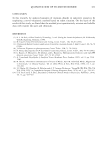
QUANTITATION OF TITANIUM DIOXIDE 383 CONCLUSION In this research, we analyzed amounts of titanium dioxide in sunscreen cosmetics by employing a novel volumetric method based on redox titration. On the basis of the results of this study, we found that the method gives quantitatively accurate and reliable data with routine lab-ware and chemicals. REFERENCES (1) K. F. De Polo, A Short Textbook of Cosmetology, 1st ed. (Verlag for chemische Industrie, H. Ziolkowsky GmbH, Augsburg, Germany, 1998). (2) M. Caswell, Sunscreen formulation and testing, Cosmet. Toiletr., 116, 49-60 (2004). (3) J. Glowczyk-Zubek, Cosmetic application of microfine titanium dioxide,]. Appl. Cosmetol., 22, 74-76 (2004). (4) J. Ginestar, Pigments as photoprotectans, Cosmet. Toiletr., 118, 73-78 (2003). (5) K. Klein, Encyclopedia of UV absorbers for sunscreen products, Cosmet. Toiletr., 107, 45-50 (1992). (6) L. Rigano, A. Mezzanotte, M. Lohman, and L. Kujansivu, Hydrogenated polydecenes and high-SPF physical sunscreens, Cosmet. Toiletr., 117, 79-85 (2002). (7) A. Townshend, Encyclopedia of Analytical Science (Academic Press, London, 1995), vol. 9, pp. 5236- 5240. (8) H. Onishi, "Photometric Determination of Traces of Metals, Part IIB: Individual Metals, Magnesium to Zirconium," in Chemical Analysis, 4th ed. (John Wiley & Sons, New York, 1989), vol. 3, pp. 535-585. (9) J. C. Bailar, H.J. Emeleus, R. Nyholm, and A. F. Trotman-Dickenson, "Group IB, IIB, IIIA, IV A, VA VIA, VIIA, VIII," in Comprehensive Inorganic Chemistry (Pergamon Press, 1976), vol. 3, pp. 359-361. (10) F. D. Snell and L. S. Eltre, Encyclopedia of Industrial Chemical Analysis (Interscience Publishers, 1979), vol. 13, pp. 425-427.
Purchased for the exclusive use of nofirst nolast (unknown)
From: SCC Media Library & Resource Center (library.scconline.org)