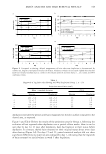
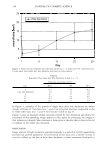
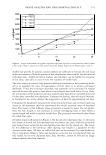
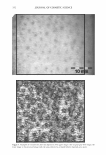
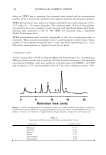
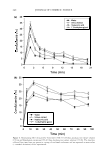
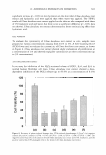
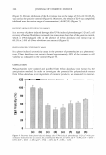
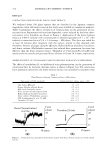
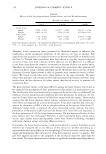
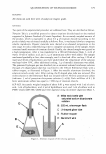
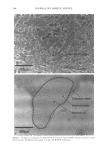
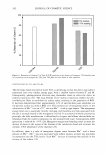
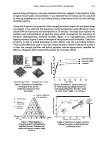
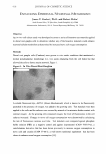
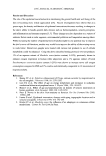
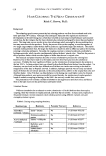
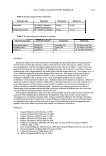
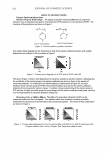
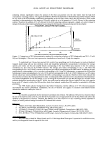
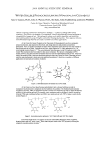
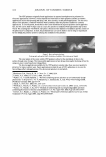
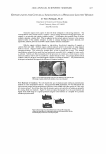
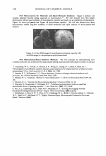
2006 ANNUAL SCIENTIFIC SEMINAR 437 OPPORTUNITIES FOR CHEMICAL INNOVATION IN A RESOURCE LIMITED WORLD D. Tyler McQuade, Ph.D. Department of Chemistry and Chemical Biology, Cornell University, Ithaca, NY 14853 dtm25@cornell.edu Chemistry impacts every aspect of daily life from toothpastes to life-saving medicines. The essential feature of this central science is synthesis. The top selling cholesterol lowering agent Lipitor, for example, is an optically pure, entirely synthetic product. 1 Such progress has prompted some to declare synthetic chemistry a mature field. 'What is neglected in this myopic analysis, however, is the resource intensive nature of the synthetic enterprise. In order to continue meeting the world's demands, new approaches, methods, and tools are needed to make synthetic chemistry sustainable. 2 Effective organic synthesis depends on site-isolation, the physical separation of reagents or catalysts from each other. Synthetic organic chemists typically achieve site-isolation by using separate flasks or reactors. Separate vessels prevent incompatible catalysts or reagents from fouling or yielding intractable mixtures. This reliance on "multiple pots" is both a triumph and a curse. This iterative transformation and purification model has been enormously successful, but it is plagued by waste, mostly as solvents. Solvents are often incinerated and if the precursors to solvents are a finite resource, current chemical synthesis will be only be possible for a limited amount of time. The average pharmaceutical synthesis yields 25-100 kg of waste per kilogram of product, according to Sheldon3• 4 We present materials, techniques, and methods that improve the efficiency of chemical synthesis. Figun: I. (A) An optical micrograph of the oil-in-oil emulsion on the right and (BJ a SEM image of capsules formed at the interface of an oil-in-oil emulsion. New Materials for Synthesis: We will describe the use of emulsion-based interfacial polymerization methods to create encapsulated catalysts. Using spin-echo NMR experiments, we will demonstrate that high-molecular weight catalysts encapsulated in polymeric shells diffuse within the capsules as if they were in a viscous solvent. We will also show that oil-in-water, water-in-oil, and oil-in-oil emulsions are useful for creating these new materials. Figure IA shows an optical micrograph of an oil-in-oil emulsion and Figure lB an SEM image of a capsule produced using the oil/oil interface as a template for a polyurea interfacial polymerization. Figure 2. Basic design of our microfluidic reactor. The top-left syringe pump contains the carrier phase, the right pump contains the fint disperse phase, and lhc bottom-left pump contains the second dispenc phase.

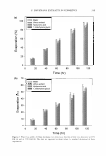
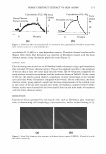
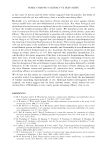
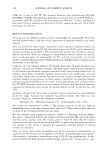
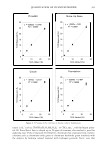
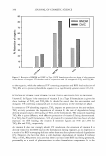
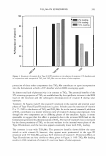
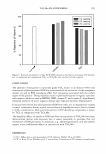
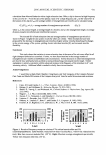
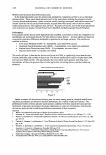
438 JOURNAL OF COSMETIC SCIENCE New Microreacton for Materials and Small Molecule Synthesis: Figure 2 portrays ow recently reported flexible tubing approach to microreactors. 1 · 7 We will describe how this simple microreactor allows rapid synthesis of monodisperse capsules and beads via an interfacial polymerization. Figure 3A shows polyamide and Figw-e 38 polysiloxane capsules. We will also discuss how these microreactors enable clog-free synthesis of small molecules and rapid creation of micro-packed-bed reactors. Figure 3. (A) An SEM image of monodisperse polyamide capsules. (8) An SEM image of a monodisperse polysiloxane bead. New Multicatalyst-Based Synthetic Methods: We will conclude by demonstrating how complex molecules are synthesized by using simple starting materials and multi-catalyst systems in one-pot. 1. Greenberg, W. A Varvak, A Hanson, S. R. Wong, K. Huang, H.J. Chen, P. Burk, M. J., "Development of an efficient, scalable, aldolase-catalyzed process for enantioselective synthesis of statin intermediates." Proc. Natl. Acad. Sci. U.S. A. 2004, 101, 5788. 2. Anastas, P. T. Williamson, T. C., Green chemistry :frontiers in benign chemical synthesis and processes. ed. Oxford University Press: New York, 1998. 3. Sheldon, R. A, "Catalysis: The key to waste minimization." J. Chem. Technol. Biotechnol. 1997, 68, 381. 4. Sheldon, R. A, "Consider the Environmental Quotient." Chemtech 1994, 24, 38. 5. Quevedo, E. Steinbacher, J. McQuade, D. T., "Interfacial polymerization within a simplified microfluidic device: Capturing capsules." J. Am. Chem. Soc. 2005, 127, 10498. 6. Poe, S. L. Cwnmings, M. A Haaf, M. P. McQuade, D. T., "Solving the Clogging Problem: Precipitate-Forming Reactions in Flow." Angew. Chem. Int. Ed. Eng. 2006, in press. 7. Steinbacher, J. Moy, R. W. Y. Price, K. E. Cwnmings, M.A. Buffy, J. Roychowdhury, C. Olbricht, W. L. Haaf, M. P. McQuade, D. T., "Highly Structured Spiny Microcapsules Produced in Flow and Batch." Submitted 2006.
Purchased for the exclusive use of nofirst nolast (unknown)
From: SCC Media Library & Resource Center (library.scconline.org)