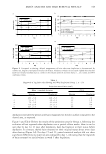
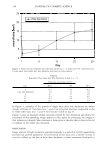
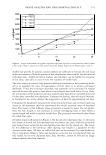
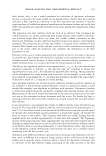
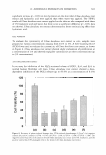
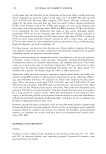
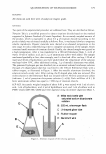
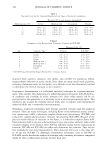
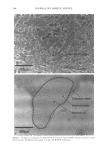
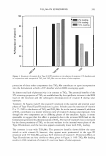
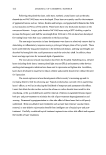
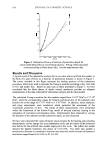
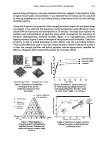
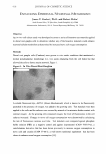
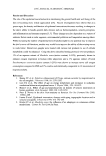
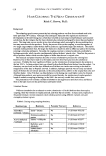
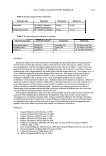
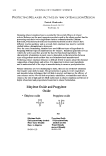
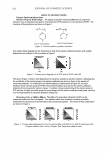
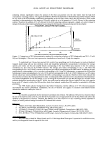
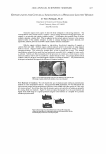
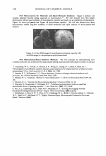
2006 ANNUAL SCIENTIFIC SEMINAR 439 HIGH PERFORMANCE PRODUCTS FROM RENEWABLE RESOURCES Doreen Howard1, Martin Scott Cardinali1, Bret Schweid1, Tomohiro Hashimoto2 and Anja Gestmann3 1 National Starch and Chemical, Bridgewater, NJ 2 Nippon-NSC, Osaka, Japan 3 National Starch and Chemical, Sempach Station, Switzerland Consumers of cosmetics are increasingly expressing a preference for products that contain naturally derived ingredients because these products better reflect their personal values. These consumers value high quality products that are environmentally friendly, but are not willing to sacrifice product performance. Environmentally friendly products use renewable resources, defined as "any natural resource that can replenish itself naturally over time, as wood or solar energy,"' as starting materials. Starch, a polysaccharide found widely in nature in such grains as corn, wheat, and rice, in such tubers and roots as potatoes and tapioca, and even in the pith of sago palms, is one such renewable resource. The starch starting material can be modified to deliver high performance, naturally derived personal care ingredients that meet the demands of these consumers. Background Starch is a generic term applied to a combination of two glucose-based polymers, amylose and amylopectin (Figure 1). Amylose is a substantially linear polymer with a molecular weight of approximately I x 105• Amylopectin is a highly branched polymer with very high molecular weight, on the order of I x 107• 2 The starch polymers are packaged by nature in the form of granules. Through hydrogen bonding, the amylose and amylopectin polymers form highly ordered crystalline bundles. These starch granules are insoluble in water at ambient temperatures. However, as the water temperature is raised, the granules swell and rupture as the hydrogen bonds are broken, causing the "cooked" starch polymers to escape the granule lo form a colloidal dispersion. Continued heat treatment and shear will eventually cause the starch polymers Lo fragment (Figure 2). �-.... IIO.. I .. �-•ISlll}" OIi � ��-·�- It - .. _.,_ Figure I Figure 2 Starch Modifications Native starches can offer some benefits to cosmetic products however, because of their composition, unmodified starches can have poor performance with respect to such attributes as aesthetics, stability, and functionality. As a result, native starches are frequently modified to optimize performance in commercial applications. Breeding can be used to alter the relative ratios of the amylose to amylopectin polymers in the starch which can influence solution behavior and film properties of dispersed starches. 2 A number of chemical and physical modifications, including hydroxypropylation and agglomeration, can be made to the starch starting material to modify its behavior in both the granular and dispersed stale. Modified starches are of greatest interest for personal care applications because they are naturally derived and provide high performance in a broad range of formulations. Starches in Personal Care Granular starches, because of their size, shape, and structure, can be used to provide a number of aesthetic benefits to personal care products during different stages of use. The reported benefits include delivery of a soft, silky feel, oil absorption and a reduction in gre;isiness, and reduced caking on the skin and in the package. 3 Examples of granular starches used in personal care products include Corn Starch

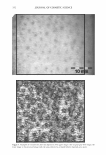
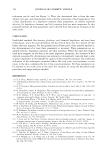
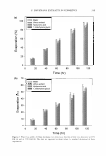
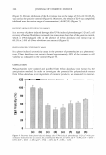
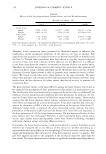
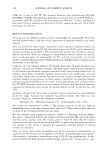
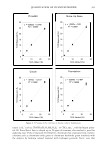
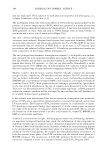
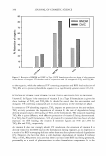
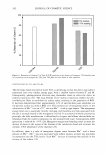
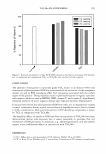
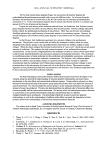
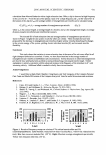
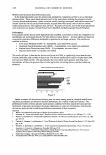
440 JOURNAL OF COSMETIC SCIENCE Modified and Aluminum Starch Octenylsuccinate. 'In the dispersed polymer state, the amylose and amylopectin components are free to act as individual polymer chains. These starch-based polymers swell in the water phase, enabling the polymers to build viscosity through hydrodynamic volume exclusion,·modify rheology and texture, and stabilize emulsions:'-� Soluble starch derivatives can also form humidity resistant films when dried6, and can deliver smooth, conditioning aesthetics when applied to hair and skin. 7 Examples or starches used in the dispersed polymer state in personal care products include Potato Starch Modified and Hydroxypropyl Starch Phosphate. Performance Four granular starches that are either h{drophobically modified. cross-linked, or both, are compared to two benchmarks, talc and titanium dioxide, for their ability to reduce friction. All four starches are based on corn starch to minimize differences attributable to granule size and shape variation. The starches are modified as follows: • Corn Starch Modified (CStM) - C12 hydrophobe, cross-linked with calcium • Aluminum Starch Octenylsuccinate (AStO) - C11 hydrophobe, cross-linked with aluminum. • Sodium Starch Octenylsuccinate (SStO) - C11 hydrophobe, not cross-linked • Glyceryl Starch (GSt) - Covalently cross-linked The results in Figure J show that the friction coerficient for CStM, is significantly lower than the other friction coefficients, and is similar to that of talc. The friction coefficient for AStO, is higher than CStM, but lower than SSLO and GSt. The data indicates that cross-linked starch granules with long chain hydrophohes will have the greatest effect at reducing friction, increasing silkiness and thus enhancing aesthetics. Frictioll Coeff'cieont of l'MUW Stan:- 0.2 0.4 0.8 0.8 Figure 3 1 □TI02 fO ■TM: ! ■SSIO Further examples will be presented showing how the starch starting material, chemical modifications and physical propenies are tailored to optimize performance for a variety of specialty starches. The performance benefits of these specialty starch products combined with their natural derivation provide formulators of personal care products the unique opponunity to create new formulations with naturally derived raw materials that exceed the performance expectations of their consumers. References I. Webster's Ne.._, MillenniumrM Dictionary of English. Preview Edition(\' 0.9.6J 2. Rutenberg, M .• "Starch and It Modifications". Handbook of Watu Soluble GunLf and Re.fins, ed., 1980, pgs. 22.1 - 22.83, 3. Mwtino, G. and Solarek, D., "Personal Care Applications of Starch", The Chemi.ftry and Ma,1ufacture of Co.m�tics, ed .• 2002, pgs. 703-729, 4. Cardinali, S., Pasapane. J., and Greenberg, J., "Novel Thickeners for Hard-to-Thicken Personal Care Products", GCI, May 1997. pgs. 42-48 5. Oestmann, A., Bonnardel, V., and Milliere, J., "'A New Concepl for Creating Skin Care Emulsions in Asia", Personal Care Ingredients • Fonnularion • Mun1ifacrure, November 2002. pgs. 27-29 6. Vitale, M. and Moll. S., "Performance Enhancement of Styling Products Using Starch-Based Fixatives", Pu.wnal Care Ingredients Asia Conference Proceedings. Marrh 2002, pgs. 339-348 7. Ondeo Nalco Company, "Sensomer Cl-50 Product Bulletin PC-Cl-50", 2001 8. Advanced Ceramics Web Site, www.accos.com/LUBRICITY.html, December 2002
Purchased for the exclusive use of nofirst nolast (unknown)
From: SCC Media Library & Resource Center (library.scconline.org)