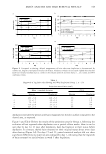
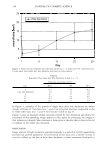
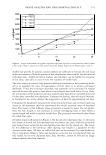
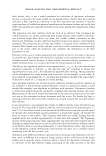
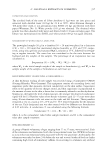
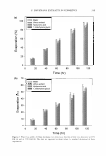
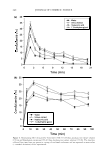
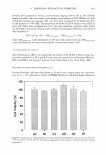
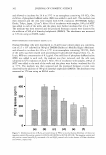
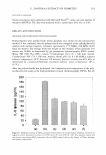
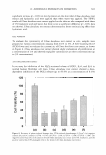
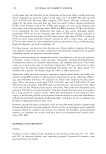
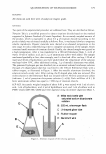
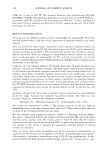
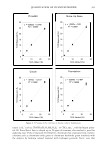
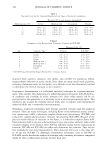
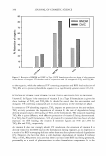
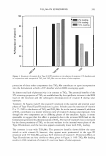
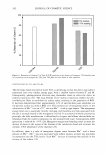
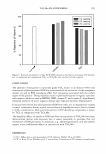
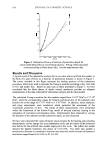
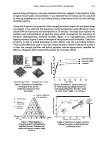
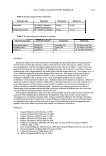
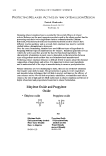
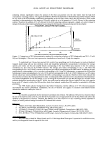
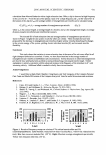
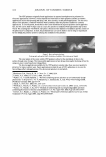
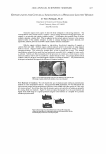
w C: .E - 5 0 C: 0 C: Q) - Q) '::!:!. 0 TiO 2 :Mn IN SUNSCREENS 391 100---------------------------- 80 60 40 20 0 -----"-T-------- - 2% loading r=J 5%1oading - 10% loading Figure 3. Retention of vitamin E in Type II 0/W emulsion in the absence of inorganic UV absorbers and in conjunction with nanoparticle Ti02 and Ti02:Mn over two hours of solar exposure. protection of these other components that TiO2:Mn contributes to upon incorporation into the formulation as both a UV absorber and an ROS scavenging agent. Its almost total lack of photoactivity is in contrast to TiO 2• The potential benefits of the UV-screening properties of TiO 2 are overwhelmed by the significant increase in the ROS load on the emulsion and the subsequent decomposition of vitamin E during solar exposure. Vitamin C. In Figures 4 and 5 the vitamin C retention in the external and internal water phases of Type II and Type III emulsions is given. In both cases the retention of vitamin C is 77-78% in the absence of TiO 2 and TiO 2 :Mn. As in the case of vitamin E, addition of TiO 2 contributes to a shorter retention time of vitamin C during solar exposure, even though the two components are in differing phases of the emulsion. Again, it seems reasonable to suggest that this effect is primarily due to the increased ROS load on the formulation generated by photoexcitation ofTiO 2 • The rate of vitamin Closs is increased by the closer proximity of TiO 2 to the anti-oxidant in the internal water phase of the Type III emulsion, and the loss rate appears essentially linear with TiO 2 loading. The converse is true with TiO2:Mn. The protective benefits shown follow the same trends as with vitamin E however, they appear more pronounced in the type III emulsion with 3% TiO2:Mn, giving a 92% retention of vitamin C. Protection effects in Type II emulsions are very similar to those given in Figure 3: 10% TiO2:Mn loading results in 94% retention of vitamin C over two hours of solar exposure.

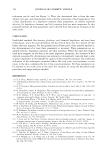
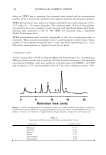
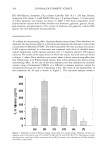
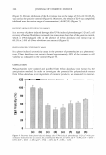
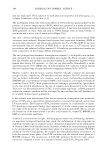
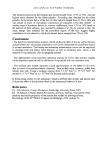
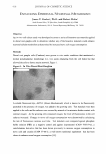
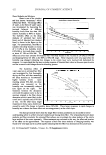
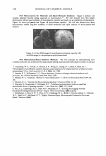
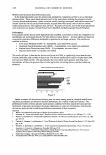
392 JOURNAL OF COSMETIC SCIENCE 100---------------------------- u C E ..... 0 C 0 80 60 C 40 !l cf. 20 c::::J 5% loading 10% loading Figure 4. Retention of vitamin C in Type II 0/W emulsion in the absence of inorganic UV absorbers and in conjunction with nanopartide Ti02 and Ti02:Mn over two hours of solar exposure. PHOTOPHYSICS OF Ti0 2 AND Ti0 2 :Mn The electronic band structure of rutile TiO 2 is interesting in that the direct and indirect transitions have very similar energy gaps, with a shallow barrier between f and M. Consequently, photogenerated electrons may thermalize down to either the direct or indirect transitions (26). The long lifetime of the indirect transitions renders the elec tron/hole pair likely to annihilate via surface states, resulting in the generation of ROS. It has been demonstrated that approximately 12% of electron/hole pairs annihilate via the particle surface to produce ROS (27). The introduction of manganese results in the substitution of Mn3 + ions on a Ti4+ site as a Mn3 + + hole p-type dopant. The manganese energy level site is essentially directly mid-gap, and therefore any hole associated with the site is strongly bound to the manganese site (28). In accordance with the uncertainty principle, the hole wavefunction is delocalized in k-space and allows electron/hole an nihilation from the indirect transition via the localized hole state. Consequently, ROS generation is reduced by 95% (26). Manganese oxygen anti-bonding states increase the density of states in the region of the bottom of the conduction band and increases the intrinsic UV A absorbance of the material (29). In addition, there is a split of manganese dopant states between Mn3 + and a lesser amount of Mn2+ . Mn2 + ions are associated with surface regions, as their size precludes incorporation into the TiO2 lattice. Such Mn2+ ions act to scavenge free radicals in the vicinity of the surface (13).
Purchased for the exclusive use of nofirst nolast (unknown)
From: SCC Media Library & Resource Center (library.scconline.org)