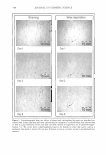
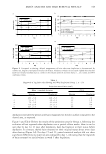
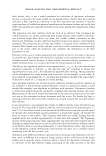
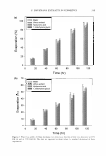
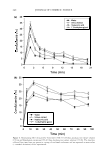
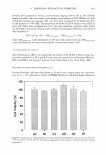
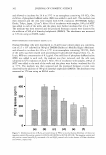
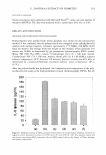
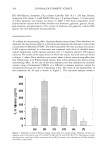
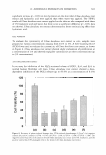
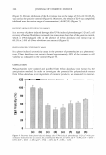
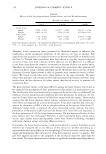
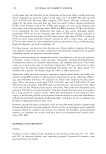
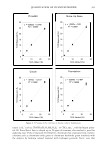
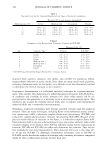
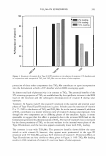
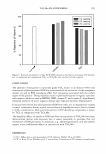
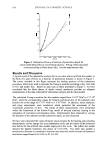
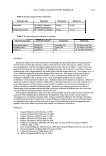
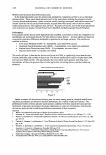
2006 ANNUAL SCIENTIFIC SEMINAR 413 % of Excess Red Pixel Cycle Differencelii: Right Hand hea of Recine$$ Cycle Differen::es I:iNi: Right Hand :le+6 -,--------------------, -4 C:=JWorkCycie2 c::::J 'MlriCyda2 =i3 Reaivery after Cycle2 -6 -'-------------J..----�-----' IZ:Z!lll Reooveryafter�2 -S...6-'-------,-----.-------'1------,------' Figure t. Summer and Winter cycle differences of the right hand using percent of excess red pixels technique. Figure 2. Summer and Winter cycle differences of the right hand using area of redness technique. Visual Skin Grade Cycle Differences: Right Hand VPS Right Hand Cycle Differences: Erythema & Irritation 0.6 �-------------------, 20 �-------------------, i 0.4 � a, 0.2 C) o.o W -0.2 C Cl) ] -04 .Ill c::::J WorlCycle2 c::J WorlCycle2 = Recovery alter Cycle2 � Recovery alter Cycle2 -0.6 -'--------�--...,.....I--..-------' .30 -'----.------r----+----..-------' Sumi( Wini( SumF WinF SumD WinD Sum Ery WinEry Sum Irr Win Irr Figure 3. Summer and Winter cycle differences in the right knuckle, finger and dorsal area using live visual skin grading (VSG). Figure 4. Summer and Winter cycle differences of the right hand in erythema and irritation using VPS analysis (visual perception system). References I. Pessoa-Silva CL, Poafay-Barbe K, Ptisler R, Touvencau S, Pemerger TV, Pittet D. Attitudes and Perceptions Toward Hand Hygiene Among HealthcaR Workers Caring for Critically Ill Neonalft. Infect Control Hosp Epidcmiol 2005 26(3):305-11. 2. Pille! D. Improving Compliance with Hand Hygiene in Hospitals. Infect Control Hosp Epidcmiol 2000 21(6):381-6. 3. Lam BC, Lee J, Lau YL. Hand Hygiene Practiccs in a Neonatal Intenaive Care Unit: A Multimodal Intervention and Impact on Nosocomial Infection. Pediatrics 2004 l 14(S):eS6S-71. 4. Won SP, Chou HC, Hsieh WS, Chen CY, Huang SM, Tsou KI, Tsao PN. Hand washing Program for the Prevention of Nosocomial Infections in a Neonatal Intensive Care Unit. Infect Control Hosp Epidemiol 2004 25(9):742-6. S. Karabey S, Ay P, Derbentli S, Nakipoglu Y, Esen F. Handwashing frequencies in an intensive care unit. J Hosp Infect 2002 50(1):36-41. 6, Kuzu N, Ozer F, Aydernir S, Yalcin AN, Zencir M. Compliance with Hand Hygiene and Glove Use in a University-Affiliated Hospital. Infect Control Hosp Epidemiol 2005 26(3):312-1 S. 7. McCormick RD, Buchman TL, Maki DG. Double-Blind, Randomized Trial of Scheduled Use of a Novel Barrier Cream and an Oil-Containing Lotion for Protecting the Hands of Health Care Workers. Am J Infect Control 2000 28(4):302-10. 8. Aspres N, Egerton IB, Lim AC, Shumack SP. Imaging lhe Skin. Aust J Derm 2003 44: 19-27.

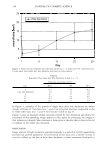
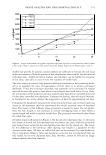
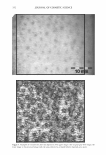
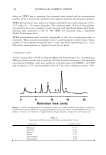
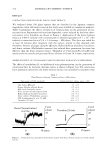
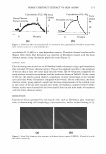
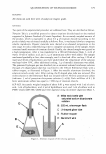
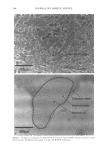
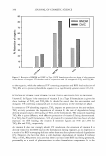
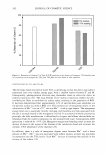
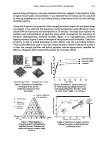
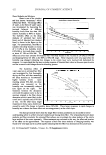
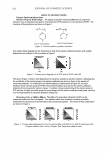
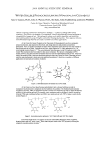
414 JOURNAL OF COSMETIC SCIENCE NANOHYBRIDS FOR EX TRACTION/RELEASE OF DESIRABLE AT TRIBUTES AND FOR SCAVENGING OF ODORS AND TOXIC MATERIALS Ponisseril Somasundaran, Ph.D., S. Chakraborty, and S. Mehta Langmuir Center for Colloids and Interfaces Columbia University, New York, NY 10027 A major challenge in cosmetic industry is to incorporate water-incompatible perfume molecules into reliable carriers for release at desired rates and desired sites. Nanohybrid particles and polymers can be designed to encapsulate sensory attributes or scavenge odors from the surrounding environment and then to release them as required. In the present work, nanogel carrier particles and hybrid polymers were tested for their extraction and release capabilities. A series of functional nanogels, hydrophobic, ionic, dually modified with both hydrophobic and ionic groups and chiral types, were made by polymerization in nano emulsion of Span BO/Tween BO/hexane/water by gamma radiation. Dynamic light scattering and scanning electron micrograph revealed the size of the particles to range from 50-BOnm for dry particles to 150nm for wet. The size as well as sponginess could be altered by varying the crosslinking density. Encapsulation experiments were carried out with these nanogels to determine the effects of functionalization on extraction and release. As compared to the unmodified nanogels, the chemically modified for hydrophobicity and electrostatic charge showed considerably higher ability of extraction. The range and capacity of the nanogels could be controlled by determining the effects of these functional groups on their loading properties. Swelling was more apparent in alkaline medium than in acidic medium. The swelling behavior of the particles was determined by monitoring them using atomic force microscopy upon immersing them in water (figure 1 ). Although, in saline the efficiency of all types of nanogels was decreased, the hydrophobic nanogels showed much better performance than other types of nanogels. The release was observed to be pH dependent, change in pH thus offering a means of controlling the release of active substances. Linalyl acetate, a fragrance ingredient, was incorporated in the nanogels particles. It was observed that poly(acrylic acid) nanogels could extract 40% linalyl acetate(LA) from dispersion medium. The efficacy of extraction was enhanced by the introduction of hydrophobic moieties to the polymeric backbone. Figure 2 compares the extraction of linalyl acetate by unmodified and modified nanogels. Nanogels are also used in food industry for flavor encapsulation. The ability of starch starch nanoparticles to encapsulate vanillin, an ingredient that gives vanilla flavor, was evaluated and it was observed that succinic acid cross-linked starch nanoparticles extracted 25% vanillin in 6 hours. The kinetics of these nanoparticles for extraction of various active substances was investigated using surface plasmon resonance (SPR) technique. The evanescent behavior of the waves makes the SPR technique sensitive and surface specific to long and short changes in refractive index of the layer next to the substrate and hence to adsorption/desorption (extraction/release) of molecules in the surface layer. The release·
Purchased for the exclusive use of nofirst nolast (unknown)
From: SCC Media Library & Resource Center (library.scconline.org)