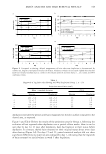
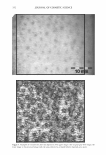
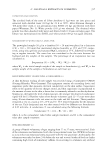
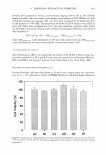
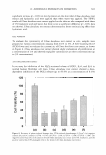
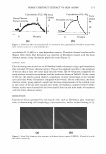
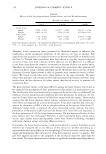
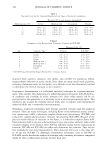
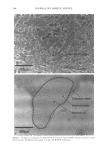
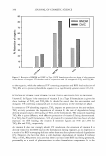
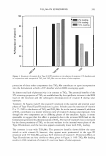
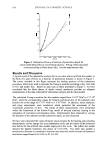
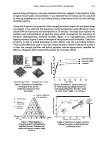
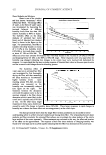
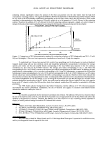
2006 ANNUAL SCIENTIFIC SEMINAR 429 contacting solution significantly reduces the amount of SLS that can penetrate into the skin barrier from the high SLS concentration contacting solutions. The significant difference between the diamonds (or the dashed line) and the triangles (which lie very close to the SLS monomer contribution corresponding to the full line) clearly shows that SLS micelles, which would contribute to skin penetration in the absence of Glycerol, cannot do so in the presence of 10 wt% Glycerol in the contacting solution. Therefore, the addition of 10 wt% Glycerol to the SLS contacting solutions represents a simple, yet useful, strategy to mitigate SLS-induced skin barrier perturbation by preventing the SLS micelles from penetrating into the skin barrier. ? 10 ..--___ ♦_S_L_S ....;. (1_-2_0_ _m_M""") _J.S_L_S ...a (_1-_20_0_m_ M....;.)_+_G""'lyc_e_r_o 1_0_wt'l_Yo_)-----, -� 8 m � 7 II) .c_"' & , CMC o SLS • 8.7 mM ! 5 : .. - -r- - - -- : .. f -- /�-- Micelle Contribution 1 2 L --r --1-- . A § 1 •' • l.... Monomer 8 o.,.�_..__, _________ ---,-------.------,.....I Contribution 50 100 150 200 Total SLS Concentration in the Contacting Solutions (mM) Figure 1. Comparison of SLS-skin penetration induced by contacting solutions of SLS (diamonds) and SLS+ 10 wt% Glycerol (triangles). The error bars represent a standard error based on 6-10 pig skin samples. To understand how Glycerol may prevent SLS micelles from penetrating into the skin barrier, we used our hindered transport model along with our skin electrical current and transderrnal permeability measurements to determine the average aqueous pore radius and the pore number density corresponding to the skin barrier upon exposure to the two solutions considered: (A) SLS and (B) SLS+ 10wt% Glycerol. The average pore radius corresponding to (A) is 33A while that corresponding to (B) is 20A, which is similar to the aqueous pore radius corresponding to the PBS control. In addition, the pore number density corresponding to (A) is twice that corresponding to (B). Using DLS experiments, we measured the SLS micelle hydrodynamic radius corresponding to (A) to be 19.5A and that corresponding to (B) to be 18.0A. Furthermore, our ST studies did not indicate any statistical difference between the CMCs corresponding to (A) and (B). Therefore, these results indicate that Glycerol does not reduce SLS-skin penetration by either: (i) reducing the CMC such that a lower concentration ofSLS monomers can contact and penetrate into the skin barrier, or (ii) increasing the SLS micelle size such that the larger SLS micelles cannot penetrate through the aqueous pores in the SC. In fact, our results seem to indicate that Glycerol reduces the size of the aqueous pores in the SC relative to that of the SLS micelles, which if not reduced, would allow SLS micelles to contribute to SLS-skin penetration. Our TPM studies indicate, through direct skin barrier visualization, that the addition of 10 wt% Glycerol minimizes SLS-induced skin barrier perturbation. Furthermore, the use of Glycerol also appears to minimize SLS-induced keratin denaturation within the comeocytes of the SC. Conclusions SLS micelles can penetrate into the skin barrier and induce skin irritation. The addition of GI ycerol was found to reduce the size of the aqueous pores in the SC, such that the SLS micelles can no longer penetrate into the skin barrier and induce skin irritation in the presence of Glycerol. Therefore, the addition of 10 wt% Glycerol to a SLS contacting solution represents a simple, yet useful, practical strategy to minimize SLS-induced skin irritation. References 1. P.Moore, S.Puvvada, and D.Blankschtein, Journal of Cosmetic Science, 54, 29-46 (2003). 2. G.K.Menon, and P.M.Elias, Skin Pharmacology, 10, 235-246 (1997). 3. L.D.Rhein, F.A.Simion, R.L.Hill, RH.Cagan, J.Mattai, and H.I.Maibach, Dermatologica, 180, 18-23 (1990). 4. H.Tang, S.Mitragotri, D.Blankschtein, and R.Langer, Journal of Pharmaceutical Sciences, 90, 545-568 (2001). 5. B.Yu, K.H.Kim, P.T.So, D.Blankschtein, and R.Langer,Joumal of Investigative Dermatology, 120, 448-455 (2003). Acknowledgements We would like to thank Dr. Sidney Homby and Dr. Yohini Appa from Neutrogena Corporation for useful discussions, and for providing partial financial support for this work

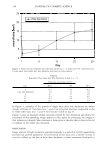
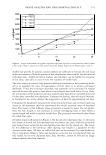
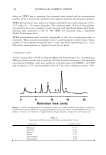
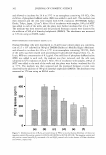
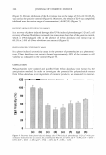
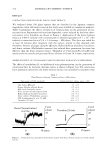
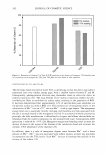
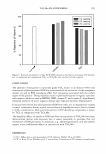
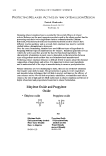
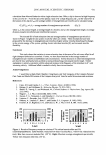
430 JOURNAL OF COSMETIC SCIENCE A looK BEHIND THE SALT CURVE: THE LINK BE TWEEN RHEOLOGY, S TRUCTURE AND SALT CONTENT IN SHAMPOO FORMULATIONS Introduction Kevin Penfield, Ph.D. Uniqema, 900 Uniqema Blvd., New Castle, DE 19720-2779 kevin.penfteld@uniqema.com Shampoos are viscoelastic materials, demonstrating both viscous (liquid-like) and elastic (solid like) flow properties. They consist of wonn-like micelles - equilibrium structures strongly dependent on composition variables. The interactions between micelles are responsible for the viscoelastic behavior of shampoos: entanglements, branching points, and adhesive contacts thicken these systems, while reptation (disentanglement through snake-like motion), breaking of the micelles, and sliding of contact points are the principal mechanisms of stress relaxation [l-6]. When exhibiting a single relaxation time, the viscoelastic behavior of the micellar solutions can be fit to a simple Maxwell model consisting of a spring and dashpot connected in series. The spring is characterized by a spring constant, G, while the dashpot is characterized by a viscosity, TJ. These two are related, through the relaxation time, as follows: .,, = G X t (Eq. I) Dynamic rheological measurements. in which samples are subjected to an oscillating shear stress, reveal both the viscous and elastic behavior of surfactant solutions. In particular, frequency sweeps show the dependence of the viscous and elastic moduli (G" and G') and the complex viscosity (11•) on the rate of the oscillatory motion. For a Maxwell fluid, the frequency at which the curves for the viscous and elastic moduli intersect corresponds to the reciprocal of the relaxation time further, the modulus value at this intersection is one-half the spring constant. The complex viscosity at low frequency is equal to the zero shear viscosity, TJo- Thus, for a Maxwell fluid, the material modulus (G',,J, relaxation time {t,), and zero shear viscosity, TJo, can all be obtained in one simple measurement. Experimental Eight formulations were examined at 10 ° C and 20° C using a Rheometric Scientific DSR-200 stress rheometer. Stress sweeps of each sample were first recorded to detennine the stress range for linear response. Frequency sweeps were then recorded from these, the complex viscosity at low frequency, the relaxation time, and the modulus value at which G' and G" intersect were determined. Results and Discussion Low-shear viscosity, crossover modulus, and relaxation time as functions of salt content are presented in Figure I {left) for one formulation. These and similar results for the other fonnulations show that in these systems the relaxation time tracks the rise and fall of the low-shear viscosity, while the modulus steadily increases with salt concentration. The addition of cocamidopropyl betaine to either SLES or ALES/ALS surfactant solutions increases the maximum relaxation time, and thus the viscosity. The further addition of PPG-2 hydroxyethyl cocamide or PPG-2 hydroxyethyl coco/isostearamide shifts the maximum relaxation time to lower salinity while boosting viscosity at low salt concentration through an increase in the modulus. Further structural information can be obtained from features of the frequency sweep above the crossover frequency [2,5]. In this region, the increased importance of additional relaxation modes results in
Purchased for the exclusive use of nofirst nolast (unknown)
From: SCC Media Library & Resource Center (library.scconline.org)