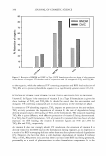
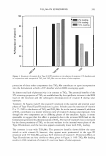
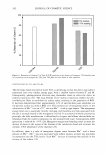
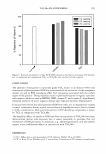
J. Cosmet. Sci., 57, 385-395 (September/October 2006) Photostabilization of organic UV-absorbing and anti-oxidant cosmetic components in formulations containing micronized manganese-doped titanium oxide G. WAKEFIELD and J. STOTT, Oxonica Healthcare, 7 Begbroke Science Park, Sandy Lane, Yarnton, Oxford OX5 JPF, UK. Accepted for publication June 12, 2006. Synopsis Micronized titanium oxide (TiO2) and manganese-doped titanium oxide (TiO2:Mn) particles have been incorporated into a variety of oil-in-water (O/W) and water-in-oil-in-water (W/O/W) emulsions in con junction with the UV-absorbing organic compounds butyl methoxydibenzoylmethane (BMDM) and octyl methoxycinnamate (OMC) and with the anti-oxidants vitamin E and vitamin C. The retention of the organics under solar exposure has been shown to be significantly enhanced by the addition of TiO2:Mn to the formulation. In the case of BMDM and OMC, the retention is increased from 20% and 24% to 63% and 83%, respectively, after two hours of solar exposure. In this system, TiO2 particles are shown to provide only limited protection relative to BMDM and OMC. Vitamin E and vitamin C are actively degraded by the presence of TiO2 in the emulsion during solar exposure. This effect is reversed with TiO2:Mn, the use of which can protect 90% of anti-oxidants in both the oil and water phases of the formulation. The absence of reactive oxygen species (ROS) generation and surface scavenging of ROS by TiO2:Mn is responsible for a significantly reduced ROS load on the organic components and consequent photostabilization of the emulsion. INTRODUCTION Incident UV solar irradiation has been implicated in a number of skin pathologies. Conventionally, the UV portion of the solar spectrum is split into two regions, UVB (290-320 nm) and UVA (320-400 nm). UVA comprises 90-95% of incident UV radiation energy at the surface of the earth and penetrates deeper into the skin layer (20-50% can reach the melanocytes) than UVB (1,2). Although the skin penetration depth is much lower in the case of UVB radiation, UVB is approximately 1000 times more effective at causing sunburn and corresponding chromosomal damage as a result of direct UVB absorption, and as such UVB has historically been considered a more likely carcinogen than UVA. However, recent work has called this assumption into question Address all correspondence to J. Stott. 385

386 JOURNAL OF COSMETIC SCIENCE and has implicated UV A radiation in both photocarcinogenesis and photoaging, 1.e., collagen breakdown, of the skin (3-5 ). The mechanisms behind the deleterious effects of UV A radiation appear unified by the presence of reactive oxygen species (ROS), which are generated as a result of reactions with endogenous skin photosenstizers and chromophores. It has been demonstrated that ROS generated in these ways can lead to DNA damage such as strand breaks or mutations and a severe loss of interstitial collagen (5 ,6). The skin's defense mechanisms are principally enzyme- and non-enzyme-based ROS scavengers (anti-oxidants). Enzyme-based systems have superoxide dismutase (SOD) as the principal component, and this group subdivides into Cu, Zn, Mn-SOD. It has been demonstrated that an inhibition of SOD leads to an increase in UV-induced lipid peroxidation and enhanced cellular damage (5). Glutathione peroxidases and catalase are other components of the enzyme defense mechanism (7). The two principal non-enzymatic scavengers are vitamin C, a hydrophilic anti-oxidant, and vitamin E, the most important lipophilic anti-oxidant (8). There is ample evidence that lipid-soluble anti-oxidants, in particular vitamin E, are themselves depleted within human skin during UV exposure, i.e. they are not photostable. Remarkably, a single suberythemogenic (0.75 MED) dose of solar-simulated UV radiation reduced human skin a-tocopherol (one of eight molecules comprising vitamin E) by 50% (9). Modern cosmetic skin protection systems therefore typically comprise two principal groups of active components, UV absorbers and anti-oxidants. The UV absorber group may be further subdivided into organics, such as butyl methoxydibenzoylmethane (BMDM) and octyl methoxycinnamate (OMC), and inorganics, principally fine-particle titanium dioxide (TiO2). Both present technical challenges: photostability (particularly in the case of UV A absorbers) in the case of organics and photoactivity in the case of TiO2 (10-12). The photoactivity of TiO2 is particularly important, as ROS generated within the cosmetic emulsion will be scavenged by anti-oxidants that will therefore not be available during topical application. It has recently been demonstrated that the incorporation of manganese ions within the lattice of TiO2 acts to quench free-radical generation, scavenge free radicals, and increase UVA absorbance. These improved TiO 2 properties manifest in a stabilization of organic UV-absorbing components during solar exposure (13). In the current paper, we extend the study of the properties of manganese-doped titanium dioxide (Ti0 2 :Mn) to include the interaction of the material with 1-ascorbic acid (vitamin C), vitamin E, BMDM, and OMC in oil-in-water emulsions. Vitamin C is very sensitive to light, oxidizing agents, metal ions, and heating. However, its important biological functions have made the stabilization of this compound an important research topic in cosmetic science. A number of approaches to the stabilization of vitamin C have been described in the literature, of which the most promising appears to be incorporation into the internal water phase of a water-in-oil-in-water (W/0/W) emulsion (14-18). Consequently, we compare the solar photostability of vitamin C in both the external water phase of an O/W emulsion and the internal water phase of a W/O/W emulsion. The interactions of TiO 2 :Mn particles (50-60 nm) with organic actives are compared to those of a standard cosmetic grade Ti 02, Degussa T805.
Purchased for the exclusive use of nofirst nolast (unknown)
From: SCC Media Library & Resource Center (library.scconline.org)