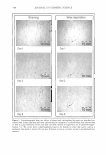
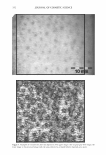
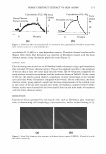
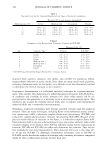
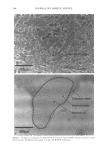
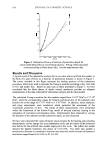
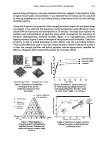
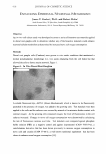
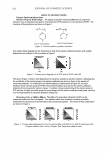
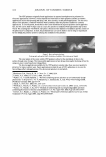
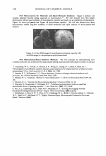
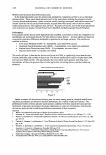
TiO2:Mn IN SUNSCREENS 387 EXPERIMENT AL PROCEDURES SYNTHESIS OF O/W AND W/O/W EMULSIONS Uncoated TiO2 :Mn (50-60 nm) was used as supplied by Umicore. The material was compared to 10-100 nm octylsilane-coated rutile TiO 2 used as supplied by Degussa. Type I emulsions. Type I O/W sunscreen emulsions were formulated containing 3% BMDM and 5% OMC in conjunction with 5% TiO 2 and 5% TiO 2 :Mn. The oil phase consisting of the UV filters was heated to 65°C with vigorous stirring to ensure com plete dispersion of all the active ingredients. The water phase was also heated to 70°C, and on complete dissolution of the ingredients the heated oil phase was added slowly under homogenization. After complete addition of the oil phase, the final formulation was left to cool to room temperature. Type II emulsions. Type II O/W anti-aging emulsions were formulated to test the stability of vitamin C and vitamin E. The vitamin C formulations consisted of Ti0 2 in the oil phase and 5 % vitamin C in the water phase. The vitamin E formulations consisted of both 5% vitamin E and the titanium dioxide in the oil phase. These formulations were then made up in the same way as the Type I O/W formulations. Type III emulsions. Type III W/0/W emulsions were prepared by a two-step process. In the first step an overall concentration of 3% 1-ascorbic acid was combined with anhy drous MgSO4 and dissolved in water to constitute the internal water phase (W 1). This internal water phase was then adjusted to pH 7 through the addition of 10 wt% NaOH solution. The total internal water phase was then made up to a known volume through the addition of water. The oil phase was prepared by heating Puresyn 4, Dehymuls LE to 70°C and then adding the titanium dioxide slowly while homogenizing at 7000 rpm. Once addition of the titanium dioxide was complete and a uniform dispersion was obtained, the internal water phase was added slowly, with homogenizing at the same rate, to create the primary W/O emulsion. The primary emulsion was then left to cool to room temperature. The second step of the process required the very slow addition, about 15 g/min, of the primary emulsion, while shear mixing at 4000 rpm into the external water phase containing the Poloxamer 407. After an additional five minutes of homogenization after addition of the primary W/O emulsion was completed, the emulsions were stabilized sterically through the addition of xanthan gum. Structure of emulsions. Micrographs showing the principal features of Type I and Type III emulsions are given in Figure 1. Type I emulsions are 0/W (Figure lA), with a typical droplet size in the oil phase of 10-20 µm. Type III W/O/W emulsions, (Figure lB) are more complex, with an internal water phase droplet size of sub 10 µm and an internal oil phase droplet size of, on average, 500-800 µm. This is surrounded by the external water phase (19-21). ANALYSIS OF EMULSIONS Vitro-Skin™ substrate for UV-visible absorption experiments was purchased from IMS Testing Group, USA. The substrate was cut into 6 x 9-cm rectangles and placed in a

388 JOURNAL OF COSMETIC SCIENCE Figure 1. (A) Optical micrograph of a Type I O/W formulation. Type II O/W formulations show a similar microstructure. (B) Optical micrograph of a Type III W/O/W formulation.
Purchased for the exclusive use of nofirst nolast (unknown)
From: SCC Media Library & Resource Center (library.scconline.org)