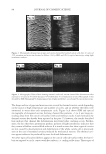
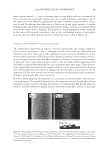
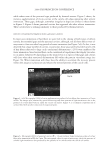
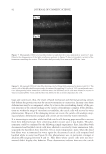
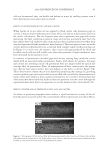
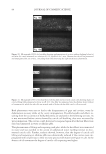
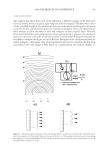
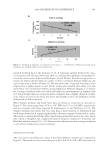
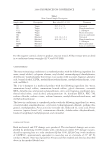
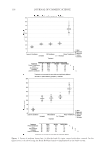
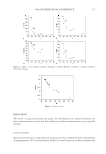
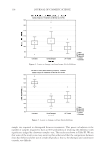
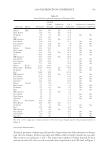
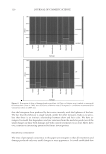
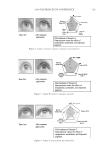
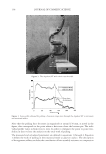
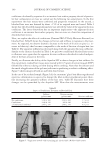
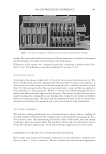
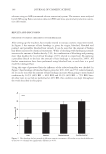
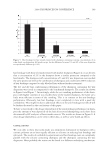
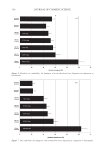
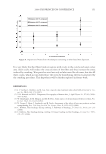
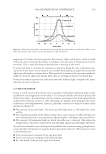
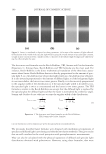
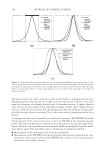
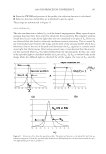
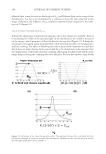
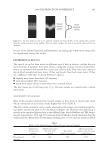
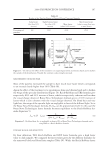
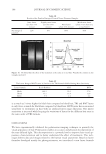
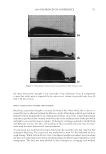
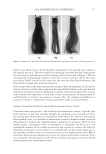
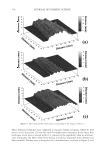
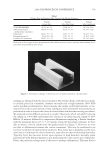
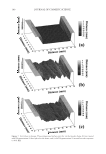
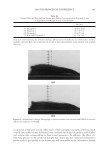
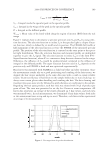
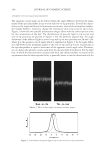
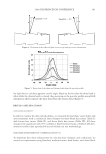
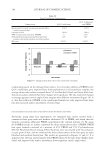
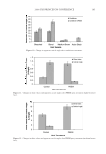
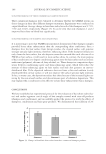
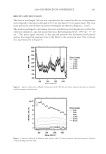
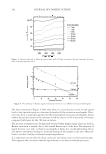
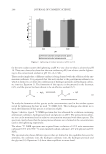
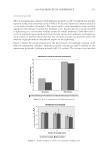
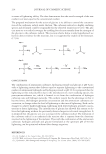
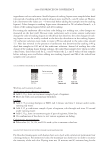
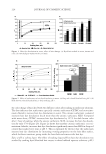
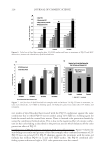
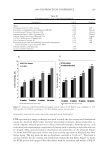
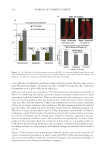
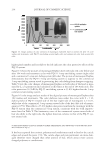
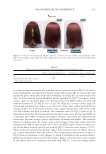
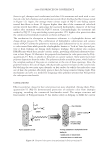
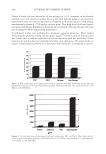
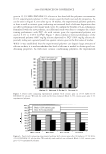
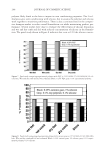
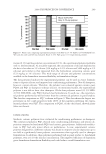
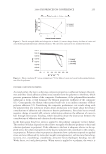
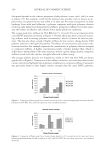
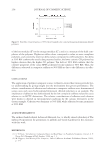
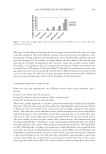
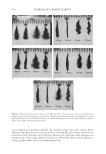
JOURNAL OF COSMETIC SCIENCE 94 Both phenomena were seen to lead to the disappearance of gaps and cavities water by deformation recovery while oil by cavity impregnation. Possible benefi ts and effects re- sulting from the occurrence of both phenomena are analyzed in the following sections. As it was mentioned before cavities formed by cuticle cell buckling close once recovered by water immersion. The cavities could, however, be reopened again after the hair fi bers were dried and immersed in water at alkaline pHs. This phenomenon of lifting and reopening took place while the hair fi bers were immersed in water and was ascribed to the action of unbalanced water swelling stresses in dece- mented cuticle cells. Further, analysis showed, however, that the degree of cuticle cell lifting and reopening at alkaline pHs was substantially reduced if the cavities were im- pregnated with oil previous to their recovery process with water (see Figure 11a,b). In the absence of oil treatment the degree of cuticle cell reopening was higher. Figure 11. Micrograph (250×) of two hair fi bers with buckled and recovered cuticle cells showing degree of cuticle lifting while immersed in water at pH 10.0. One fi ber was immersed into the alkaline water without oil treatment (a), while the other (b) was treated with oil before the buckled cuticle cells recovered. Figure 10. Micrographs (300×) of a hair fi ber showing agglomerations of cavities without bulging before (a) and after (b) it was immersed in a solution of 0.1% Jojoba oil for 3 min. Observe that the oil has penetrated and impregnated the air cavities, concealing them and destroying the light interference phenomena.

2008 TRI/PRINCETON CONFERENCE 95 These observations suggest that the presence of oil in recovered cavities prevents the oc- currence of cuticle cell lifting at alkaline pHs by the combined action of the two follow- ing mechanisms, namely: (a) by the oil acting as a hydrophobic barrier that decreases rapid swelling stresses as water diffuses into the cuticle cells, and (b) by the oil acting as a weak adhesive cement between two separate cuticle cells. The action of both mecha- nisms seems necessary to explain the reduction in cuticle cell lifting at alkaline pHs. For instance, the presence of oil in the recovered cavities or gaps acts as a barrier that decreases steep gradients of swelling. However, eventually the cuticle cells swell and reopen again if the oil does not provide enough adhesion between cuticle cells. CONCLUSIONS The experimental results discussed in the previous paragraphs indicate that the analysis of gap and microcavity formation in cuticle cells by light interference techniques can yield important information when water and oil are allowed to penetrate into these defects. Gaps and microcavities produced by reversible deformations were seen to close by a plasticization effect induced by water. However, the phenomenon of gap and cavity closing alone did not prevent the cuticle cells from reopening again when the hair fi bers were immersed in water at alkaline pHs. In contrast, when the phenomenon of cavity closing by water plasticization was combined with oil penetration, the degree of cuticle cell reopening was substantially reduced. Water penetrates into the cuticle cells and allows for recovery of the protein struc- ture by plasticization. However, water penetration also induces swelling stresses that buckle the cuticle cells if they are decemented. The protective role of oils or lipids may arise, thus, from their capacity to act as a barrier preventing rapid diffusion of water and swelling, and also from their ability to produce a weak adhesion at cuticle cell junctions. REFERENCES (1) C. R. Robbins, Chemical and Physical Behavior of Human Hair , 4th. ed. (Springer-Verlag, New York, 2002), pp. 211–206. (2) J. A. Swift, “The Hair Surface,” in Hair Research, Orfanos Montagna, Ed. (Stuttgen-Springer-Verlag, New York, 1994), pp. 211–226. (3) S. B. Reutsch and H. D. Weigmann, Mechanism of tensile stress release in the keratin fi ber cuticle I, J. Soc. Cosmet. Chem., 47, 13–26 (1996). (4) M. Gamez-Garcia, Patterns of light interfernce produced by damaged cuticle cells in human hair, J. Cosmet. Sci., 58(4), 269–282 (2007). (5) S. Nagase, S. Shibuichi, K. Ando, E. Kariya, and N. Satoh, Infl uence of internal structures of hair fi ber on hair appearance. I. Light scattering from the porous structure of the medulla of human hair, J. Cosmet. Sci., 53(2), 89–100 (2002). (6) M. Gamez-Garcia, Cuticle decementation and cuticle buckling produced by Poisson contraction on the cuticular envelope of human hair, J. Soc. Cosmet. Chem., 49, 213–222 (1998). (7) M. Gamez-Garcia, The cracking of human hair cuticles by cyclical thermal stresses, J. Soc. Cosmet. Chem., 49, 141–153 (1998). (8) M. Yoshinori, N. Hirofumi, and I. Genji, Characterization of the lipid composition at the proximal root regions of human hair, J. Cosmet. Sci., 56(1), 1–16 (2005). (9) M. Feughelman, Mechanical Properties and Structure of Alpha-Keratin Fibers: Wool, Human Hair and Related Fibres, University of New South Wales Press, 1997. (10) S. B. Hornby, Y. Appa, S. Ruetsch, and Y. Kamath, Mapping penetration of cosmetic compounds into hair fi bers using time of fl ight secondary ion mass spectroscopy (TOF-SIMS), IFSCC Magazine, 8, 99– 104 (2005).
Purchased for the exclusive use of nofirst nolast (unknown)
From: SCC Media Library & Resource Center (library.scconline.org)