J. Cosmet. Sci., 60, 97–109 (March/April 2009) 97 The behavior of hair from different countries CRYSTAL E. PORTER, FELICIA DIXON, CHO-CHO KHINE, BRADFORD PISTORIO, HAROLD BRYANT, and ROLAND de la METTRIE, L’Oréal USA— L’Oréal Institute for Ethnic Hair and Skin Research, Chicago, IL (C.E.P., F.D., C.-C.K., B.P., H.B.), and L’Oréal Recherche, Rio de Janiero, Brazil (R.d.l.M.). Synopsis The properties of curly hair from different countries were assessed using geometrical measurements from a laser scanning micrometer and a new hair shape classifi cation method. In addition, tensile tests, 2-D gel electrophoresis, and differential scanning calorimetry (DSC) were performed. Results concluded that hair characteristics are infl uenced by the degree of curl. For example, curlier hair tended to be more fragile. Inter- estingly, the degree of curl in hair also was dependent upon the country of origin. DSC and 2-D gel electro- phoresis showed that the thermal behavior and the protein markers in hair differed as a function of hair origin. The variability seen in hair characteristics may potentially infl uence how the hair responds to treat- ment and these differences could be caused by regional and cultural diversities in the population from where the hair originated. INTRODUCTION Interest in ethnic hair is growing in the cosmetic science fi eld and a number of researchers have reported on the effect of hair type on hair characteristics that pertain to cosmetic attributes such as visual appearance, manageability and response to treatment (1–4). Keis et al. studied macroscopic characteristics of hair from different ethnic groups to under- stand how ethnicity infl uenced luster (1). They showed that variables such as fi ber diam- eter, cross-sectional shape, and curvature had an impact on luster. Thus, products to modify these characteristics can be considered when enhancing the visual appearance of hair. Garcia and Diaz have shown that the manageability of African-American hair is more challenging compared to Caucasian hair because the increased degree in curl makes it necessary to use much more force during combing (3). Appropriate surface-enhancements and hair assembly treatments and processes can overcome combing obstacles and thus, manageability can be increased. Researches have also found that hair type can infl uence how the hair responds to treat- ments (4). This is particularly important as it pertains to hair from people of African descent because of its inherent fragility compared to people of other races. In addition, there are hair styles and treatments, such as braids and relaxers, that are common within

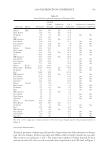
JOURNAL OF COSMETIC SCIENCE 98 the Black population. The impact of these styling regimes may be intensifi ed due to in- herent properties in hair. As such, there is a need to understand the intrinsic characteris- tics of Black hair. Even though contributions in knowledge have been made (1–21), there is still limited information about hair from people of African descent. Among what is available in the literature, most researchers group hair from this population to compare it to other ra- cial groups, such as Asian and Caucasian, or they use low sample numbers because of limited availability of untreated hair. Within the Black population, it is often per- ceived that hair behaves differently depending on the country of origin. To date, sys- tematic studies have not been performed to understand the characteristics of hair within one racial group with different origins. This study investigates the behavior of curly hair of African descent that originates from different countries to better understand their specifi c needs. MATERIALS AND METHODS HAIR SAMPLES Curly untreated hair from people of African descent was collected from several countries including Ghana (GA n=35), Jamaica ( JA n=50), Kenya (KE n=50) Liberia (LI n=34), and the United States (US or AA n=75). Information about the participants’ ethnic background was obtained and only participants who were self-identifi ed as a member of the country-specifi ed ethnic group were categorized as such. Thus, the country from where the hair came and its respective ethnic group are used interchangeably throughout this paper. HAIR PREPARATION All hair was individually swatched and washed using a 10% ammonium lauryl sulfate solution for 1 minute followed by 1 minute of rinsing in 40°C tap water. The hair was then equilibrated in an environmental chamber at 45% relative for a minimum of 12 hours. AMINO ACID ANALYSIS To validate the untreated status of the hair, amino acid analysis on fi nely chopped hair samples from each subject was performed using acid hydrolysis in sealed tubes with ro- tary stirring at 120°C. The hair hydrolyzates were then analyzed on an L-8800 Amino Acid Analyzer (Hitachi, Tokyo, JPN) using ion exchange chromatography for amino acid separation. Amino acids were detected colorimetrically with ninhydrin after post-column derivatization. Lanthionine, cysteic acid, and tyrosine were selected as quality markers. The allowable limit of lanthionine was set at less than 0.5 g / 100 g amino acids. Quality limits for cysteic acid and tyrosine were less than 1.0 g / 100 g amino acids and greater than 1.8 g / 100 g amino acids, respectively. Samples were run in duplicate and only hair that met the requirements for quality was used in the study.
Purchased for the exclusive use of nofirst nolast (unknown)
From: SCC Media Library & Resource Center (library.scconline.org)