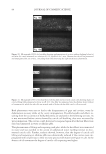
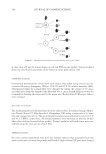
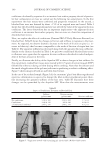
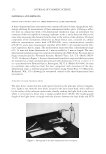
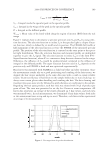
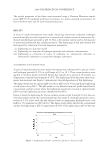
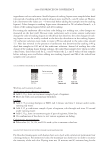
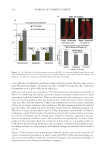
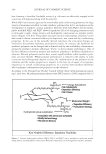
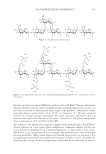
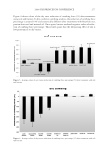
JOURNAL OF COSMETIC SCIENCE 252 Industrial composites start with the polymer and add fi bers for reinforcement there is a critical amount of fi bers that must be achieved for strengthening. In contrast, fi xative composites start with fi bers (hair), and a minimum amount of polymer gel must be used to achieve composite strength properties. As is the case for the industrial composites, the hair fi bers provide the primary strength to the fi xative composite. (With respect to fi xa- tive gel products, this sometimes goes against popular belief.) In both cases, it is impor- tant that the polymer adheres to the fi bers (2). The fi xative gel glues multiple hair fi bers together, creating a composite fi ber with a larger effective diameter, and thus, higher stiffness. Good adhesion between the polymer and the fi bers allows stress transfer be- tween the polymer and fi ber and is necessary to achieve composite properties. Polymer cohesion, which is affected by molecular weight, architecture, crystallinity, polar interac- tions, hydrogen bonding, environmental conditions and additives, contributes to the composite strength when there is suffi cient polymer-hair adhesion (3). To demonstrate the connection of composite science and cosmetic formulation, the effect of cationic substitution on the polymer fi lm and the composite mechanical properties will be shown for cassia and two experimental hydroxypropyltrimonium chloride derivatives (Lubrizol Advanced Materials, Inc., Noveon® Consumer Specialties). Film testing will show how the cationic charge density affects the cohesive properties of the polymer, and testing fi xative-hair composites will provide a measure of the combined adhesive and cohesive properties. The results will be considered with respect to polymer composite principles, and the implications for the balance of adhesion and cohesion in fi xative mech- anisms will be discussed. EXPERIMENTAL MATERIALS Cassia gum (cassia tora and cassia obtusifolia) and experimental cassia hydroxypropyltri- monium chloride (cassia HPTC) polymers, with cationic substitution levels of 1.8 and 3.0 meq/g, were used for this work. The average repeat units of cassia and cassia HPTC with a charge density of 3.0 meq/g are shown in Figures 1 and 2, respectively. Preparation of these derivatives has been described elsewhere (4). Polymer dispersions were prepared using 0.5, 1.0 and 2.0 weight percent (solids) cassia polymer. The cassia HPTC polymers were cold- water dispersed, and cassia gum was heated to 80°C for 30 minutes to disperse. SAMPLE PREPARATION AND METHODS Polymer fi lms were prepared by pouring the dispersions into Tefl on-coated foil troughs and allowed to evaporate for a minimum of seven days at 23°C, 50% relative humidity (RH). The resultant dry fi lm was approximately 0.20 mm thick. Tensile testing of the fi lms was done with a TA.XT.Plus® Texture Analyser (Texture Technologies). All testing was performed at 23°C, 50% RH using the sample geometry described in ASTM D 882-02 (5) and a rate of 5 cm/min. Tensile strength, calculated as the maximum of the stress versus strain curve, and elongation at break were obtained for comparison.

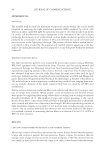
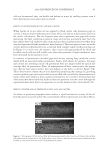
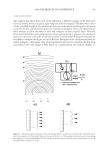
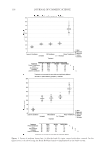
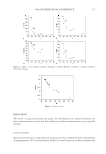
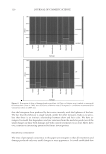
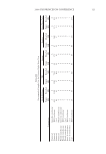
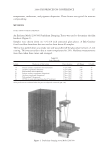
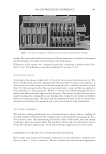
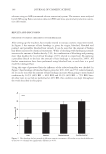
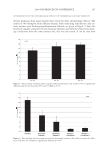
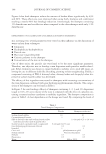
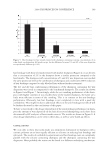
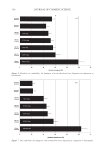
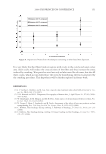
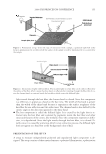
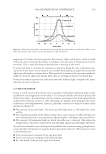
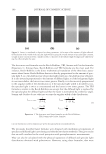
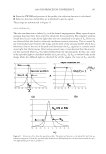
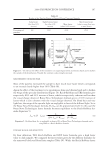
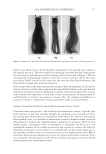
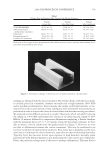
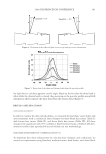
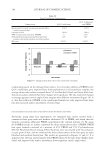
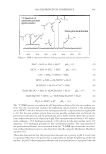
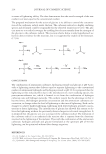
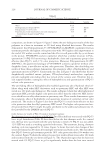
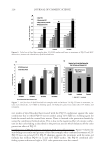
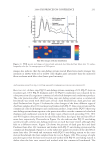
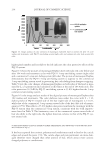
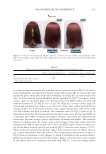
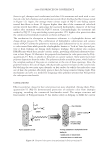
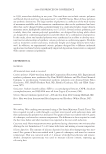
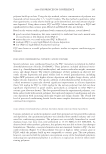
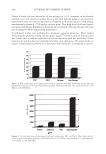
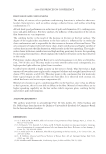
2008 TRI/PRINCETON CONFERENCE 253 Dynamic mechanical analysis (DMA) was performed on a TA RSA3 Dynamic Mechanical Analyzer (TA Instruments) using rectangular samples of polymer fi lm. Strain sweeps were fi rst done in tension to determine the linear range of the polymers. Temperature sweeps were then done in tension from -50 to 250°C at a frequency of 1 Hz and a strain of 0.001% in a nitrogen-purged atmosphere. The glass transition temperature (Tg) was chosen as the onset of the decrease in the elastic modulus (E ). Frequency sweeps were done in extension at 23°C and 50% or 90% RH. The stiffness of the fi xative-hair composite samples was performed using a TA.XT.Plus® Texture Analyser in a three-point bend confi guration. Composite samples for this test were prepared by applying 0.8 g of polymer dispersion to virgin Chinese hair tresses, which were 2.5 g in weight and 16.5 cm in length. The prepared tresses were sandwiched between perforated, Tefl on-coated plates and clamped using spacers to maintain a fl at, rectangular geometry while the samples were dried for 24 hours at 23°C, 50% RH. For high humidity testing, the dried samples were conditioned for an additional 24 hours at Figure 1. Average repeat unit for cassia. Figure 2. Average repeat unit for cassia hydroxypropyltrimonium chloride at a substitution level of 3.0 meq/g.
Purchased for the exclusive use of nofirst nolast (unknown)
From: SCC Media Library & Resource Center (library.scconline.org)