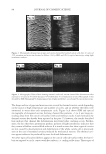
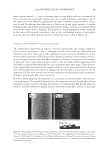
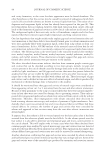
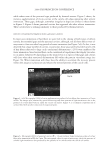
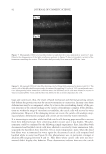
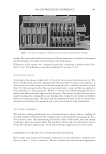
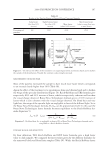
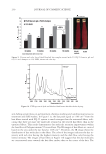
2008 TRI/PRINCETON CONFERENCE 101 with 6.5–7.5 mg of this blended hair and 50 μl of deionized water was added. The sam- ples were allowed to equilibrate overnight at 22 ± 2°C. All samples were then thermally characterized using a Q100 DSC (TA Instruments, New Castle, DE). A total of 5 blended samples that represented each country were run, and the denaturation temperature (Td) and change in enthalpy (ΔHd) were determined by averaging the 5 values. CHEMICAL ANALYSIS Twenty-three to twenty-fi ve individuals from the 5 different countries were used for two- dimensional polyacrylamide gel electrophoresis (2D PAGE) experiments. Three to fi ve fi bers were selected from each individual and were delipidated in ethanol (25 ml) and in cyclohexane (25 ml) for 20 minutes, successively. The hair was allowed to air dry at ambi- ent temperature and cut into a powder. The hair powder was placed in an extraction solution which contained 7 molar (M) urea, 2 M thiourea, 50 millimolar (mM) 2-Amino- 2-(hydroxymethyl)-1,3-propanediol (trizma), 50 mM dithiothreitol (DTT), and 0.1% Triton ×100 with doubly distilled Millipore water at 40°C for 18 hours. The keratin was post-translationally modifi ed with iodoacetamide in a tris solution prior to dialysis. The protein solution was dialyzed for 3 days in 3500 molecular weight (MW) cassettes sus- pended in water. The extraction solutions were lyophilized to yield white to off-white keratin. Protein was rehydrated in a solution containing 7 M urea, 2% 3-[(3-cholamidopropyl) dimethylammonio]-1-propanesulfonate (CHAPS), 2% sodium dodecylsulfate (SDS), and 0.2% 3-10 Biolyte ampholytes. The protein solution (125 μl) was loaded onto 7 cm im- mobilized pH gradient (IPG) 3-11NL support strips and then active rehydration was performed at 50 V overnight. The fi rst dimension was run on a PROTEAN IEF cell (Bio- Rad, Hercules, CA) with a fast gradient voltage of 8000 V at 10000 V-hr. Both current and temperature were kept constant at 50 μA/gel and 20°C, respectively. The second dimension was performed with Novex Sharp Protein Standard MW markers (Invitrogen, Carlsbad, CA) on 10% bis-tris Invitrogen gels in NuPage MES buffer at 200 V using a XCell SureLock system (Invitrogen, Carlsbad, CA). After each run, the gels were fi xed in an aqueous solution containing 10% acetic acid and 40% ethanol prior to staining with Sypro Ruby stain (BioRad, Hercules, CA) using stan- dard techniques. The gels were destained in 7% acetic acid and 10% ethanol with deion- ized water prior to imaging with the BioRad Molecular Imager Gel Doc XR System (BioRad, Hercules, CA) interfaced to Dell using Quantity One software. Three gels were performed on each sample to assure reproducibility. STATISTICAL ANALYSIS The statistical analyses to determine differences in hair from different countires for the geometrical and mechanical data were based on LSD (22), Duncan (23) and Scheffe (24). Group differences were determined by considering the methods that were consistent in their statistical output. Contrast tests (independent t-tests) (25,26) were used to show ethnic differences in the thermal properties of hair. A Levene test of variance homogeneity (27) showed that ΔHd

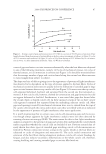
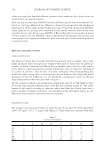
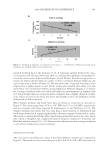
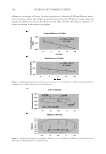
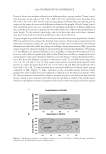
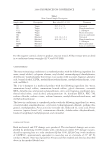
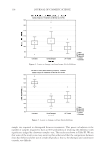
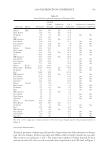
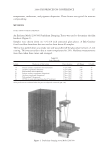
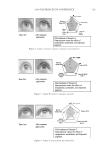
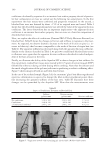
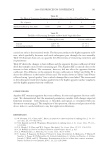
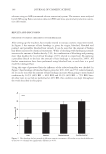
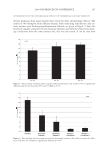
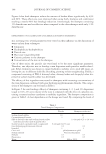
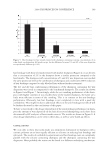
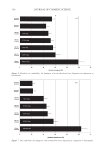
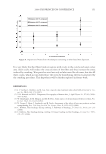
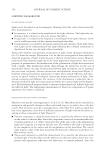
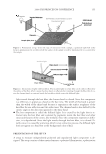
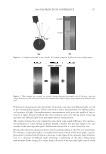
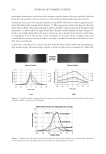
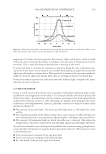
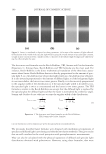
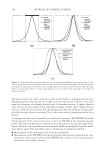
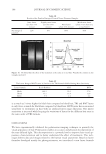
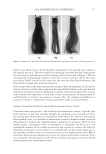
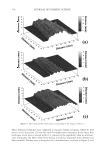
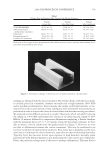
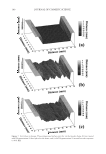
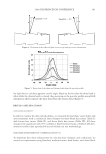
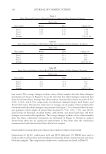
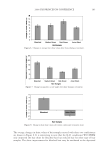
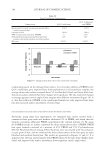
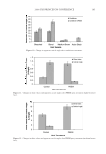
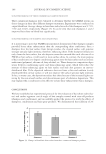
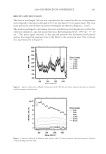
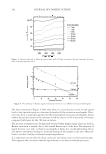
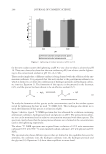
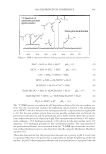
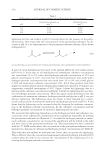
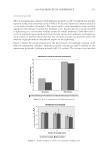
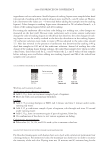
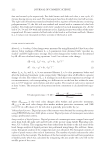
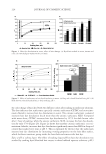
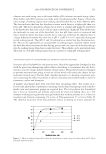
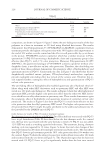
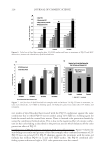
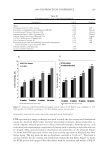
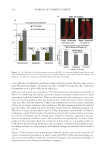
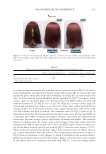
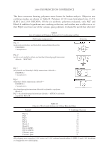
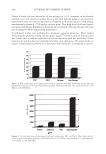
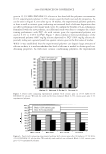
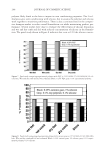
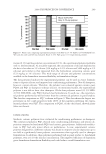
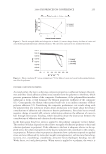
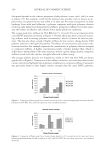
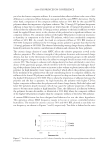
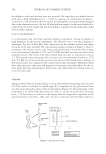
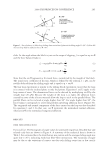
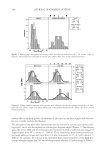
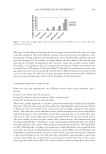
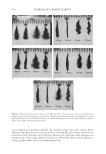
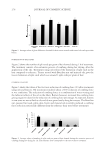
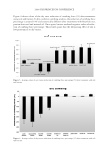
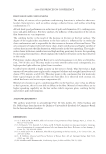
JOURNAL OF COSMETIC SCIENCE 102 values for virgin hair data had different variances across ethnicity, thus, the p-values are assumed to be of unequal variances. Both one-way and two-way ANOVA methods (28) were used to determine whether eth- nicity or curl type infl uenced the differences observed in geometrical and mechanical properties for all the ethnic groups within class types VI and VII. In one-way ANOVA, either ethnicity or curl type was considered for the model, whereas, both factors were considered at one time for two-way ANOVA. A Brown-Forsythe test of equality of means (29) was used for one-way ANOVA, which is appropriate for heterogeneous variances and small sample sizes. Signifi cant differences were indicated only if both methods produced consistent results. RESULTS AND DISCUSSION CURL CLASSIFICATION The degree of curl in hair is usually described using words such as straight, wavy, curly, kinky, and frizzy. These descriptors are adequate when used to characterize the global ap- pearance of Asian, Caucasian and African hair as straight, wavy, and very curly, respec- tively. However, these descriptors are poorly defi ned since they are subjective and depend on a point of reference. They become even more inadequate when distinguishing hair within one ethnic group thus, to overcome this obscure method of describing the global appearance of hair, de la Mettrie et al. (5) developed a classifi cation system on the hair shape measurements that were described in Figure 1. For the countries studied, curl classifi cation ranged from type IV to VIII (Table I). Type IV was the least populated whereas most of the hair was classifi ed as type VI. The distri- bution of curl varied according to ethnicity where hair from the United States had a greater number of samples with looser curls and Kenyan hair the highest degree in curl. Hair from other countries varied between two extremes. INFLUENCE OF CURL The average cross section and ellipticity values for hair of curl types IV–VIII ranged from 3296–5176 μm2 1.58–1.73, respectively (Figure 3). These values are consistent with those Table I Curl Class Distribution I II III IV V VI VII VIII AA 0 0 0 3 50 7 15 0 JA 0 0 0 0 10 32 7 1 GA 0 0 0 0 0 22 10 3 LI 0 0 0 1 2 26 4 1 KE 0 0 0 0 2 29 9 7 Total 0 0 0 4 64 116 45 12
Purchased for the exclusive use of nofirst nolast (unknown)
From: SCC Media Library & Resource Center (library.scconline.org)