J. Cosmet. Sci., 60, 261–271 (March/April 2009) 261 Infl uence of functionalized silicones on hair fi ber–fi ber interactions and on the relationship with the macroscopic behavior of hair assembly ANNE DUSSAUD and LARA FIESCHI-CORSO, Momentive Performance Materials, 769 Old Saw Mill River Road, Tarrytown, NY 10591. Synopsis It is well established that silicones alter hair surface properties and that silicones have a signifi cant impact on the macroscopic behavior of hair assembly, such as visual appearance, combing performance and manageabil- ity of the hair. In order to fi ne-tune the chemistry of functionlized silicones for specifi c consumer benefi ts and hair types, we investigated the infl uence of silicones on hair fi ber–fi ber interactions and their correlation to hair volume. The incline plane fi ber loop method, implemented with a high-precision motorized rotary stage, was used to quantify the fi ber–fi ber interactions. Low load static friction was studied as a function of polymer molecular weight, dose and chemical architecture. This information was related to the macroscopic behavior of hair assembly, using virgin curly hair in high humidity. INTRODUCTION Hair assembly behavior is driven by geometrical factors, mechanical properties and the local interactions between fi bers. Although conditioning polymers primarily affect local interactions between fi bers, a clear understanding of the role of polymers on fi ber/fi ber interactions is lacking. In a recent study, Bushan investigated, at a very fi ne length scale using AFM technique (1), hair surface treated with conditioners. These measurements displayed evidence that conditioners accumulate along the edge of cuticles and increase the adhesive force between the AFM tip and the hair substrate. The magnitude of this adhesive force was attributed to the capillary force created by the conditioner fl uid material on the AFM tip and, there- fore, scaled with the size of the probe. Earlier, an elegant method, which consisted of measuring the sliding angle of a single hair loop on two parallel fi bers (2–3), was developed to measure fi ber–fi ber interactions. In this technique, the contact area is the intersection of two cylindrical hair fi bers, crossing perpendicularly. The technique measures frictional and adhesive forces in the range of μN. In addition to its simplicity, the hair loop measurement technique presents several advantages:

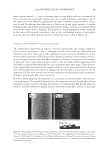
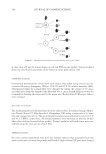
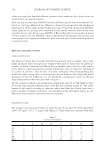
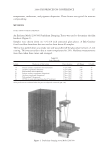
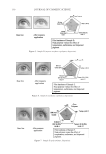
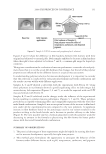
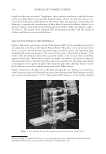
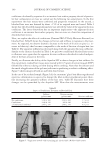
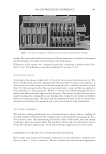
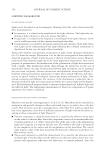
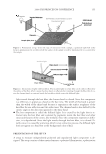
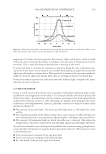
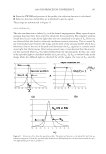
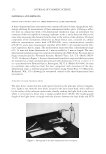
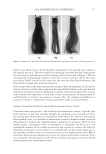
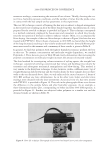
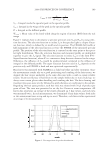
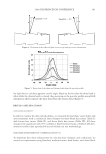
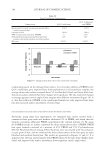
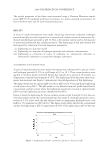
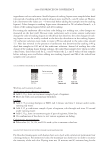
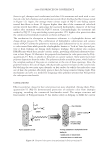
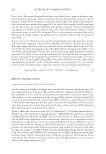
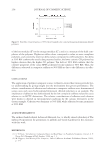
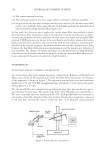
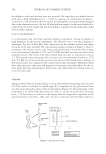
JOURNAL OF COSMETIC SCIENCE 262 (i) The contact materials are hair. (ii) The technique operates in a force range, which is relevant to the hair assembly. (iii) In spite of the fact that the technique involves very low load (10 μN) and a very small contact area, multiple slides along the hair length allow probing the distribution of interaction forces along the hair fi ber length (cm). In this work, the objective was to exploit the incline plane fi ber loop method to deter- mine hair fi ber–fi ber interactions induced by silicones, focusing in particular on under- standing the properties of block copolymer silicones versus the traditional straight PDMS polymer. PDMS polymers are known to be very fl exible and mobile, whereas the hydro- philic polar blocks of copolymer silicones interact with the hair substrate, restraining the mobility of the silicone segments. An additional objective was the identifi cation of links between the hair fi ber–fi ber interaction measurements and the macroscopic behavior of hair assembly. The changes of volume and shape of curly hair tresses at high humidity were observed to determine whether the presence of silicones increased fi ber-fi ber interac- tions, reducing the frizziness of curly hair at high humidity. EXPERIMENTAL INCLINE PLANE FIBER LOOP APPARATUS AND PROCEDURE An incline plane fi ber loop method apparatus, adapted from Robbins and Howell and Mazur, was created for the quantifi cation of the hair fi ber–fi ber interactions. A schematic of the apparatus is shown in Figure 1. The apparatus was enclosed in an environmental chamber at 25°C and 50% RH. A single hair loop, of diameter 3.8 cm, slid on two paral- lel hair fi bers (L = 10 cm). The two parallel fi bers were mounted on an aluminum plate that was attached to a preci- sion motorized rotary stage. The rotary stage (CZ7) from Thorlabs was controlled by a DC servo controller that was interfaced with a PC. Each parallel fi ber was mounted at each end by a brass fl at clamp from Diastron, A nylon thread with a closed loop connected to the hair fi ber allowed the tension of the hair fi ber to be adjusted, using standard Figure 1. Incline plane hair loop apparatus.
Purchased for the exclusive use of nofirst nolast (unknown)
From: SCC Media Library & Resource Center (library.scconline.org)