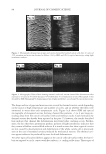
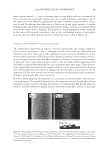
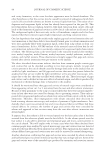
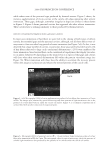
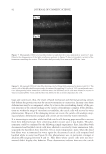
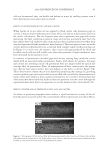
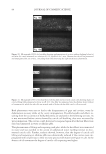
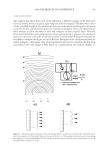
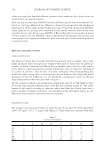
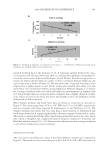
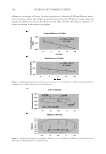
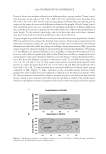
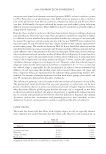
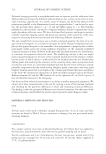
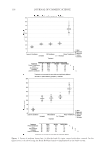
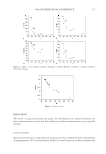
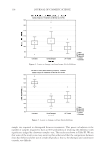
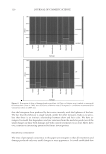
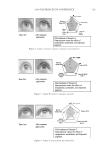
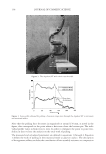
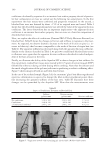
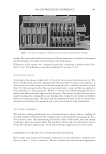
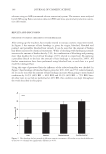
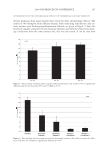
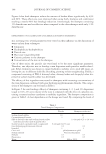
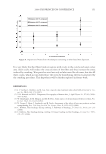
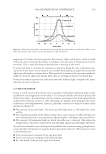
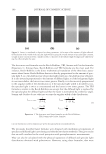
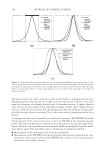
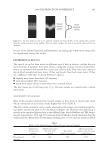
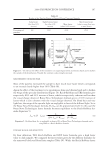
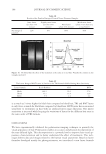
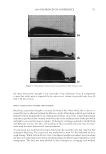
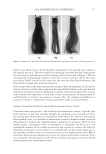
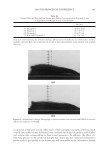
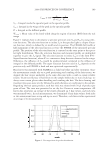
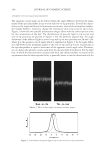
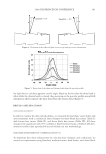
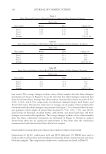
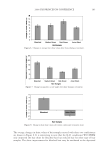
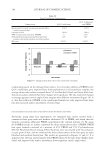
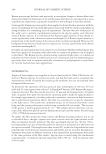
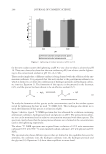
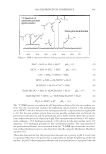
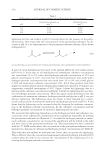
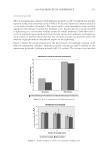
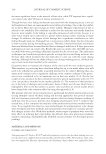
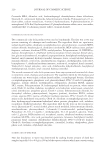
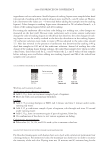
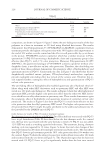
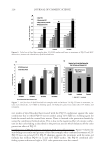
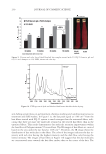
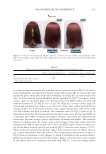
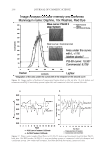
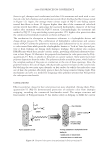
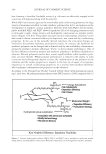
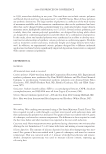
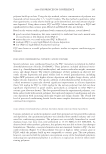
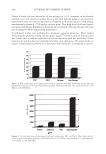
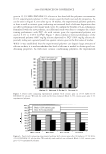
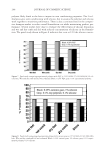
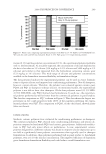
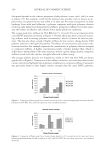
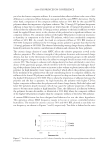
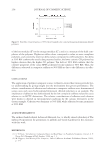
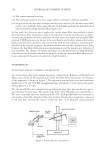
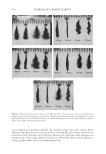
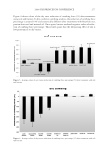
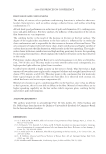
JOURNAL OF COSMETIC SCIENCE 140 coeffi cient calculated by equation 4 is an intrinsic hair surface property devoid of particu- lar hair confi guration or mass we carried out the following two experiments. In the fi rst experiment two hair tresses were combined and properties measured. In the second, a bleached hair tress was thinned by about ~15% of its original mass and tested. Table I shows that the described manipulations have not altered the value of the apparent friction coeffi cient. The latter observation has an important implication—the apparent friction coeffi cient is an intrinsic hair surface property that can serve as a basis for comparison of dissimilar hair tresses. Next, we explore the effect of conditioner (Pantene PRO-V Daily Moisture Renewal) on bleached hair. Table II shows the changes to friction and stiffness in response to the treat- ment. As expected, we observe dramatic decrease to the work of friction on pins (i.e. in- crease in lubricity) that becomes comparable to the work of friction of virgin hair (see Table I). The apparent stiffness has decreased along with the apparent friction coeffi cient. Similar to the exercise described in Table I, we pair two conditioned bleached hair tresses to illustrate once again that the apparent friction coeffi cient described is indeed indepen- dent of the hair amount in the tress. Finally, we illustrate the ability of the Aqualon SLT to detect changes in hair stiffness. In this experiment, washed hair tresses were treated with 0.25 gram of texturizing gel (DEP) followed by either air drying or blow drying while combing. Note that the amount and the mode of application of the gel was judicious in producing a realistic stiffening effect. Figure 5 shows images of both air and blow dried tresses. In the case of the air dried sample (Figure 5A), the treatment ‘glues’ hair fi bers together and repetitive deformation is expected to disrupt the fi ber-to-fi ber attachment points there- fore decreasing the apparent stiffness of the hair tress. Table III illustrates how these changes can be quantifi ed by the Aqualon SLT. Note that the measurements were Table II Impact of Conditioner Treatment on Bleached Hair Stiffness (g-force mm) Friction on pins (g-force mm) Friction coeffi cient No conditioner 1340 ± 100 2230 ± 200 1.7 ± 0.2 Conditioner 1140 ± 110 960 ± 140 0.8 ± 0.1 2 Conditioned combined 2760 ± 170 2390 ± 170 0.9 ± 0.1 Figure 5. Virgin tress treated with texturizing gel. (A) air dried. (B) blow dried tresses.

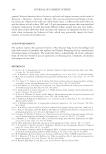
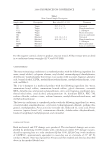
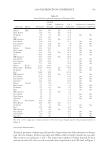
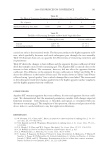
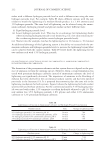
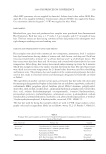
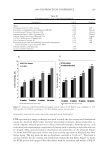
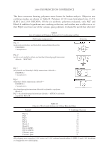
2008 TRI/PRINCETON CONFERENCE 141 Table III The Effect of Texturizing Treatment on Apparent Stiffness of Air Dried Virgin Hair Tress No. of passes 1 2 3 4 5 Apparent stiffness (g-force mm) 3300 2400 2100 1850 1790 Table IV The Effect of Texturizing Treatment on Blow Dried Virgin Hair Tress Stiffness (g-force mm) Friction coeffi cient Control 1120 ± 30 1.5 ± 0.1 Texturizing treatment 1400 ± 100 1.4 ± 0.2 carried out only in the rotational mode. The fi rst pass produces the highest apparent stiff- ness, which gradually decreases with each subsequent pass through the test assembly. Table III illustrates how one can quantify the effectiveness of texturizing treatment and its persistence. Table IV shows the changes to hair stiffness and the apparent friction coeffi cient of blow dried hair samples treated with texturizing gel. The Aqualon SLT accurately detects the increase in hair stiffness. The treatment, however, did not affect the apparent friction coeffi cient. The difference in the apparent friction coeffi cients in Table I and Table IV is due to the difference in the batches of hair used. The results shown in Tables I and II were collected using “special quality” hair in which damaged hair is excluded. The tresses used in the subsequent work were regular quality hence the higher apparent surface roughness and the higher apparent friction coeffi cient. CONCLUSIONS Aqualon SLT measures apparent hair tress stiffness, friction and apparent friction coeffi - cient. We demonstrated that the measured parameters correlate with changes expected from hair treatment—both chemical, i.e. bleached, and topical, i.e. treatment with con- ditioner or texturizing gel. The simplicity of the operation, effi ciency and precision of the device make it a useful addition to any hair application laboratory. REFERENCES (1) W. Newman, G. L. Cohen, and C. Hayes, A quantitative characterization of combing force, J. Soc. Cos- met. Chem., 24, 773–782 (1973). (2) Y. K. Kamath and H.-D. Weigmann, Measurement of combing forces, J. Soc. Cosmet. Chem., 37, 111– 124 (1986). (3) P. S. Hough, J. E. Huey, and W. S. Togyesi, Hair body, J. Soc. Cosmet. Chem., 27, 571–578 (1979). (4) C. R. Robbins in Chemical and Physical Behavior of Human Hair, 4th ed., p. 413. (5) L. J. Wolfram and L. J., Albrecht, J. Soc. Cosmet. Chem., 36, 87 (1985). (6) U. Assmus, P. Augustin, H. Hensen, P. Hossel, G. Lang, H. Leidreiter, A. Markowetz, V. Martin, B. Noecker, E. Poppe, M. Pfaffernoschke, H. Schmidt-Lewerkuhne, E. Schulze-zur-Wiesche, A. Schwan- Jonczyk, J. Wood, and F.-J. Wortmann, Determination of the feel of hair after cosmetic treatment— Sensory and objective test methods, IFSCC, 11, 121–128 (2008).
Purchased for the exclusive use of nofirst nolast (unknown)
From: SCC Media Library & Resource Center (library.scconline.org)