J. Cosmet. Sci., 60, 143–151 (March/April 2009) 143 Hair breakage—How to measure and counteract HANS-MARTIN HAAKE, SANDRA MARTEN, WERNER SEIPEL, and WOLF EISFELD, Cognis GmbH, Henkelstr. 67, 40551 Düsseldorf, Germany. Synopsis A system to determine the effi cacy of hair treatments in terms of anti-breakage and split end prevention was developed which involves the repeated combing of hair strands. The device allows ten hair strands to be combed simultaneously. First, the infl uences of chemical hair treatments like bleaching on hair breakage were examined. In a next step, the protective effects of benchmark products from the market were studied. Since nearly all commercial products with anti-breakage claims contain silicones combined with cationic polymers, alternative actives were searched. In a test series with different waxes in shampoo formulations with a variable number of parameters, the particle size was found to be the factor with the strongest infl uence on the amount of wax deposited on the shampooed hair. Therefore, a targeted development was started, resulting in a com- bination of several ethers dispersed in sodium laureth sulfate. Excellent conditioning, anti-breakage and split ends protection properties of the compound were found, showing also a dosage dependency. The latter could be explained by analyzing the amounts of waxes applied on treated hair. In these experiments, a dependency on the concentration in the shampoo was found. INTRODUCTION Anti-hair breakage is one of the most popular claims made for modern shampoos and conditioners. Nearly any brand offers anti-breakage or anti-damage shampoos and condi- tioners, or even some other products like masks. Literature describes several methods to test anti-breakage properties. The most laborious way reported was an in-vivo determination of broken hair fi bers gathered from 15 panel- ists (1). Hair breakage was also tested, applying a tensile strength protocol (2), which may be questioned since the force to pull out hair from the bulb is signifi cantly smaller than the break forces (3) and also depends on the phase of the growth cycle of each hair. Another means to determine the anti-breakage properties of cosmetic products is a re- petitive combing of treated hair strands (4–6). We developed a set-up for such a testing protocol, allowing for an automated parallel combing of up to 10 hair strands. Broken hair fi bers are collected in separated drawers for each strand. Besides hair breakage, the generation of split ends can also be observed and quantifi ed. Address all correspondence to Hans-Martin Haake.

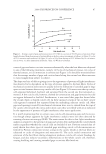
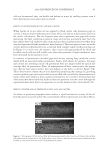
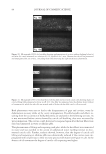
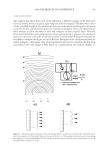
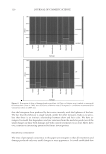
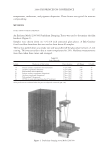
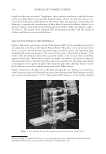
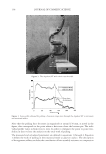
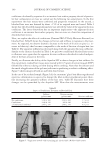
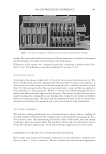
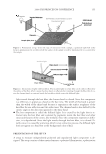
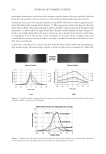
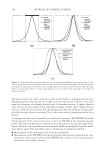
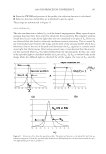
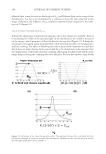
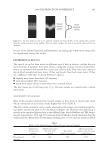
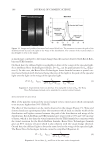
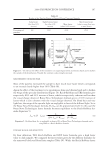
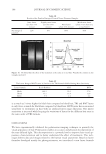
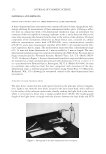
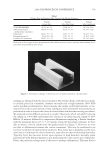
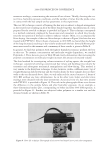
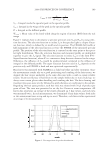
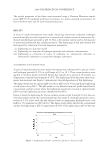
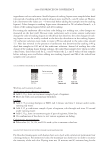
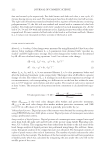
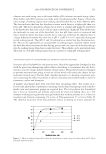
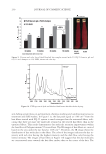
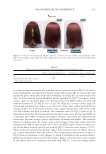
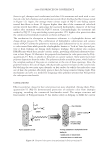
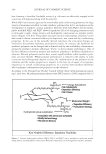
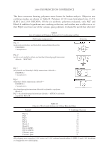
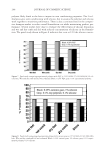
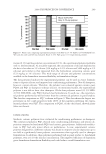
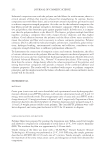
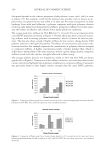
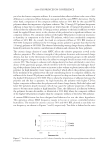
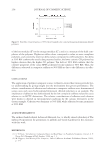
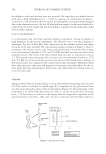
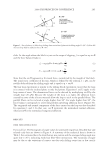
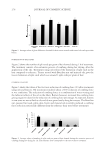
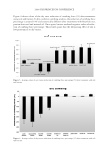
JOURNAL OF COSMETIC SCIENCE 144 We tested the infl uence of hair status on the hair breakage by combing virgin and chem- ically damaged hair (bleached and permanently waved). Several anti-breakage shampoos from the market containing silicones were examined and found to be effi cient in terms of hair breakage protection. As silicones are often regarded less sustainable and biodegradable compared to oleochem- ical ingredients and the usage of silicones in shampoos is very much limited by patents, silicon-free alternatives for anti-breakage effi cacy are of considerable interest. Therefore, several waxes were tested for their deposition on the hair from shampoo formulations. This approach is straight forward also because waxes are often used for shampoos to give them a nice milky or even pearlescent appearance. Several parameters of wax dispersions were tested for their infl uence on the wax amounts deposited on hair. EXPERIMENTAL HAIR STRANDS TREATMENT All experiments are performed using dark brown European hair (from International Hair Importers, New York). If not stated otherwise the strands were bleached applying 5% of hydrogen peroxide (pH 9.4) for 15 min followed by intensive rinsing. Treatment of the hair with shampoo formulations was performed as follows: 0.25 g formulation per 1 g hair was applied on the hair using dyeing brushes for hair dressers. After 5 min incuba- tion time the strands were rinsed with warm tap water (38°C) using a special rinsing device ensuring a water fl ow of 1 l per minute and strand. The whole procedure was re- peated once. For wet combability, the hair strands were taken directly after the second rinsing, for all other methods the strands were dried. For conditioners a similar procedure was applied, but with a single application and only 3 min incubation time. Perming of hair strands was done applying fi rst a perming solution (7% thioglycolic acid, pH 9.5) for 30 minutes, followed by extensive rinsing and the application of fi xation (2.2% hydrogen peroxide, pH 4) for 30 minutes. Subsequent to extensive rinsing the hair strands were dried with hot air for 30 minutes. The persulfate bleaching was performed by a 30 minute treatment of the hair strands with a bleaching solution (6% hydrogen peroxide, 15% ammonium peroxide sulfate, pH 9.4) followed by extensive rinsing and 60 minutes of hot air drying. HAIR BREAKAGE DETERMINATION A customized system was developed, allowing the parallel combing of up to ten hair strands (see Figure 1). Combing was performed by two combs per strand mounted on a motor-driven axis. The broken hair fi bers were collected in drawers made from stainless steel, one for every hair strand. The device was set in a box allowing the control of tem- perature and relative humidity. Standard conditions were 40% relative humidity and 30°C (to avoid an active cooling system). The amount of broken hair was determined gravimetrically after sorting out fi bers longer than 9 cm (which are most probably not broken but pulled out of the glued part of the
Purchased for the exclusive use of nofirst nolast (unknown)
From: SCC Media Library & Resource Center (library.scconline.org)