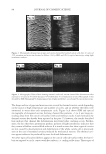
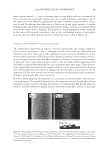
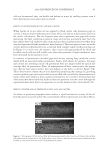
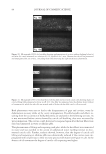
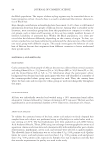
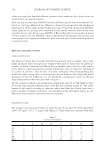
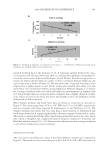
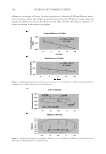
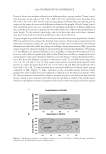
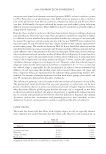
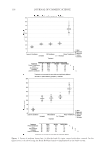
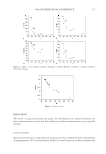
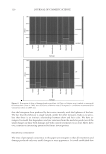
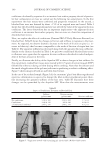
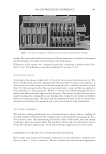
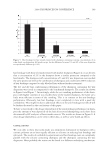
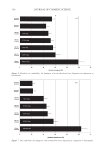
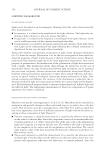
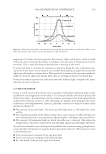
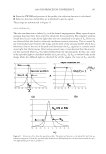
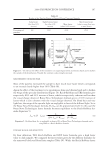
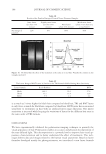
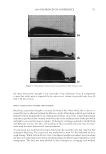
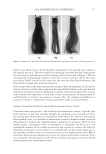
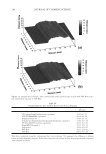
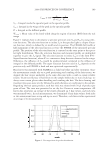
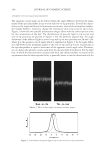
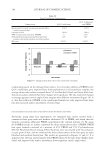
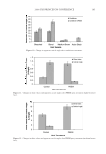
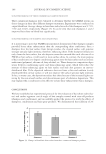
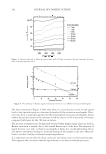
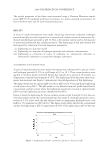
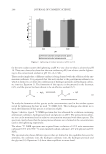
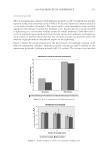
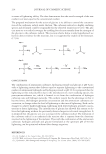
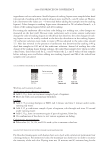
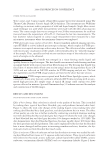
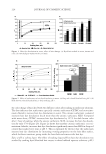
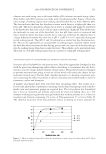
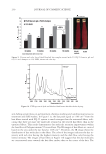
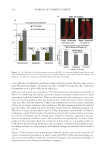
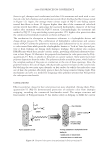
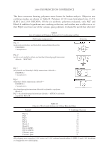
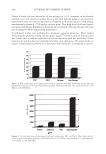
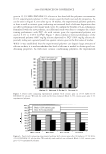
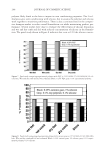
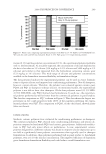
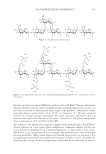
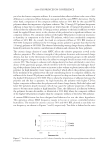
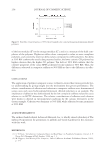
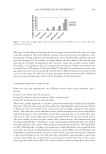
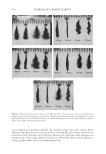
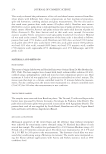
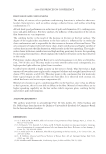
2008 TRI/PRINCETON CONFERENCE 151 Figure 8. Deposition of waxes from the shampoos containing an ether-based wax dispersion. It is very likely that hair fi bers break at regions with cracks in the cuticle and outer cortex area. Such cracks will reduce the cross sections of the fi ber and thus increase the stress induced by combing. Wax particles acted not only as lubricants like silicones, but also fi ll these cracks, which in turn will reduce the stress by distributing the forces generated by the combing procedure. This hypothesis will be further explored in future work. REFERENCES (1) J. V. Gruber, L. Bouldin, and K. Lou, Can a topical scalp treatment reduce hair bulb extraction? J. Cos- met. Sci., 58(4), 369–374 (2007). (2) Y. K. Kamath and H. D. Weigmann, Fractography of human hair, J. Appl Polymer Sci., 27(10), 3809– 3833 (1982). (3) W. Hamburger, H. M. Morgan, and M. M. Platt, Some aspects of the mechanical behavior of hair, Proc. Sci. Sect. TGA., 14, 10–16 (1950). (4) N. Cooper, J. Short, J. Szadurski, and B. Turek, Assessment of the effect of hair care products on hair strengthening, Proc. 14th Cong. Int. Fed. Soc. Cosmet. Chem., 2, 1125–1133 (1986). (5) C. Robbins, Hair breakage during combing. I. Pathways of breakage, J. Cosmet. Sci., 57(3), 233–243 (2006). (6) C. Robbins, Hair breakage during combing. II. Impact loading and hair breakage, J. Cosmet. Sci., 57(3), 245–257 (2006).

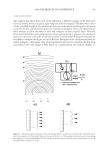
J. Cosmet. Sci., 60, 153–169 (March/April 2009) 153 New luster formula for the characterization of hair tresses using polarization imaging N. LEFAUDEUX, N. LECHOCINSKI, P. CLEMENCEAU, and S. BREUGNOT, Bossa Nova Technologies, 606 Venice Blvd, Suite B, Venice, CA 90291. Synopsis Hair luster is one of the most important parameters of visual appearance perceived by consumers. Current luster formulae (TRI, Reich-Robbins, …) are optimized for goniophotometric measurements. They are based on a mathematical decomposition of refl ected light into specular and diffused light and the meaurement of the shine peak width on the fi tted angular distributions. In this expose, we are describing a polarization imaging system measuring luster of hair tresses with an innovative algorithm. Using polarization imaging allows to physically separating the specular light from the diffused light for each pixel of the imaged tress. Angular distributions of the specular and diffused light are obtained in a few sec- onds. Where conventional methods calculate the shine peak width on the angular distribution, the imaging system imitates the human eye and calculates the shine width directly on the image. The new formula combines different measured parameters to objectively quantify luster. It was designed to exhibit a higher correlation with visual perception along with a higher sensitivity. Results obtained with conventional formulae are compared on different hair tresses, treated and untreated. The new formula is found to be consistent for a whole range of hair colors, from light to dark. INTRODUCTION The analysis of hair visual appearance has become strategic for the hair care industry. It enables product effi cacy evaluation, claims substantiation and improvement of hair prod- uct formulation. For a long time, the evaluation of the visual appearance of hair has been done by experts. In order to deliver more precise and objective data, quantitative tech- niques have been developed (1–3), mainly based on the measurement of the light scat- tered by hair fi ber (individual or hair tress). Goniophotometer is an excellent example of a technique used for the understanding of hair visual appearance. Scientifi c method closer to what the human eye sees is often required and digital image of the hair tress has proved fundamental to analyze its visual appearance. Optical imaging system is very powerful because it can deliver both data and images in real time. Light scattering in hair fi ber is complex and needs a detailed investigation. Polarization analysis is a well known tech- nique to deeply analyze the composition of the light scattered by an object (1–9,15). This paper presents the application of a new polarization imaging technique for the measure- ment of hair visual appearance. A new luster formula enabling the characterization and the measurement on any type of hair is proposed.
Purchased for the exclusive use of nofirst nolast (unknown)
From: SCC Media Library & Resource Center (library.scconline.org)