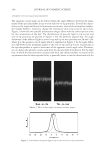
J. Cosmet. Sci., 60, 171–185 (March/April 2009) 171 Measurements of hair volume by laser stereometry ROGER MCMULLEN, FRANCO ZISA, and JANUSZ JACHOWICZ,* International Specialty Products, Wayne, NJ. Synopsis A three-dimensional laser stereometer was constructed utilizing an x-y two-dimensional translational stage and a laser device, which provides distance information in the z-direction. The distance data is obtained by triangulation of the refl ecting red laser beam from the surface of the measured object, in this case hair. Since hair fi ber assemblies do not have a continuous solid surface, each z-dimension reading is obtained as an aver- age of measurements obtained from multiple refl ections corresponding to fi bers at various depths below the outermost hair surface. We demonstrate the utility of this technique to perform the analysis of either an en- tire hair tress or relatively short sections of tresses prepared from straight, curly, and frizzy hair and subjected to cosmetic treatments such as washing, conditioning, dyeing, etc. An interpretation is provided for the three-dimensional images of hair assemblies as well as for the calculated volume of space occupied by a hair tress. In addition, we investigated various strategies for testing the volume retention of styling polymers. INTRODUCTION Hair body is one of the most important attributes for the hair care consumer. It is a com- plex phenomenon that describes the three-dimensional state of one’s hair and often al- ludes to the overall mechanical properties of the hair fi ber assembly. Several single fi ber properties are thought to be responsible for hair body and include curvature, friction, stiffness, diameter, cohesion, or weight of the individual fi bers that comprise the hair fi - ber assembly (1–3). Based on consumer research in conjunction with principal compo- nent analysis (a statistical technique), it was found that three words, together, describe body: volume (bulk, thickness), springiness (bounce), and stiffness (of the hair-set, not soft) (4). Other studies have emphasized the structural strength and resiliency of a hair mass as the predominant characteristics responsible for consumer-perceivable body (5). These studies were followed by the development of techniques to evaluate hair body based on the amount of work required to pull a hair tress through a specially designed template or utilizing a radial compressibility apparatus (6–9). Hair volume is recognized as a key component of hair body, and several attempts have been made to measure the three-dimensional volume of a hair-fi ber assembly (10,11). In this account, we describe a technique to measure hair volume by three-dimensional laser stereometry and demon- strate how physical properties of the hair fi ber assembly infl uence the volume. *The current address of Janusz Jachowicz is International Specialty Products, LLC, Bethel, CT.

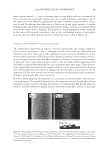
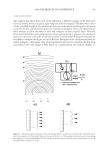
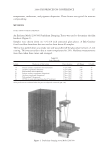
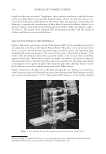
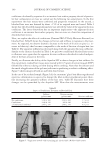
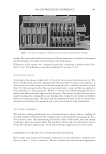
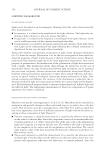
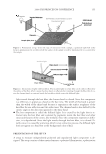
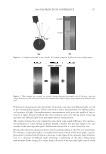
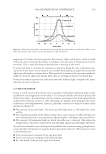
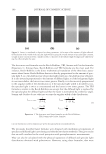
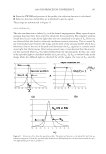
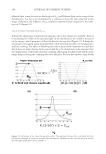
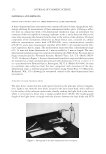
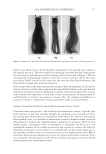
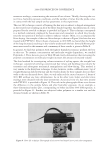
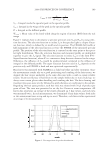
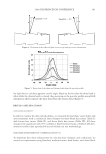
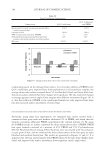
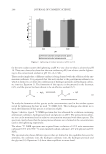
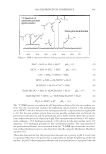
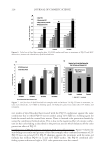
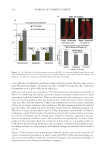
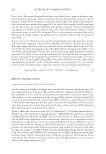
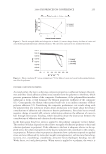
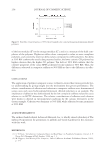
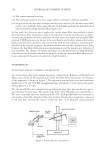
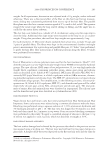
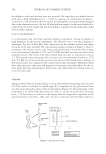
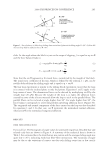
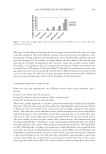
JOURNAL OF COSMETIC SCIENCE 172 MATERIALS AND METHODS DESIGN AND CONSTRUCTION OF A THREE-DIMENSIONAL LASER STEREOMETER A three-dimensional laser stereometer was constructed based on laser triangulation tech- nology, allowing for measurement of three-dimensional surface plots. Utilizing a refl ec- tive laser in conjunction with a two-dimensional translation stage, an instrument was constructed that was capable of scanning a substrate in the x- and y-direction while at the same time measuring the distance from the laser to the surface of the substrate. The laser component of the instrument, referred to as Smart Sensor unit, consisted of a diffuse refl ective measurement sensor head (ZX-LD100L), series communications interface (ZX-SF11), and a laser measurement amplifi er (ZX-LDA11), all manufactured by Om- ron Corporation, Kyoto, Japan. The measurement sensor head has a measurement range of 6–14 mm and beam dimensions of 1 mm in width by 4 mm in length. The two- dimensional translation stage was constructed utilizing two NLS4 Series Precision Linear Stages manufactured by Newmark Systems, Mission Viejo, CA, U.S. (Model NLS4- 12-25). As shown in Figure 1, the two-dimensional translation stage and the laser system are mounted on a black anodized optical board with dimensions of 36 in. × 24 in. × ½ in.—purchased from Edmund Optics, Barrington, NJ, U.S. (Model A03-680). In order to coordinate data collection from the laser component with movement of the two- dimensional stage, a software program was written using Visual Basic 6.0 (Microsoft, Redmond, WA, U.S.) allowing for automated control of the three-dimensional laser stereometer. PRINCIPLE OF LASER TRIANGULATION The laser device utilized in this work operates based on the principle of laser triangula- tion. Light is sent from the laser diode, located in the laser sensor head, and is refl ected by the surface of the substrate under study, thereby sending the light back to the sensor where it is focused via lenses onto a charge-coupled device (CCD). The resulting path length of the light forms a triangle with the distance between the laser diode and CCD Figure 1. Photograph of the three-dimensional laser stereometer.
Purchased for the exclusive use of nofirst nolast (unknown)
From: SCC Media Library & Resource Center (library.scconline.org)