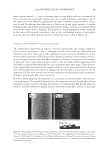
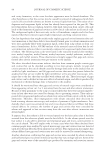
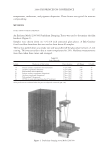
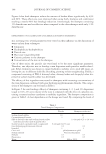
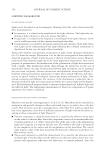
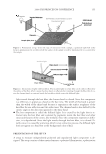
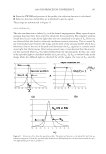
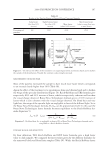
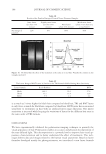
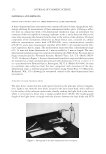
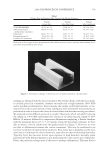
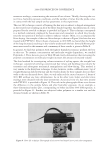
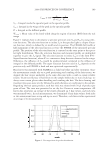
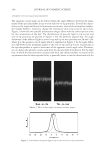
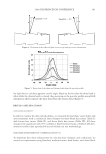
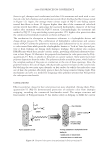
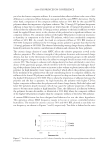
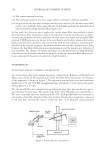
2008 TRI/PRINCETON CONFERENCE 173 comprising one leg, while the distance between both components and the surface of the substrate forming the other two legs. Based on set angles and distance of the CCD and laser diode devices, the distance from the sensor to an object may be calculated. Depend- ing on the distance of the laser to the substrate, the refl ected light will strike the surface of the CCD in a different position allowing for measurement of distance. HAIR SUBSTRATES A variety of hair types were examined, which consisted of European dark brown straight hair as well as dark brown European hair characterized by various degrees of curvature, such as straight, very curly, and frizzy hair. Measurements were also performed on Natural African Kinky hair. All hair was purchased from International Hair Importers & Prod- ucts, Inc., Glendale, NY, U.S. Straight hair tresses were constructed by gluing 2 g of fi - bers to a 1.5 in. × 1.5 in. Plexiglas tab with Duco cement. The resulting dimensions of straight hair tresses were 6.5 in. in length and 1.25 in. in width. The masses of the straight, very curly, and frizzy hair were variable and are indicated in the Results and Discussion section of this report. We also examined the effect of a bleaching process on the measured topographical plot and volume of hair. To bleach hair, 120 g of commercial bleaching powder (BW 2 – Clairol Professional, Procter & Gamble Company, Cincinnati, OH, U.S.) was mixed with 147 mL of 20 volume clear developer (Emiliani Brothers, Union, NJ, U.S.). After thorough mixing with a spatula, European dark brown hair was treated with this mixture and allowed to react for 30 minutes. The hair was then sham- pooed with 3% (w/w) ammonium lauryl sulfate (ALS) followed by rinsing. To examine the effect of bleaching on the fi ber assembly properties of hair, we utilized an atypical drying technique. After wetting, excess water was removed from the tress by sliding two fi ngers (index and middle) along the length of the hair tress allowing all of the fi bers to remain together. The hair tress was then allowed to air-dry overnight at ambient tem- perature and humidity (25°C and 50% RH). INVESTIGATED MOLECULES The effect of various polymers were tested in order to evaluate their ability to either in- crease volume for bleached hair or retain volume for hair subjected to stress stimuli such as high humidity or external forces. The following polymers, manufactured by ISP (Wayne, NJ), were utilized and their respective commercial names are provided: VCL/ VP/DMAEMA (Advantage LCA), VP/acrylates/lauryl methacrylate copolymer (Styleze 2000), Polyimide-1 (Aquafl ex XL-30), Polyquaternium-55 (Styleze W-20), VP/DMAPA acrylates copolymer (Styleze CC-10), Polyquaternium-11 (Gafquat 755N), Polyquaterni- um-69 (AquaStyle 300), isobutylene/ethylmaleimide/hydroxyethylmaleimide copolymer (Aquafl ex FX-64), and VP/VCL/DMAPA acrylates copolymer (Aquafl ex SF-40). The acronyms VCL, VP, DMAEMA, and DMAPA are used to represent the monomer units vinyl caprolactam, vinyl pyrrolidone, dimethylaminoethyl methacrylate, and dimethyl- aminopropyl methacrylate. Polyimide-1 may more specifi cally be described as isobu- tylene/dimethylaminopropyl maleimide/ethoxylated maleimide/maleic acid copolymer. We examined the commercially available polymer as well as a high molecular weight analog. Several samples of PVP (supplied by ISP, Wayne, NJ) were tested and con- sisted of PVP K30 (Mw = 60,000 Da), PVP K90 (Mw = 1,300,000 Da), and PVP K120

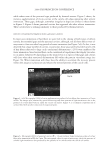
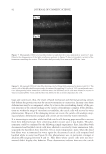
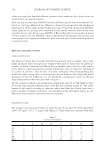
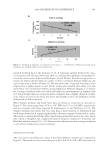
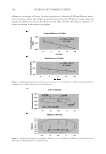
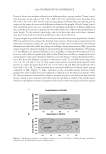
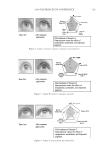
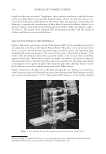
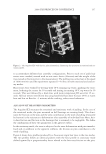
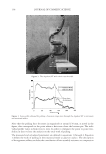
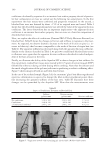
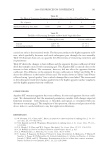
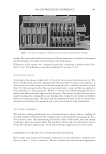
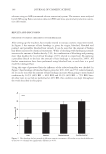
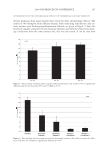
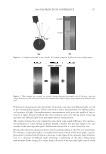
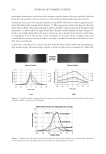
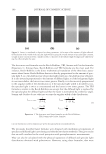
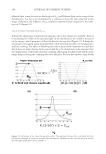
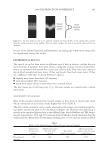
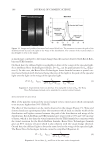
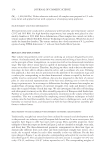
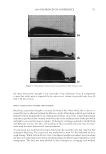
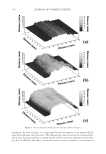
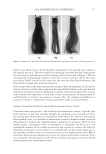
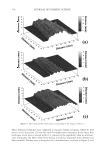
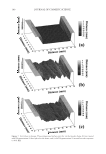
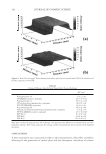
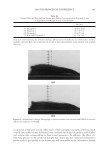
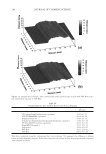
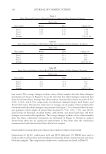
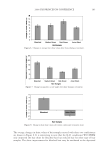
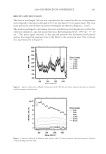
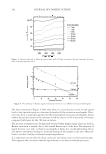
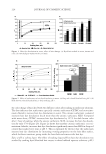
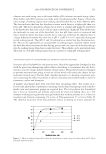
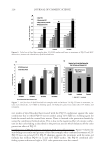
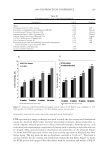
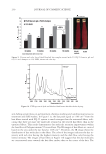
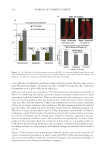
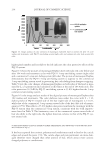
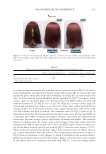
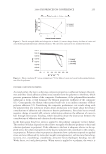
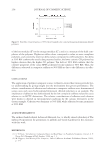
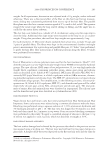
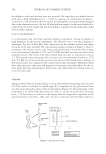
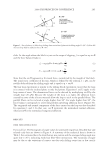
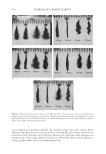
JOURNAL OF COSMETIC SCIENCE 174 (Mw = 3,000,000 Da). Unless otherwise indicated, all samples were prepared as 1% solu- tions (w/w) and applied to hair with a pipette or a hairspray pump applicator. HIGH HUMIDITY AND FORCE DEFORMATION All experiments were conducted in a laboratory with humidity and temperature control (25°C and 50% RH). For high humidity experiments, hair samples were placed in a hu- midity chamber at 90% RH. Force deformation of hair samples was carried out with a texture analyzer (Model TA-XT2, Texture Technologies Corporation), Which was located inside the humidity chamber. The texture analyzer has a load sensitivity of 0.1 g and was operated using XTRA dimension 3.7 software from Stable Micro Systems. RESULTS AND DISCUSSION Hair volume measurements were carried out utilizing an in-house designed laser stere- ometer. As already stated, the stereometer was constructed utilizing a laser device, based on the principle of laser triangulation, in conjunction with a two-dimensional translation stage. The laser device sensor head is capable of measuring the distance from the laser source to an object of interest. Therefore, by placing an object such as hair on the transla- tion stage, we were able to obtain z-data for each x- and y-coordinate of a scan. Utilizing this approach, a hair tress may be positioned on the platform of the translation stage and a surface plot corresponding to the three-dimensional volume occupied by the hair as- sembly may be constructed. In addition, data are also presented in the form of contour plots or cross-sectional representations of the hair tress allowing one to view the tress along its primary axis. In an attempt to differentiate the shape between hair samples, we analyzed hair of varying degrees of curvature (straight, very curly, and frizzy) to deter- mine the occupied volume of each hair type. We also investigated the effect of bleaching and subsequent treatment on the fi ber assembly properties of European dark brown hair. Further, we studied the effects of various polymeric treatments on the volume of hair fi ber assemblies. This was accomplished by employing several different techniques to build volume into the hair fi ber assembly, then to subject hair to challenge tests, such as high humidity or external forces, and measure how well the hair fi ber-polymer assembly per- forms to induced stress. MEASUREMENT OF HAIR ASSEMBLIES WITH DIFFERENT GEOMETRIC ARRANGEMENTS Traditionally, straight hair tresses have been utilized for research and development work in the personal care industry, mostly European dark brown hair. In more recent years, hair suppliers have begun to offer hair types with various fi bers assembly properties. Some examples of these hair types are shown in Figure 2 and are classifi ed as straight, very curly, and frizzy hair. The three-dimensional geometric arrangements in these hair types are dramatically different from each other and from traditional straight hair tresses. As a result, the occupied volume by such a fi ber assembly is also very different. For the hair types shown in Figure 2, we also provide a corresponding surface plot for a section of each tress (See Figure 3). The calculated volume for each tress section is: straight–123.04, very curly–276.32, and frizzy–514.97 (values reported as cm3). The corresponding weights of
Purchased for the exclusive use of nofirst nolast (unknown)
From: SCC Media Library & Resource Center (library.scconline.org)