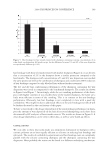
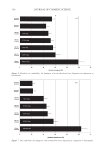
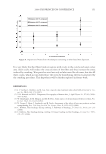
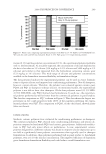
2008 TRI/PRINCETON CONFERENCE 185 methods were investigated to determine the style retention of polymers used as fi xatives. Volume was introduced to the hair fi ber assembly by mechanical manipulation. Then the ability of a given treatment to maintain the induced volume was tested by stressing the hair sample with either force or high humidity. Future testing should include methods, which differentiate the ability of treatments to build volume. This would, however, re- quire the use of a mechanical device capable of manipulating a hair fi ber assembly similar in manner to that exercised by consumers. REFERENCES (1) C. R. Robbins, Chemical and Physical Behavior of Hair, 3rd ed. (Springer-Verlag, New York, 1994). (2) N. E. Yin, R. H. Kissinger, W. S. Tolgyesi, and E. M. Cottington, The effect of fi ber diameter on the cosmetic aspects of hair, J. Soc. Cosmet. Chem., 28, 139–150 (1976). (3) C. R. Robbins and G. V. Scott, Prediction of hair assembly characteristics from single fi ber properties, J. Soc. Cosmet. Chem., 29, 783–792 (1978). (4) D. L. Wedderburn and J. K. Prall, Hair product evaluation: From laboratory bench to consumer and back again, J. Soc. Cosmet. Chem., 24, 561–576 (1973). (5) P. Hough, J. E. Huey, and W. S. Tolgyesi, Hair body, J. Soc. Cosmet. Chem., 27, 571–578 (1976). (6) C. R. Robbins and R. J. Crawford, A method to evaluate hair body, J. Soc. Cosmet. Chem., 35, 369–377 (1984). (7) H.-D. Weigmann, Y. Kamath, and H. Mark, Radial compression for the evaluation of hair body, Proc. Quinquennial Int. Wool Textile Res. Conf., Pretoria, South Africa, 111, 473–486 (1980). (8) Y. Kamath and H.-D. Weigmann, Hair body, J. Soc. Cosmet. Chem., 47, 256–259 (1996). (9) M. L. Garcia and L. J. Wolfram, Measurement of bulk compressibility and bulk resiliency of a hair mass, Proc. 10th IFSCC Congress, Sydney, Australia (1978). (10) M.-S. Wu, A simple method for measurement of hair volume, J. Soc. Cosmet. Chem., 33, 85–92 (1982). (11) J. Clarke, C. R. Robbins, and C. Reich, Infl uence of hair volume and texture on hair body of tresses, J. Soc. Cosmet. Chem., 42, 341–350 (1991).

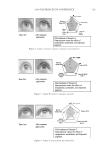
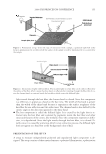
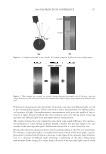
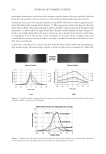
J. Cosmet. Sci., 60, 187–197 (March/April 2009) 187 Study of hair shine and hair surface smoothness TIMOTHY GAO, ABEL PEREIRA, and SAM ZHU, Croda Inc., 300-A Columbus Circle, Edison, NJ 08837. Synopsis A new hair visual appearance measurement system called SAMBA from Bossa Nova Technologies (Venice, CA) has been employed to measure effects of cosmetic treatments on hair shine and surface smoothness of different types of hair samples. Experimental procedures for evaluations of shine value and surface cuticle angle of hair samples treated with rinse-off products (shampoo or/and conditioner) have been successfully established and applied. We demonstrated that hair spray and conditioner formulas containing PPG-3 benzyl ether myristate (PBEM) (1) showed great performance on shine enhancement for hairs with light and me- dium colors. Instrumental measurement of shine values was also conducted to compare different commercial shampoo and conditioner products. This study showed reliable utility of SAMBA system and demonstrated the shine enhancement of PBEM in hair care. INTRODUCTION Hair luster (gloss, shine) is an important feature of hair appearance, and this attractive visual effect is a key consumer objective in the hair care market. However, the percep- tion of hair shine is affected by many factors such as lighting environment, hair color, surface smoothness, hair morphology, hair mass density on scalp, and hair fi ber align- ment. These factors make it diffi cult to conduct meaningful shine measurements. SAMBA, a hair luster evaluation apparatus, has been recently applied to study effects of cosmetic treatment on hair shine and surface smoothness (2,3). In a SAMBA mea- surement, a hair tress is illuminated and the different types of light refl ected are col- lected. Using polarized illumination coupled to polarization analysis, SAMBA is able to differentiate the specular and diffusive refl ection. The specular refl ection gives in- formation about hair gloss and roughness, while the diffused light gives information about the hair color. By acquiring two states of polarization at video rate, SAMBA can be used to determine changes in hair shine indexes and surface cuticle angles of hair samples before and after cosmetic treatment. In this study, we established experimen- tal procedures for hair treatment with rinse-off products and demonstrated that PBEM, an emollient ester used in many hair care formulations, improved hair shine. Effects of treatments with commercial shampoo and conditioner products on hair shine were also quantitatively measured by employing SAMBA as the polarimetric imaging system.
Purchased for the exclusive use of nofirst nolast (unknown)
From: SCC Media Library & Resource Center (library.scconline.org)