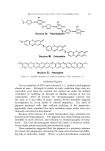
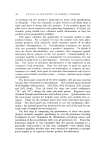
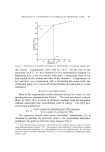
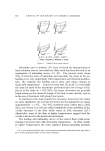
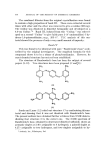
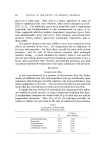
J. Soc. Cosmetic Chemists, 19,361-379 (May 27, 1968) Studies Concerning the Reactions of Oxidation Dye Intermediates FREDERICK BRODY, Ph.D., and MARGARET SUE BURNS, M.S.* Presented September 2[-22, 7967, Seminar, Chicago Synopsis--Reactions of oxidation dye intermediates were investigated in aqueous systems designed to simulate hair-dyeing conditions. The reaction mixtures were examined for the presence of Bandrowski's base (BB) by chromatographic and spectral methods. BB was found only when p-phenylenediamine (PPD) alone was oxidized, and not when PPD was co-oxidized with other dye intermediates. Quinonediimine (QDI) was sought by its charac- teristic hydrolysis to ammonia and by a spectral method. Though formed during the oxida- tion of PPD alone, QDI could not be detected when resorcinol was co-oxidized, either be- cause it was not formed, or because it immediately reacted with resorcinol. A simple oxida- tion pigment (from PPD and resorcinol, 1:1) was examined by functional group analysis (acetylation, methylation, hydrolysis), and found to be a polymeric indophenol. No evi- dence of cyclization to azines was found. INTRODUCTION For many years there has been speculation on the chemistry of the oxidation of dyeing of hair. The current thinking is still that of Cox of 1940 (1), based on earlier suggestions of Erdmann (2) and Austin (3). In this view (Fig. 1), p-phenylenediamine (PPD), the principal component of hair dye formulations, is oxidized by peroxide first to quinonediimine (QDI). If no other dye component is present, the QDI reacts with more PPD, to form Bandrowski's base (BB) outside the hair and polymeric azines within the hair fiber. If, however, other dye * Clairol Research Laboratories, 90 Commerce Rd., Stamford, Conn. 06904. 861

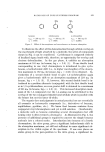
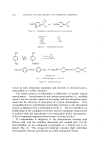
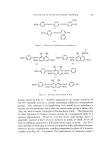
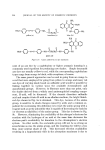
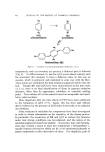
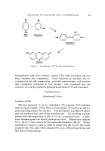
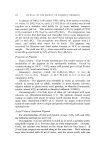
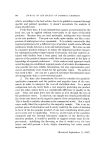
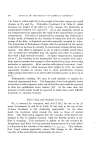
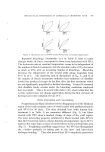
362 JOURNAL OF THE SOCIETY OF COSMETIC CHEMISTS NH 2 NH 2 PPD p-Phenylenediamine ), NH 2 NH 2 NH NH QDI Quinonediimine N -•'•'- NH2 Bandrowski Base (BB) Figure 1. Oxidation of p-phenylenediamine (Erdmann Cox) components, such as resorcinol, are present, a different path is followed (Fig. 2). No BB is formed (4), but the QDI reacts almost entirdy with the resorcinol (for example) to form a different azine, in this case an oxazine, which is polymeric and combined in some way with the fiber. These azines are considered the final oxidation pigments which color the hair. Though BB and QDI have been characterized in the pure state (2, 6, 6), there is no firm identification of them in aqueous oxidation mixtures, other than by appearance, solubility, or (variable) melting point. The evidence of Cox for azines is based on nonspecific and quali- tative color reactions. More important still, the toxic effects of PPD have been attributed to the formation of QDI (7-9). Again, this has been said without direct evidence for the presence of QDI either in the body or in oxidation dye solutions. Some reactions of oxidation dye components have been investigated in order to obtain information on the chemistry of the dyeing process. In particular, the occurrence of BB and QDI in various dye mixtures under hair dyeing conditions was investigated, and the nature of the oxidation pigments formed was studied. In practice, hair color formula- tions may contain a dozen or more dye components ("intermediates"), usually benzene derivatives which are di- or tri-substituted phenolic or amino compounds or nitro derivatives of these. For simplicity, pairs of
Purchased for the exclusive use of nofirst nolast (unknown)
From: SCC Media Library & Resource Center (library.scconline.org)