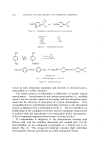
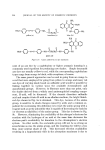
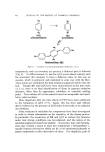
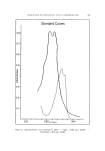
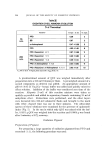
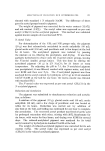
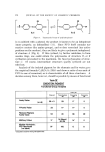
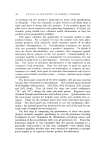
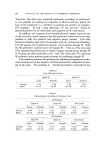
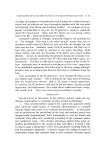
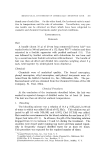
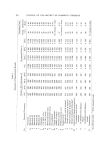
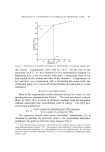
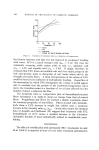
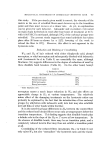
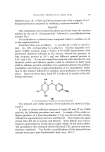
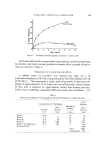
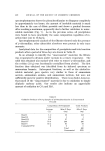
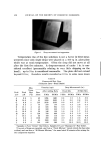
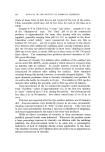
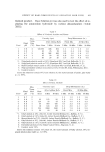
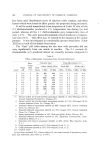
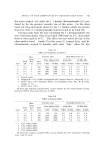
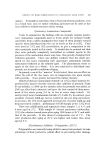
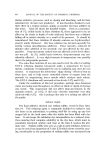
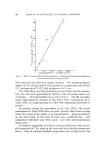
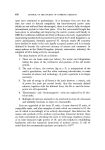
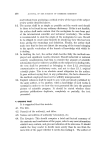
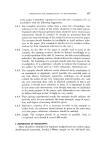
426 JOURNAL OF THE SOCIETY OF COSMETIC CHEMISTS ß .: ...•..,J '.• .. ',: ....... • •,,•.•... Figure 1. Drop-movement test apparatus Temperature rise of the dye solutions is not a factor in these meas- urements since only single drops were placed on a 100-sq in. glass plate which was at room temperature. Often the drop did not move at all after the first five minutes. A drop-movement of under 1 in. is con- sidered excellent (presumably relating to very little dripping on the head) up to 3 in. is considered reasonable. The plate did not extend beyond 10 in. therefore results recorded as 10 in. in some cases mean Table II Commercial Hair Dyes (Oxidation Dyes--Black Shade) Max. Viscosity (cps) Drop-Movements b (in.) Temp. After Adding H202 Fresh Mix 30 Min Mix Prod- Final Rise Base uct a pH (øC) Alone 5 Min 30 Min 5 Min 30 Min 5 Min 30 Min A 9.9 5 40 1264 1460 0.3 1.2 1.5 B 10.0 2 25 1000 2052 1.9 2.0 2.8 C 9.9 1 125 2132 2132 0.6 4.5 0.7 D 9.6 5 70 200 144 3.8 4.5 2.8 E 10.1 4 46 836 964 0.5 1.3 0.3 F 10.0 2 40 520 335 1.0 1.5 1.1 G 10.0 9 30 146 155 1.4 1.8 1.7 H 10.1 5 129 756 620 2.0 3.5 1.0 I 10.1 2 33 110 113 3.7 5.5 4.8 J 9.5 4 1528 360 355 2.0 2.2 2.3 K 9.9 4 85 1856 1600 2.1 10.0 2.5 L 9.6 2 140 640 580 5.8 10.0 10.0 59 29 31 34 10 13 35 12 4.9 9.5 10.0 10.0 a Samples A-F are "Creme" Hair Colors Samples G-L are "Shampoo In" Hair Colors. b Two sets of drops are recorded, one from a "Fresh Mixture" (newly mixed dye base plus oxidizer) and one from a "30 Minute Mixture," the same batch 30 minutes after mixing the two components together.

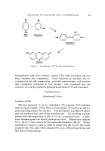
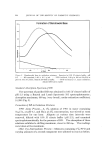
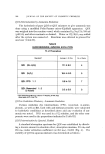
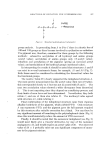
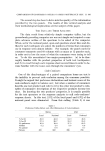
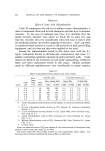
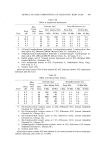
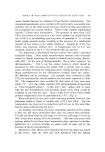
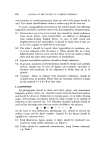
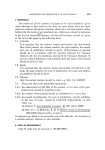
EFFECT OF BASE COMPONENTS ON OXIDATION HAIR DYES 427 off the plate the exact amount is immaterial when products perform this poorly. Dyeing Tests Immediately after mixing the dye base with an equal amount of 20 vol hydrogen peroxide as described above, the dye was applied to natural white human hair (with no attempt at quantification) by brushing onto the strands while they were on one glass plate, then transferring the swatches onto a clean plate where they were allowed to stand at room temperature for 30 minutes. They were then rinsed thoroughly (with water only) and dried. Aging Tests Some dye bases do not thicken properly when mixed with peroxide, or they change shade over a period of time, or show sedimentation. The above tests were therefore carried out three times: once on freshly prepared solutions, again after aging 1000 hours at 48 øC, and again on a separate bottle of the same batch aged 1000 hours at 2 øC. Viscosity measurements were run only once however, 48 hours after the solutions were first prepared. pH Measurements These were performed routinely on the base before addition of peroxide, as well as afterwards. In those few cases where excessive heating occurred after addition of the peroxide (indicating an exo- thermic reaction) the pH was observed to drop drastically, e.g., from pH 9.3 for the fresh mixture to pH 7.2 upon standing 135 hours. COMMERCIAL HAIR DYES In order to have a meaningful point of comparison, the black shade from each of 12 commercially available oxidation hair dyes, products of the recognized leaders in this field on the American market, was also first put through this same series of tests. The results are summarized in Table II, which clearly shows that there is very little agreement in any of the major factors which are considered. This was most unexpected a number of equally successful commercial products seem to have been formulated from diametrically opposed viewpoints regarding such factors as temperature rise, viscosities, or drop-movement. An alterna- tive explanation is that some of these factors were simply not considered at the time the products were formulated. It is also true that the black
Purchased for the exclusive use of nofirst nolast (unknown)
From: SCC Media Library & Resource Center (library.scconline.org)