4OO JOURNAL OF THE SOCIETY OF COSMETIC CHEMISTS ß

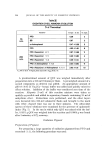
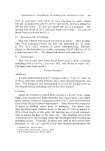
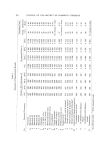
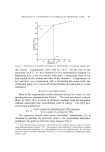
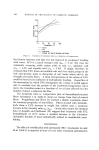
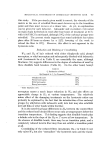
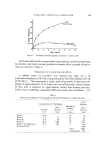
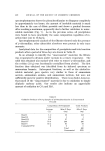
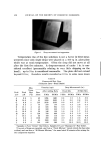
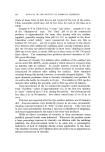
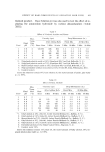
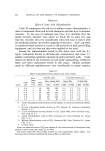
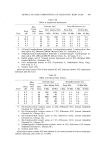
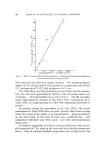
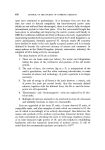
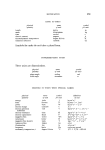
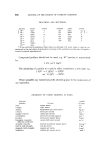
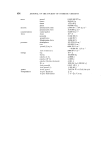
MECHANICAL HYSTERESIS OF CHEMICALLY MODIFIED HAIR 401 0.7- 0.6- •, 0.2- 0 I/Tt 0 io 45 7'5 9'o Temperature øC Figure 1. Illustration of graphical technique for determination of transition temperature the control. Temperatures were held to +2 øC. In the case of the extensions at 0øC, ice was deposited in the experimental chamber by immersing it in a dry ice/acetone bath until a substantial layer of ice had formed on the bottom and sides of the chamber. Temperatures of 65 ø and 80 øC were maintained with a circulating hot water bath the circulating pump was turned off during loading and unloading to avoid turbulence. RESULTS AND DISCUSSION Most of the experimental results obtained during the course of this investigation are summarized in Table I. The work necessary to extend fibers by 20% (W20) is given in arbitrary readings from the integrator without conversion into conventional units of energy. The 20% hys- teresis ratio is defined as: Work regained in unloading from 20% extension ti/20 • Work required to extend by 20% The apparent second order phase transition* temperature (Tt) is obtained by plotting the hysteresis ratio vs. the temperature and inter- polating to the point at which the slope changes (Fig. 1). * "A second order phase transition is characterized by a sudden change in slope of the pri- mary thermodynamic variable" (16.) The change in heat capacity of a solid going to a liquid is a first order phase transition, i.e., a discontinuity exists at the melting point the softening point of a wax is a second order phase transition, i.e., the heat capacity vs. temperature curve changes slope.
Purchased for the exclusive use of nofirst nolast (unknown)
From: SCC Media Library & Resource Center (library.scconline.org)