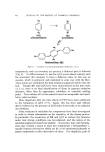
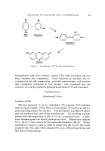
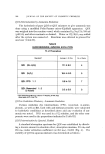
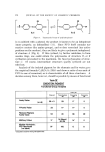
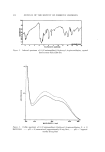
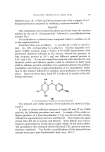
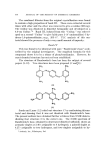
REACTIONS OF OXIDATION DYE INTERMEDIATES 371 titrated with standard 1 N ethanolic NaOH. The difference of titers gave the acetyl groups bound to pigment. The weight of pigment was corrected for its water content (12.8%) and ash content (2.0%). The acetyl value was expressed as per cent acetyl (CHACO) in the acetylated pigment. This method was validated against known samples of resorcinol and PPD. N-Acetyl Value For determination of the NH2 and NH groups only, the pigment (20 g) was first exhaustively acetylated in acetic anhydride (80 ml), glacial acetic acid (150 ml), and perchloric acid (a few drops) at the boil for 48 hours. The acetylated pigment was isolated by pouring the mixture on ice, filtering the precipitate, and drying. It was then partially hydrolyzed to cleave only the O-acetyl (ester) groups, leaving the N-acetyl (amide) groups intact. This was done by stirring the acetylated pigment (10 g) in 2N Na2COa for 24 hours at room temperature. By adjusting the pH to 7.5, the N-acetylated pigment was precipitated it was filtered, washed with copious water, and dried over KOH and then over P•Os. The /V-acetylated pigment was then analyzed for its acetyl content by hydrolysis (of 0.5 g) in 25 ml standard 0.373/V NaOH at the boil for one hour the excess caustic was titrated with standard HC1. The/V-acetyl value was expressed as per cent acetyl (CHACO) in the N-acetylated pigment. Reduction and A cetylation The pigment was submitted to simultaneous reduction and acetyla- tion, as follows: A mixture of the pigment (12 g), glacial acetic acid (60 ml), acetic anhydride (60 ml), and a few drops of perchloric acid was heated at reflux for 48 hours. Reduction was carried out by addition of zinc dust at the boil, and boiling was continued for one hour to complete the acetylation. The recovered acetyl product was freed of acetic acid by prolonged extraction with ether, stirring with 20% bicarbonate for six hours, with water for four hours, and drying over KOH for several days. The reduced-acetylated pigment was analyzed for its total acetyl content by hydrolysis in standard NaOH at the boil. The weight of reduced-acetylated pigment was corrected for its ash content (13%). The acetyl value was expressed as per cent acetyl (CHACO) in the reduced-acetylated pigment.

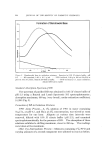
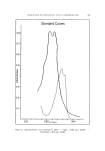
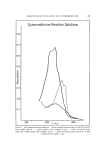
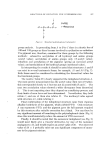
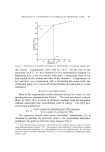
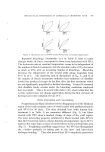
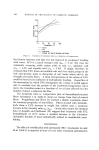
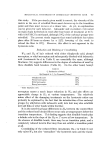
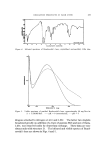
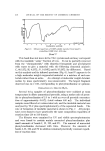
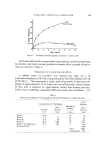
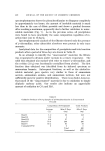
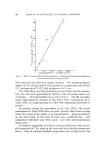
372 JOURNAL OF THE SOCIETY OF COSMETIC CHEMISTS Methoxyl Value of Methylated Pigment For determination of phenolic groups, the pigment was methylated by means of diazomethane. The pigment (1.6 g) dissolved in carbitol (80 ml) was treated with a large excess of an ether solution of diazomethane (180 ml, 0.3 N), and the mixture was stirred at room temperature for 48 hours. The ether was evaporated with air, and the solution poured into water. The methylated pigment was recovered by filtration, washing, and drying recovery, 97%. The methoxyl value was determined by the micro-Zeisel method and expressed as per cent methoxyl (CH30) in the methylated pigment. Alkaline Hydrolysis of the Pigment The pigment (1.0 g) was treated with 10% sodium hydroxide (20 ml) at the boil for 24 hours. Extraction with methylene chloride then gave a recovery of 0.30 g PPD, identified by melting point, 139- 140øC, and infrared spectrum. Since the pigment was half PPD in composition (elementary analysis), then, correcting for water (12.8ø-/o) and ash (2.0%) in the pigment sample, the recovery of PPD was 70%. A blank experiment in which 0.50 g PPD itself was subjected to the same treatment gave 72% recovery of PPD, m.p. 135-140øC. The recovery from the pigment, then, represented 97% recovery versus blank. RESULTS AND DISCUSSION Bandrowski' s Base In common with other investigations, it was found that Bandrowski's base (BB) was formed when p-phenylenediamine (PPD) alone, in the absence of other dye intermediates, was oxidized under hair dyeing conditions, i.e., in 3% peroxide at pH 9.5 and room temperature for one hour. The procedure was to sample the entire oxidation mixture, rather than the precipitate alone, and examine it by spectral and chroma- tographic methods, against a standard of pure BB. By either method it was found that other products were formed along with BB. The absorption maximum, measured in citrate buffer at pH 2.3, was displaced from 400 m• for pure BB, to 380 m• for the oxidation mixture (Fig. 3). It is likely that the other products were similar to BB in structure, and, if they had the same absorbance, there was obtained a 40% yield of BB and BB-like products from PPD in one hour. The presence of various products, including BB, was clearly
Purchased for the exclusive use of nofirst nolast (unknown)
From: SCC Media Library & Resource Center (library.scconline.org)