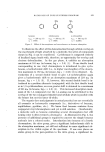
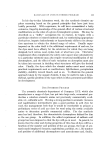
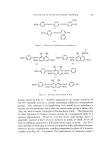
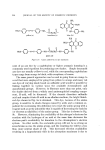
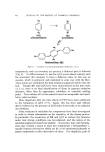
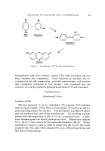
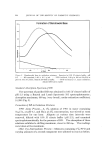
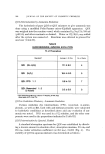
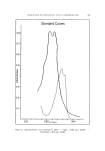
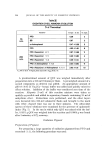
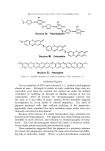
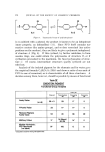
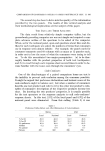
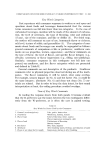
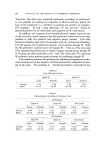
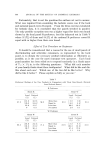
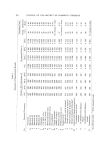
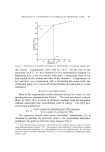
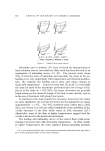
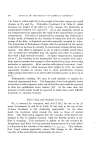
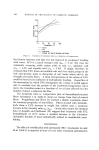
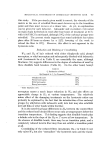
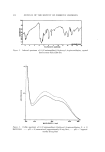
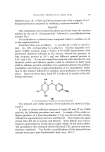
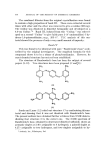
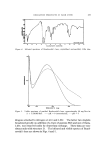
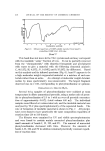
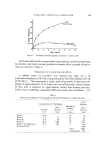
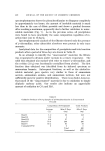
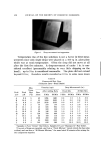
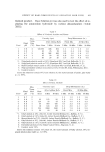
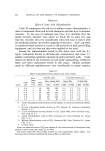
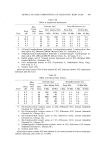
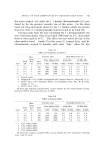
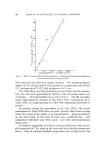
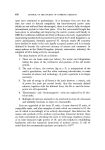
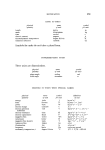
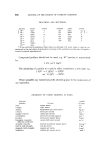
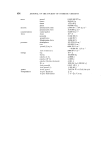
REACTIONS OF OXIDATION DYE INTERMEDIATES 373 shown by the chromatographic method which could detect BB at a level of 0. l ,. Of greater interest were the oxidation mixtures of PPD with a second dye component (resorcinol, m-aminophenol, etc.) (Table I). The chromatogram showed a large number of products indeed. No BB was found when the second component was used in amount equal to PPD. In that case, the spectrum showed no absorption near 400 m/• attribut- able to BB (Fig. 3), and the chromatogram was lacking its BB spot. When PPD was used in large excess, BB again appeared. This absence of BB was characteristic of several diverse compounds reacting with PPD, including meta and para difunctional aromatic amines and phenols. This indicates that, in hair dyeing mixtures, the self-coupling of PPD (to give Bandrowski's base) is the slowest reaction which occurs the PPD reacts faster with the other dye intermediates available. This also means that most hair color formulations on the market, in which PPD is not in excess, are not likely to form BB, and BB does not account for any of the coloring effects obtained with permanent hair color for- mulations currently in use. Quinonediimine QDI is readily prepared and isolated if one works in anhydrous media (4). It is so reactive in water, however, that for its detection under hair dyeing conditions it was necessary to resort to an indirect method, namely, hydrolysis of the QDI, and measurement of the am- monia evolved. Pure QDI gave 17% of the theoretical amount of ammonia by hydrolysis at 38øC and pH 9.6 for one hour (Table II). (The unhydrolyzed QDI, or 83%, apparently underwent polymerization to products which were not themselves hydrolyzable.) Other common nitrogen-containing compounds, namely BB and PPD, in the absence of peroxide, did not give ammonia (Table III). It was, therefore, assumed that any significant evolution of ammonia in an oxidation mixture would indicate the presence of free QDI. What is more important, the absence of ammonia would indicate that free QDI was not present, at least for the time necessary to achieve hydrolysis. Oxidation dye intermediates were then treated, singly and in combination, with peroxide under hair dyeing conditions, and the ammonia evolved was measured. PPD yielded significant amounts of ammonia, about 5% of the theoretical in one hour, indicating that some QDI was formed. This is, of course, much less ammonia than is obtained by the direct hydrolysis of QDI. This is probably so because only a portion of the PPD is converted to QDI the

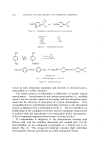
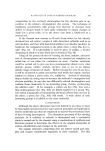
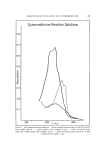
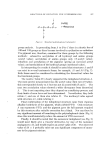
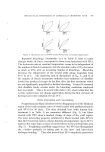
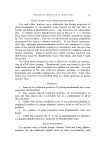
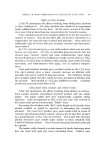
374 JOURNAL OF THE SOCIETY OF COSMETIC CHEMISTS remainder reacts with the QDI already formed to give.Bandrowski's base and other products. When resorcinol was co-oxidized with PPD, the ammonia evolved dropped to insignificant levels, showing that free QDI was not present for any time measurable by hydrolysis. It may not have formed at all, and one may envisage other reaction paths not involving QDI. Or, if formed, it reacted rapidly with resorcinol before it could undergo hy- drolysis. That QDI can react with dye intermediates is apparent from Table II which shows that addition of PPD or resorcinol to QDI gives a marked decrease of ammonia evolved. The QDI reacts faster with these intermediates than with water to give ammonia and faster with resorcinol than with PPD. In oxidation reactions involving PPD with m-aminophenol (Table III), some ammonia is evolved but this is less than for PPD alone and very much less than for QDI. In this case, the ammonia may arise from the oxidative hydrolysis of m-aminophenol itself as well as from Just how rapidly QDI reacts is indicated by the second method of detection, which is a spectrophotometric one. QDI was subjected to three different reaction conditions (Fig. $). In one case, it was placed in a buffer at pH 9.6. An ether extract taken three minutes later showed QDI still present but reduced to 25% of its initial amount. In another case, a small amount of resorcinol was added to the QDI in the buffer. An ether extract made one minute later showed no recognizable QDI. Finally, when a large amount of resorcinol was added, the spectrum after one minute showed only resorcinol to have been extracted into the ether layer. Accordingly, it seems unlikely that QDI, as a discrete entity, is present for any length of time in oxidation mixtures prepared for commer- cial use as hair coloring agents. If formed at all, QDI would be destroyed by the aqueous environment, or would react rapidly with other inter- mediates present in these formulations. Since QDI was not detectable in chemical systems designed to represent current hair coloring mixtures, it seems improper to consider observations of the toxic effects of QDI alone (8) as relevant to present day hair coloring formulations. This work has implications for patch testing to detect individuals hypersensitive to hair coloring formulations. Patch testing should be carried out with the combination of oxidation dye intermediates to be used, freshly mixed with peroxide. The patch test should not be based on PPD without the other hair color reactants.
Purchased for the exclusive use of nofirst nolast (unknown)
From: SCC Media Library & Resource Center (library.scconline.org)