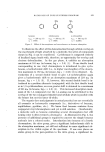
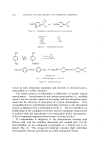
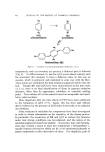
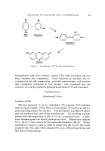
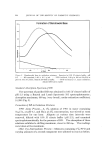
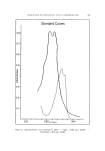
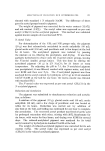
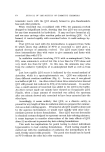
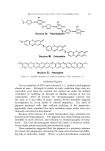
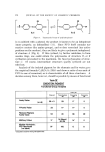
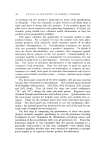
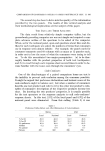
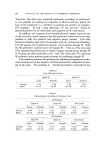
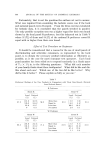
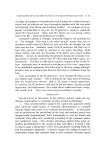
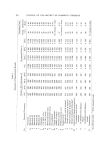
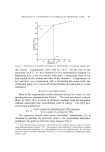
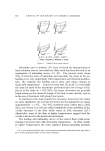
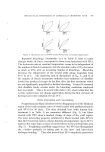
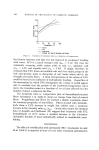
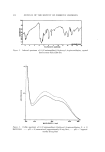
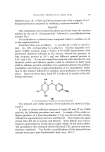
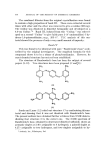
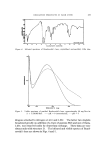
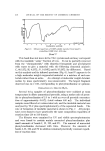
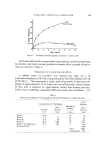
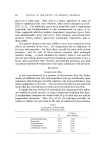
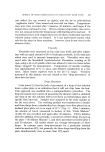
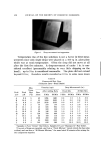
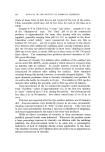
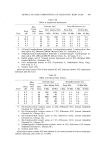
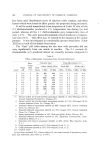
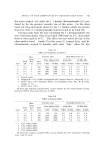
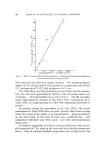
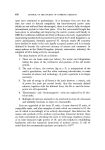
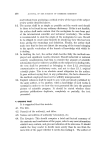
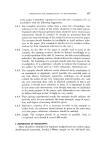
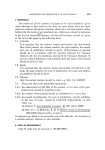
418 JOURNAL OF THE SOCIETY OF COSMETIC CHEMISTS 3 4 Figure 6. 5 6 7 8 9 10 11 12 13 14 WAVELENGTH (MICRONS) Infrared spectrum of DMF-soluble materiol from band V, crystallized DMF-I-I,,O, KBr disc Band V This band does not move in the TLC system used and may correspond with the insoluble "azine" fraction of Cox. It can be partially removed from the "chromatostick" with dimethyl formamide and precipitated with water to give a material with the following elemental analysis: C, 46.12% H, 4.25% N, 14.34% and 0, 35.29% (by difference). Based on this analysis and its infrared spectrum (Fig. 6), band V appears to be a high molecular weight oxygenated material or a mixture of such ma- terials rather than an azine. An attempt at molecular weight determi- nation by mass spectrometry was unsuccessful. The largest fragment observed was m/e 108, corresponding to phenylenediamine or quinone. OXIDATION IN DILUTE H202 Several 4.0-g samples of phenylenediamine were oxidized at room temperature in dilute ammoniacal peroxide, using a molar ratio of perox- ide to phenylenediamine of 2.5 to 1 with an over-all peroxide concentra- tion of approximately 0.65% (total volume 460 ml). The individual samples were filtered at various intervals, and the insoluble material was analyzed by TLC plus spectrophotometry of the separated bands. The rate of formation of insoluble material is shown in Fig. 7. All precipi- tates were found to have practically the same composition regardless of reaction time (24 to 310 hours). The tiltrates were examined by UV and visible spectrophotometry and were found to contain mainly unreacted phenylenediamine plus small amounts of bands I, II, III, and IV. The amount of unreacted phenylenediamine decreased with time. However, the amounts of bands I, II, III, and IV in solution remained practically constant regard- less of reaction time.

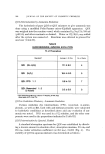
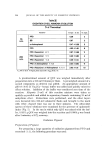
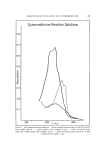
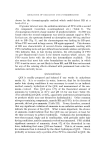
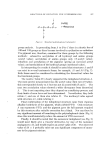
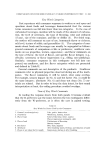
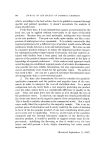
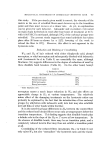
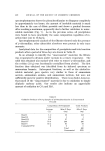
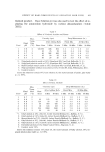
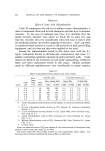
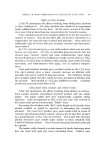
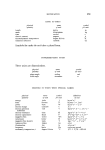
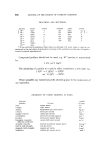
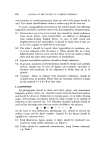
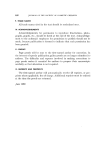
OXIDATION PRODUCTS IN HAIR DYES 419 40' ß • •o- 0 I Figure 7. TIME (DAYS) Insoluble oxidation products formed vs. reaction time Analytical data for the composition of precipitates, material remaining in solution, and total reaction products obtained after a period of twelve days are shown in Table I. OXIDATION IN CONCENTRATED I-I202 A similar series of reactions was carried out with 4.0 g of p-phenylenediamine in 267 ml of approximately 6% NH4OH plus 267 ml of 6% H•.O2. This represents a molar ratio of peroxide to phenylenedi- amine of approximately 12 to 1 with an over-all peroxide concentration of 3%, and is believed to approximate actual hair-dyeing practice. Under these conditions, somewhat different results were obtained. UV Table I Oxidation Products of 4.0-g Samples of p-Phenylenediamine in Dilute Peroxide Composition of Precipitates Total Products Material in After Solution After Average 12 Days 12 Days (%) (rag) (mg) (rag) Band I Trace ... Band II 1.0 24 Band III 6.5 87 Band IV 83.0 1665 Band V (by difference) 9.5 193 Unreacted PPD 13 13 16 40 48 135 35 1700 0 193 1600 Total 3681 Unaccounted 319
Purchased for the exclusive use of nofirst nolast (unknown)
From: SCC Media Library & Resource Center (library.scconline.org)