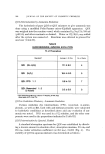
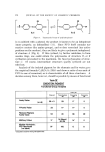
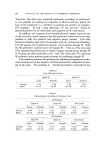
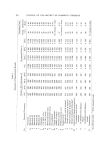
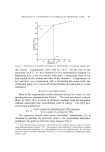
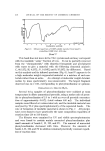
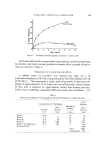
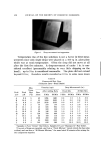
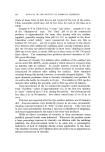
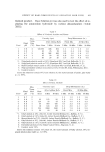
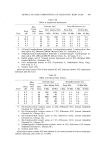
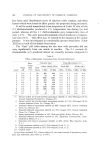
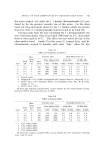
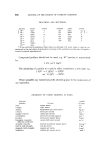
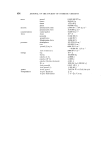
428 JOURNAL OF THE SOCIETY OF COSMETIC CHEMISTS shade of many lines of hair dyes is not typical of the rest of the series. Thus, anomalies noted may not in fact exist for each of the lines as a whole. Samples A-F in Table II are "Creme" hair colors samples G-L are of the "Shampoo-in" type. The "final" pH of all the commercial products is approximately the same after mixing with the oxidizer supplied, generally ranging from pH 9.9-10.1 as applied to the head. Viscosities varied widely: most commercial dye bases are thin as bottled (25-140 cps) one (J) is quite heavy in contrast to the others. Five minutes after adding the oxidizing agent (usually hydrogen perox- ide) the viscosity has altered radically in most cases, climbing to about 2000 cps in two cases, to about 1000 cps in three cases, to 500-750 cps in three others. The remaining four products showed viscosities of 110- 360 cps at this stage. Increase of viscosity five minutes after addition of the oxidizer was on the order 300-4000%, except sample J which showed a viscosity drop on dilution with its oxidizer. As oxygen bubbles evolved in the dye base, three of the products showed further increases in viscosity when remeasured 30 minutes after adding the oxidizer. Most remained constant during this period, however, or actually dropped slightly. The most dramatic performer (from a viscosity standpoint) was product B. As sold in the bottle its viscosity is 25 cps. This climbs to 1000 cps five minutes after adding the peroxide, and to 2050 cps after 30 minutes. Drop-movements of the 12 commercial samples varied enormously, from "excellent" values of approximately 1 in. in the first five minutes to "poor" values of up to 5.8 in. during this period. Six of them moved less than 2 in. in 30 minutes five others varied from 4.5 to 10 in. or over. This test was repeated after the dye-oxidizer mixture was 30 minutes old drop-movements were distinctly greater in six eases, presumably showing a greater tendency to "drip" as time went on. They were less in two eases (presumably showing a decrease in likelihood of dripping), and stayed approximately the same in the other four products. While no direct correlation of viscosity to drop movements seems justified, general trends seem indicated. Whenever the product shows a large percentage increase in viscosity (on dilution with the oxidizing solution), the drop-movement tends to be quite low, a presumptive indication of lack of dripping during actual application to the head. The absolute viscosity after dilution does not seem to be as important as this per cent increase in viscosity.

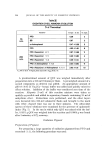
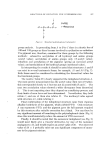
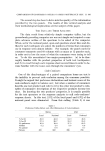
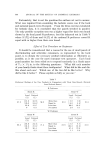
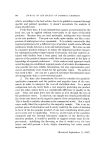
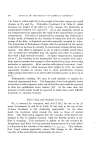
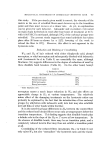
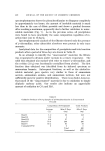
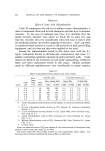
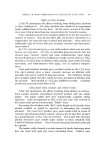
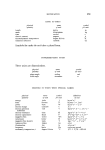
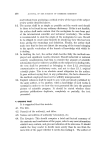
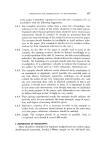
EFFECT OF BASE COMPONENTS ON OXIDATION HAIR DYES 420 BASIC FORMULATIONS Except for the measurements of the 12 black hair dyes sold commer- cially by leading cosmetic houses, all tests were performed on standard- ized ammonium oleate hair dye bases containing 2% of a fusion of oxida- tion dyes. This reduces to 1% "on the head" after dilution with an equal amount of 20 vol hydrogen peroxide. The composition of the fusion of oxidation dyes is shown in Table I. The composition of the various ammonium oleate "base solutions" used in the ten test series is shown in Table III. It should be noted that these compositions do not total 100%. They are shown as actually prepared, totalling from 70 to 90 parts, since the balance (q. s. to 100%) consisted of the various dye base additives being tested. The 12 commercial products all showed good stability to aging, insofar as the physical properties which were measured (pH, temperature rise, viscosity, and drop-movements). There were no significant dif- ferences in these characteristics for the 12 commercial products after aging 1000 hours at 2øC and 48øC. The color yield on white human hair did show some changes after such aging, however. Three of the 12 products gave deeper dyeings after aging at 2 øC none showed any change after "hot aging" at 48 øC. This is the reverse of what would perhaps be expected. This behavior pattern was repeated many times in subsequent tests on experimental dye bases. In addition to this change in depth of dyeing, two of the commercial products (C and G) Table III Test "Base Solutions" #1 #2 #3 Ammonium hydroxide (28%) 10.0 10.0 10.0 ... Sodium sulfite 0.2 0.2 0.2 0.2 Propylene glycol 10.0 10.0 10.0 10.0 Dye mixture (Fusion #4245) • 2.0 2.0 2.0 2.0 Oleic acid 20.0 20.0 20.0 20.0 Isopropyl alcohol 10.0 10.0 ... 15.0 Hydroxyethyl stearyl amide b ... 15.0 ...... Oleyl alcohol ......... 15.0 De-ionized water 17.8 17.8 32.8 22.8 Totals c 70.0 85.0 75.0 85.0 • Dye Fusion #4245 (Table I). b Hydroxyethyl stearyl amide (Cerasynt 303, Van Dyk, Belleville, N.J.). c The above Base Solutions were used, in the concentrations indicated ("Totals"), with various modifying additives, to make up the final "Dye Bases" (Tables IV through X in- clusive).
Purchased for the exclusive use of nofirst nolast (unknown)
From: SCC Media Library & Resource Center (library.scconline.org)