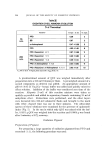
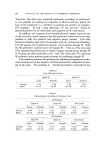
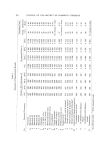
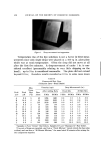
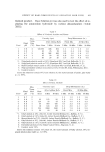
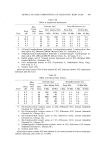
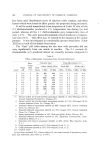
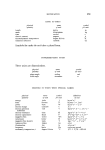
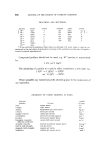
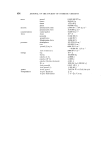
438 JOURNAL OF THE SOCIETY OF COSMETIC CHEMISTS pound produced sufficient increase in viscosity upon dilution with the peroxide, and control of drop-movement was only considered "fair" for both. A mphoteric Surfactants Table VIII summarizes the effect of adding four different amphoteric surfactants to Base Solution//3. This series was of special interest in terms of the development of "shampoo-in" colors. These particular additives were not chosen for their potential thickening ability, but rather because of their possible value for mildness, foam, or hair condi- tioning properties. One of them, the •-imino dipropionic acid derivative (//3, Table VIII) showed definite interference with color uptake when used in this base at 15%. The other three amphoterics had no effect on color. All pro- duced clear bases which lathered to some degree. The imidazolinium coconut derivative (#1, Table VIII) gave excel- lent increase in viscosity, but did not control drop-movement well at all. The heptadecenyl imidazolinium amphoteric (//2), on the other hand, controlled drop-movement better than the other three, but showed no improvement on the viscosity. Both imidazolinium compounds were the salt-free grades. Tertiary Fatty Amines Table IX summarizes results with the three cationic type surfactant amines, each a fatty acid derivative. None of the three contributed to an unusual temperature rise when peroxide was added to dye bases containing them, nor did they affect pH particularly. One of them, the bis-2-hydroxyethyl soybean amine, was quite effective in raising vis- cosity and controlling drop-movements when used at the 15% level at 7.5%, however, its value was almost nil in these respects. The stearyl analog of this soybean amine gave excellent viscosity increases at 15% on dilution with peroxide, but did not control drop-movement well. At 7.5%, it too was almost useless. The third fatty amine tested (2-hydroxyethyl, 3-hydroxyethyl soy amine) was relatively inefficient in controlling viscosity and drop- movements. It has a higher level of ethylene oxide than the other two, and once again, the depressing effect of high EtO levels on viscosity is noted. There was some evidence of occasional darkening of shades when swatches of hair were dyed from aged solutions containing these fatty

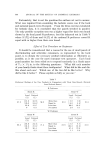
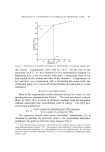
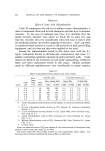
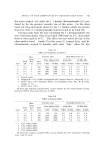
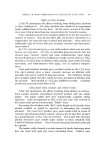
EFFECT OF BASE COMPONENTS ON OXIDATION HAIR DYES 439 amines. It should be noted here that 15% levels of these products, even in a bland base, may be rather irritating and must not be used as dye base additives without extensive safety testing. Quaternary Ammonium Compounds Table X summarizes the findings with six strongly cationic quater- nary ammonium compounds used at levels which are perhaps totally unrealistic from a safety standpoint since some of them produce corneal opacity when introduced into the eye at levels as low as 0.2%. They were used at 7.5% and 15% nevertheless, to give a comparison to the other materials tested in this study. It should also be pointed out that they were probably completely neutralized as cationic agents in the presence of the ammonium oleate soap base, thus greatly changing their irritation potential. There was definite evidence that the shade pro- duced by dye bases containing such quaternary ammonium cationic surfactants reddened as the solution aged. The phenomenon seems to apply to the class as a whole it is not restricted to individual com- pounds, nor to specific conditions of aging. In general, even at the "massive" levels tested, there was no effect on either the pH of the dye bases, nor on temperature rise upon mixing with peroxide. None greatly increased the initial viscosity. Dimethyl distearyl ammonium chloride (at 15% in Base Solution #1) produced the largest viscosity increase after addition of peroxide (from 30 cps initially, to 2060 cps five minutes after the peroxide was added, to 2580 cps after thirty minutes) and gave the best control of drop-move- ment of the whole group (0.5 in. or less at every stage tested). Di- methyl cetyl benzyl ammonium chloride (#7, Table X), in contrast, gave excellent viscosity build-up, but no control at all over drop-movement. In all cases, the 15% level appeared necessary for viscosity build-up and drop-movement control performance fell off sharply at the 7.5% level. There was solidification and separation when samples 1, 3, 4, 6, and 8 were aged at 2 øC. With sample #5 (stearyl quaternary imidazoline, 15%) the solution turned green after aging 1000 hours at 48 øC and addi- tion of the peroxide. It also showed a temperature rise of 7 øC. The color produced after aging at 48 øC was lighter and redder than when aged at 2 øC. Miscellaneous A dditives--Polypeptides, ED TA Polypeptides are currently being added to many hair products to take advantage of their protective colloid effect in preventing fiber damage
Purchased for the exclusive use of nofirst nolast (unknown)
From: SCC Media Library & Resource Center (library.scconline.org)