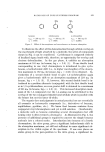
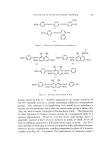
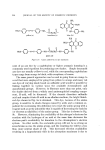
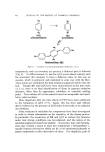
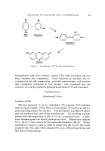
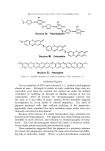
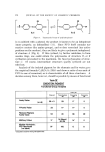
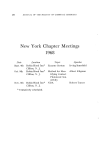
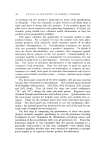
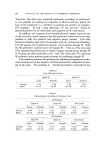
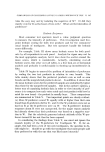
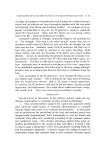
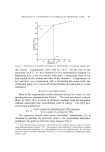
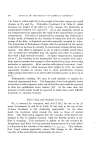
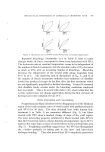
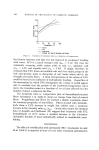
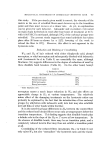
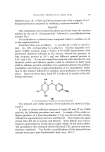
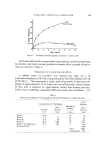
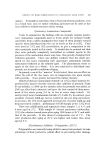
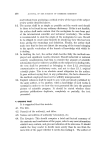
RATIONALE OF DYES SYNTHESIS PROGRAM 357 (a) (b) Figure 8. Disazo and naphthylazo chromophores H0 i•IH2 H038 (a) o HO HNCCHa • H0•S •--•3•_J•S0•H (b) H2N OH • H0•S •--4•k,,•__.•S0•H• (c) H•N OH (d) Figure 9. Azo dyes derived from H-acid groups shown in Fig. 7e. Another approach to an orange would be to use the sulfanilic acid in a system containing additional chromophore groups. One manner of accomplishing this would be to introduce a second azo chromophore along with an auxochrome giving a disazo dye (Fig. 8a) with a longer conjugated chromophore chain. This deepening of color obtained by linking arylazo groups in a conjugated chain is a general phenomenon. However, beyond three such groups there is generally reached a limit wherein increase in depth of shade levels off and, in addition, preparative difficulties may begin to occur. An alter- nate method of achieving increased conjugation with additional chromo- phores is to use a naphthalene coupling component in place of a benzene coupler as in Fig. 8b. In general, the replacement of a benzene compo-

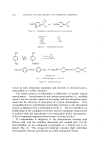
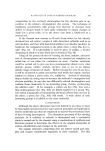
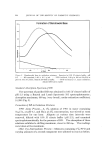
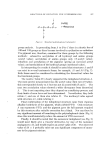
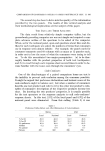
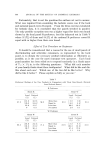
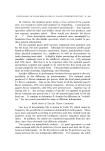
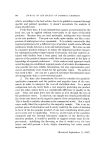
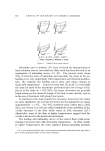
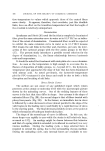
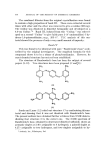
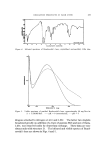
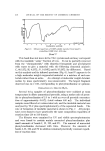
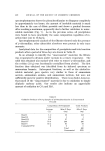
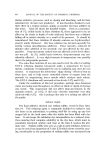
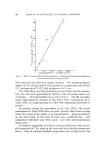
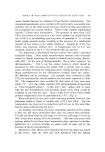
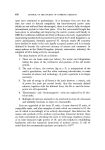
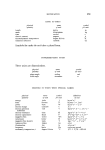
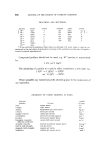
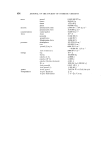
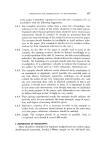
358 JOURNAL OF THE SOCIETY OF COSMETIC CHEMISTS SO•H HO•S-••N•N---•-NH2 0 0 --CCH2CH2C-- yellow (a) insulator (c) blue (b) H2N. 0 0 0 HO•S ••0 green (d) Figure 10. Color additivity in dye synthesis nent of an azo dye by a naphthalene or higher aromatic homolog is a commonly used expedient for producing new shades. Simple benzenoid azo dyes are usually yellow to red, while the corresponding naphthalene types range from orange to black, with exceptions, of course. The same general approaches can be used in going from an orange to a red that were employed for going from yellow to orange and many red azo dyes of varying shade based on sulfanilic acid would be possible by linking together in various ways the available chromophoric and auxochromic groups. However, to illustrate more than one point, only the shades derived from a widely used aminonaphthol coupling compo- nent, H-acid, will be discussed. If the chemist diazotizes sulfanilic acid and couples it into H-acid in an alkaline medium, the bright bluish- red dye shown in Fig. 9a is obtained. This dye, because of the amino group, is sensitive to shade changes caused by acids and a common ex- pedient for overcoming this deficiency is to react the amino group with a reagent such as acetic anhydride that is capable of decreasing the basicity (or electron availability) of the amino group. This dye is shown in Fig. 9b. However, eliminating the availability of the nitrogen's electrons for reaction with the hydrogen of an acid at the same time decreases the electron pair's availability for donation to the chromophore's electron system. In other words, the acetamido group will not be as strong an auxochrome as was the amino group, and the resulting dye will be a less blue, more neutral shade of red. This decreased electron availability resulting in a hypsochromic shift in the absorption maximum is due to
Purchased for the exclusive use of nofirst nolast (unknown)
From: SCC Media Library & Resource Center (library.scconline.org)