398 JOURNAL OF THE SOCIETY OF COSMETIC CHEMISTS 2. Ninhydrin Hair swatches were refluxed in unbuffered 0.1M ninhydrin solution at a liquor/hair ratio of 50:1 (15, 20). 3. Peptide Hydrolysis Hair swatches were refluxed in 0.01N HC1 (liquor/hair ratio 100: 1) for one and for 24 hours (20). 4. Esterification Dry hair swatches were refluxed for six and for 20 hours in dry methanol made 0.01N with dry HC1 gas at a liquor/hair ratio of 50:1 (20). 5. Formaldehyde Hair swatches were treated for 80 minutes at 25 øC in a solution which was 3.2M with respect to CaC12, 3.521/ with respect to CH20, and 2M with respect to HC1 at a liquor/hair ratio of 50:1 (21). 6. Phenyl lsocyanate Hair swatches were heated for ten minutes at 105 øC in 25 ml of a mixture of 2 parts by weight of phenyl isocyanate and 3 parts of dimethyl sulfoxide at a liquor/hair ratio of 12:1 (22). A control swatch was treated identically in dimethyl sulfoxide. 7. Mereuric Acetate Hair swatches were immersed in 0.1M aqueous mereuric acetate solution made 0.1N with respect to acetic acid at a liquor/hair ratio of 40:1 for one hour at 25 øC (20). 8. Perfiuorooctanoic Acid Hair swatches were immersed in a saturated aqueous solution (ca. 0.023M) of the acid at 25 øC at a liquor/hair ratio of 50: 1 for 30 days (23). 9. Reduction and Blocking Hair swatches were immersed in 0.1M benzyl mercaptan, phenyl mercaptan, ethyl mercaptan, or thioglycolic acid in 50:50 n-propanol/ water (adjusted to pH 6.3 with 0.1M NaOH) for 48 hours at 20øC. The hair was washed with 50:50 n-propanol/water and then immersed in an iodoacetate solution for 24 hours at 20øC (24). The iodoacetate solution was prepared as follows: Iodoacetic acid

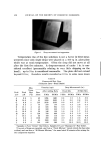
MECHANICAL HYSTERESIS OF CHEMICALLY MODIFIED HAIR 399 (18.6 g) and boric acid (12.35 g) were dissolved in water (about 400 ml), neutralized to pH 8.0 at 0øC with KOH, and then diluted to 500 ml with water. To this was added 500 ml of n-propanol. The mixture was stored at 20 øC and used within two weeks. The ratio of liquor/hair in each case was 25: 1. 10. •Red•tction and Crosslinking Hair was reduced with benzyl mercaptan as above. After washing with 50:50 n-propanol/water, the hair was immersed for 48 hours at 25øC in a 0.023/I solution of either dibromohexane, dibromo- ethane, or diiodomethane in a buffer containing 0.05_3//NH4C1 in 50:50 n-propanol/water (25). The liquor/hair ratio in each case was 50: 1. 11. Deamination Hair was treated three times for 24 hours at 25 øC with a solution containing 8.69 g NaNO2, 7.2 cc cone. HC1, and 30 ml of water (26). The liquor/hair ratio was 30: 1. Testing Proced•tre Apparatus A table model Instron Tester,* equipped with a "Type A" load cell (0-50 g), extension cycling controls, and a dual channel integrator, was used. The integrator was programmed to record the loading cycle on one channel and the unloading cycle on the other channel. Procedure Single dry treated or control fibers having a 5.08-cm (2 in.) gauge length were mounted on drilled Bakelite tabs using either a steel-filled epoxy cement• whenever temperatures above 45 øC were encountered or Kerr Sticky Waxy: for lower temperatures. These fibers were soaked for 24 hours in distilled water prior to extension. The fibers were then stretched under distilled water at the rate of 5.08 m/minute to 20% of their length at this point, the machine was reversed automati- cally to unload the fiber at the same rate. The resulting stress-strain (hysteresis) curve was recorded along with the integral of the loading and unloading curves. Generally, 30 fibers were used at each of four tem- peratures, (0 o, 25 o, 65 o, and 80 øC) for each chemical modification and * Instron Corp., Canton, Mass. t Plastic Steel, Dercon Corp., Danvers, Mass. •[ Kerr Manufacturing Co., Detroit, Mich.
Purchased for the exclusive use of nofirst nolast (unknown)
From: SCC Media Library & Resource Center (library.scconline.org)