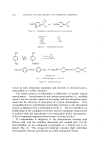
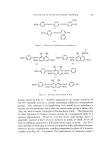
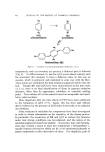
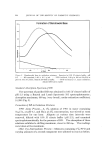
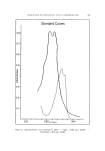
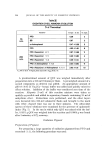
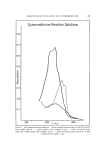
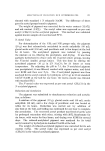
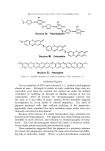
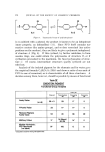
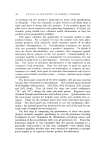
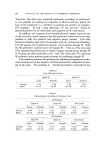
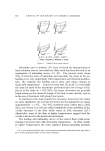
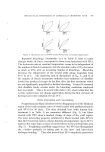
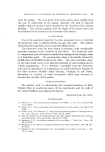
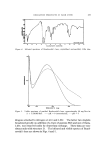
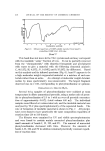
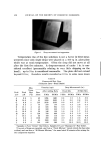
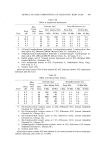
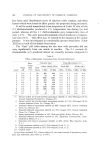
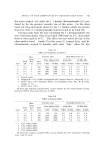
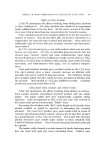
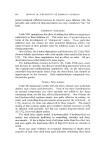
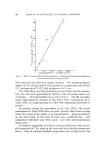
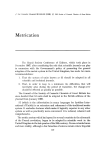
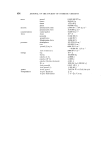
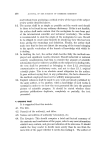
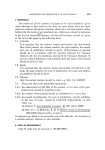
402 JOURNAL OF THE SOCIETY OF COSMETIC CHEMISTS Strain Strain C Strain D Strain A:0 øc, B =25øc, C:65øC, D:80 øc I.-Phenyl Is0cyanate, 2-Ninhydrin, 3.-C0ntr01 Figure 2. Typical stress-strain curves Alexander and co-workers (27) have reviewed the interpretation of load-extension curves, but relatively little work has been devoted to an explanation of unloading curves (16, 28). The present study shows (Fig. 2) that the work of unloading and especially the shape of the un- loading curve vary appreciably with temperature and chemical modifica- tion. By contrast, the loading curves show only minor changes in shape with temperature. It may be noted that W20 at 80 øC is essentially the same for most of the treatments performed since the average devia- tion is of the order of + 15%-30% the larger deviations are germrally found whenever the chemical change of the hair is more drastic, such as in the case of treatment with phenyl isocyanate. In contrast to the work required for extension, hysteresis ratio values are more significant the average deviations for this parameter are small, approximately + 1-3%. The 20% hysteresis ratio, rather than a 30% ratio, was chosen to avoid any added complexity from unfolding of the a-helix structure of the fiber which starts at 20% extension (27).* Admittedly, some of the data at higher temperatures suggest that the a-helix is involved in the hysteresis mechanism. The loading and unloading curves of the control fibers yield an in- creasing hysteresis ratio with increasing temperature. In other words, at higher temperatures the work regained during unloading increases * It is to be understood that some of the chemical treatments described below may have a m,?re or less permanent effect on the a-helix structure.

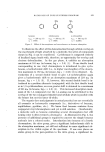
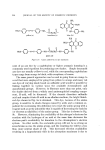
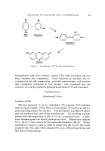
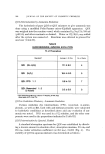
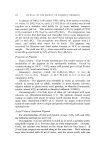
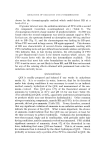
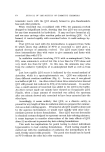
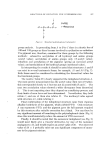
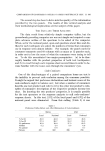
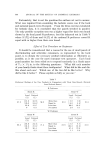
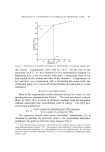
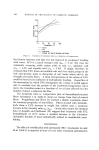
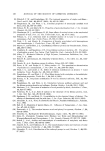
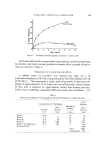
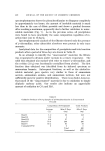
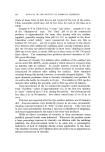
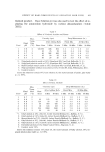
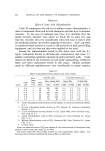
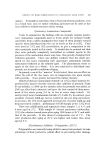
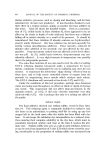
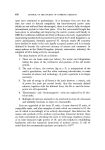
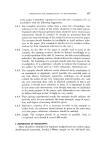
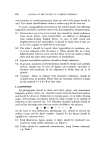
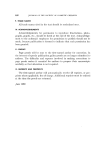
MECHANICAL HYSTERESIS OF CHEMICALLY MODIFIED HAIR Figure Simple mechanical model of keratin fiber more than the work required for extension. This may be interpreted by a spring-dashpot model (oversimplified) (Fig. 3), in which the viscosity of the dashpot is temperature dependent while the springs are essentially independent of temperature. Such a model produces instantaneous elasticity from S• and retarded elasticity from S2 and D• during loading. During unloading, S• is responsible for the immediate rapid loss of stress, while S2 and D• account for the slow release of further stress almost to the initial length. From this point on, the simple model fails to explain the rapid loss in stress to zero load. It is, therefore, concluded that the apparent second order phase transition signals a change in viscosity of the matrix with temperature. Consequently, a change in the hysteresis ratio is related to a change in the viscosity of the matrix. Effect of Introduction of Bulky Groups Watt and Leeder (20) have shown that the introduction of bulky additives into keratin (treatments 2 and 6a in Table I) produces a decrease in the equilibrium water content at high humidities. This was interpreted by them as indicating removal of possible sites for water binding. Since water is considered to be a plasticizer for keratin (16, 27), removal of such sites should lead to a more rigid or viscous material. Feughdman and Watt (9) drew a similar conclusion from the observed increase of the wet torsional modulus by addition of bulky groups to keratin fibers and attributed their findings to an increase in matrix viscosity. Farnworth (29) showed that phenyl isocyanate reacts with the amino, carboxyl, and thiol groups of wool and, possibly, with other active sites, thereby introducing bulky groups into a number of environ- ments in the hair. The present study shows dependence of the hysteresis ratio on the type and number of added bulky groups. Mercuric acetate (treatment
Purchased for the exclusive use of nofirst nolast (unknown)
From: SCC Media Library & Resource Center (library.scconline.org)