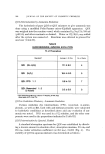
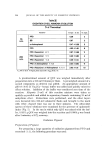
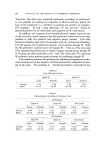
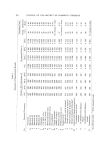
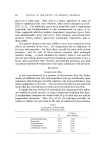
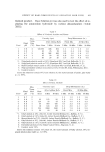
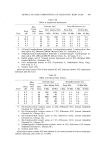
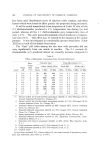
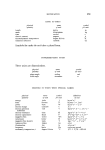
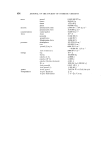
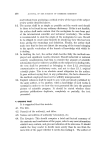
440 JOURNAL OF THE SOCIETY OF COSMETIC CHEMISTS during oxidative processes, such as dyeing and bleaching, and for their substantivity (in hair care products). It was therefore decided to test their effect in a routine manner, simply as another dye base additive in this series. Table XI shows the detailed results. Used at a concentra- tion of 1% (solids basis) in Base Solution #2, there appeared to be no effect on the shade or depth of color achieved, but there was a distinct falling off in initial viscosity as a result of its presence. It should be remembered that Base Solution #2 already contains an (hydroxyethyl- stearyl) amide thickener this base solution was devised especially for testing various miscellaneous additives. Final viscosity, achieved 30 minutes after addition of the peroxide, was not affected by the poly- peptides. Drop-movement control was not affected at this level either, nor was pH. At 2% (solids basis) however, drop-movement was con- siderably affected. A very slight increase in temperature was possibly due to the polypeptide presence. The same Base Solution #2 was also used to test the effect of adding EDTA (ethylene diamine tetraacetic acid), a sequestrant for heavy metals, commonly recommended for use in oxidation hair dyes for two reasons: to counteract the deleterious "tippy dyeing" effects of iron on these dyes, and to help ensure controlled release of oxygen from the peroxide by sequestering heavy metals which catalyze such release. The EDTA (disodium salt) was used at two levels, 0.2% and 0.5%. Under the conditions of this test procedure, perhaps since deionized water was being used throughout, no effect on shade or depth of dyeings was noted. This sequestrant did not affect drop-movements in the amounts tested at 0.5%, it did raise viscosity somewhat over that achieved with 0.2% this is perhaps due only to a salting out effect of the amide. Sodium Sulfite The final additive checked was sodium sulfite, tested in Base Solu- tion #4. This reducing agent is commonly included in oxidative hair dye bases as an antioxidant, to prolong shelf-life by using up any free oxygen left in the head space after the bottle has been filled with dye base. It also keeps the oxidation dye intermediates in a reduced state, thus ensuring their complete solubility in the dye base, which must be essentially uncolored (amber) and clear at the time it reaches the ulti- mate user. Sodium sulfite also acts as a salt in such solutions, however, as can be seen from inspection of Table XII which shows viscosity vary- ing considerably as the proportion of sodium sulfite was increased from

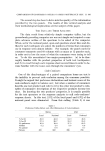
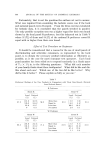
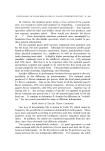
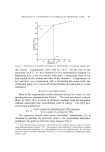
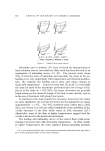
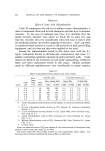
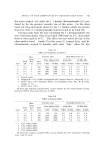
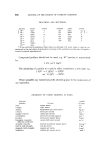
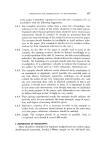
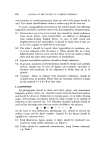
EFFECT OF BASE COMPONENTS ON OXIDATION HAIR DYES 441 0.2-2.0%. The viscosity (of the dye base alone) peaked at 1.0%, dropping off below and above that level. This reflects a typical "salting out" effect of the oleyl alcohol thickener present in this dye base. Vis- cosity of the dye base plus peroxide showed a more complicated pattern of behavior--peaking twice, at 0.5% and 2.0% levels of the sulfite salt. In contrast, drop-movement measurements of this series show a startling minimum at 0.5% sodium sulfite, with values which are only one-twelfth those at higher and lower concentrations of this salt. The distinctive results obtained at this concentration were repeated several times. It should also be noted that the maximum temperature rise rose sharply as concentration of sodium sulfite increased beyond minimal levels. At 0.2-0.5%, the maximum temperature rise was 2øC at 1%, it was 3 øC and at 2%, it was 8 øC. This may have been due simply to the oxidation-reduction reaction with peroxide, or it may have in- volved the dye intermediates as well. This particular series was not repeated without dye. The only effect on shade or color uptake noted for the series was a distinct darkening of shades obtained from aged solutions containing 0.2% sodium sulfite higher levels did not seem to affect color. Replacing Part or All of the Ammonia with Other A mines Several laboratories have noted previous to this paper (7) that extra- ordinarily large temperature rises can occur when dark shades of oxida- tion hair dyes are mixed with peroxide, if a large amount of free amine is also present. To the authors' knowledge, no systematic study of this effect has been published, however. Table XIII shows the results re- placing part or all of the ammonium hydroxide of Base Solution #4 by di- ethanolamine (DEA), triethanolamine (TEA), and monoisopropanol- amine, respectively. This dye base contains no amide, to avoid cloud- ing the issue the thickener used (oleyl alcohol) is "neutral" in two respects: it contains no amino groups and does not contribute to pH changes. The first attempt to achieve the necessary pH levels was solely by use of amines in place of ammonium hydroxide, as previously suggested in the literature (4, 5). This explains the rather extraordinary levels of DEA (18%) and TEA (29%) used in experiments #2 and #3 (Table XIII). The 30 øC temperature rise at 18% DEA should be noted how- ever, as well as the 13 øC rise which resulted from the presence of 29% TEA. There is no question that the effect was much greater for the
Purchased for the exclusive use of nofirst nolast (unknown)
From: SCC Media Library & Resource Center (library.scconline.org)