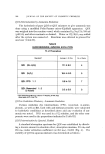
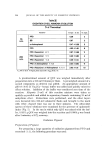
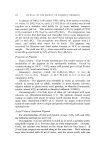
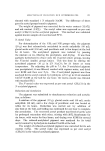
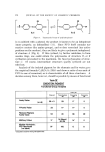
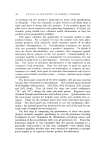
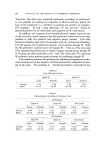
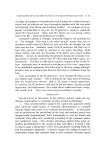
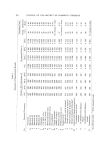
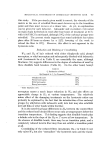
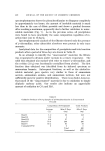
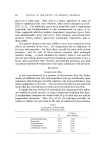
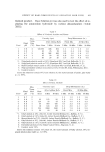
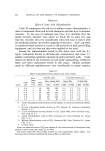
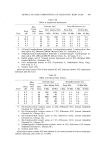
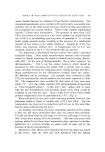
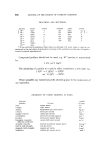
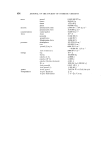
436 JOURNAL OF THE SOCIETY OF COSMETIC CHEMISTS base was fresh, but this interference disappeared on aging. None of the other amides had any effect on color uptake. t•ffect of Nonionic Additives Table V summarizes the effects of adding several nonionic materials to a dye base. At 15%, a polyglycol palmitic amide gave a solid dye base (before dilution with peroxide) it was therefore also tried at the 7.5% level. At 15%, it gave excellent viscosity readings after dilution with the peroxide, as well as minimum drop-movement. At 7.5%, it performed much more poorly and material settled out on standing. The hydroxy- ethyl stearyl amide tested also gave excellent viscosities and drop-move- ments. Polyoxyethylene sorbitan monoleate, on the other hand, did not help viscosity or drop-movement (results about equal to the water control), and definitely interfered with color uptake on the hair at the concentration used. The other two nonionics did not interfere in this respect. Temperature rises were considered reasonable for this whole series. Table XIII Effect of Replacement of All or Part of the Ammonia with Other Amines Max. Viscosity (cps) Drop-Movements (in.) Temp. After Adding H.zO.z Fresh Mix 30 Min Mix Final Rise Base Test a pH (øC) Alone 5 Min 30 Min 5 Min 30 Min 5 Min 30 Min 1 9.6 2 25 656 704 2.4 2.6 2.7 2.9 2 9.5 30 75 448 2440 0.5 0.6 0.6 0.7 3 9.0 13 65 264 400 1,4 1.7 2.6 3.3 4 10.2 3 20 400 380 6.5 7.6 6.6 8.1 5 9.8 4 25 860 936 0,9 0.9 0.8 0,8 6 9.6 6 35 500 320 0.6 0.7 0.9 1.0 7 9.7 19 40 452 1020 0.2 0.3 0.4 0.4 8 9.9 21 60 480 860 1.2 1.3 1.2 1.2 a 1. Am•noniu•n hydroxide 10%. 2. Diethanolamine 18%. 3. Triethanolamine 29%. 4. Monoisopropanolamine 7.0%. 5. Diethanolamine 2.5%. 6. Diethanolamine 5.0%. 7. Diethanolamine 7.5%. 8. Diethanolamine 10.0%. All above dye solutions contained 85% of base solution #4, the stated amount of ammonia or amine, plus water q.s. to 100%.

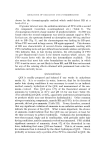
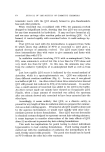
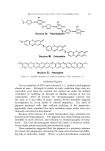
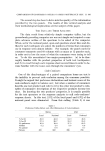
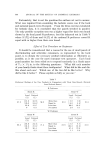
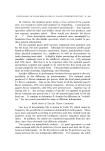
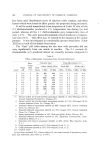
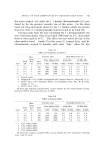
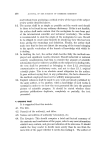
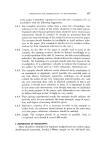
EFFECT OF BASE COMPONENTS ON OXIDATION HAIR DYES 437 Effect of Fatty Alcohols Table VI summarizes the effects resulting from adding fatty alcohols to Base Solution #3. The fatty alcohols were dissolved in isopropanol before adding them to the dye base. In this series, several of the addi- tives were tried at more than one concentration for viscosity reasons. Fatty alcohols proved to be excellent additives to the dye base for a number of reasons: they do not affect pH, nor do they contribute to a temperature rise when the base is mixed with peroxide when used at a sufficiently high level they also give excellent viscosity and drop-move- ment control. At 15%, cetyl alcohol gave a very solid product which was not satis- factory as a dye base at 7.5%, it controlled drop-movement well, but showed poor viscosity results and some sedimentation upon aging. Stearyl alcohol gave even less satisfactory results (tested only at 7.5%), showing a viscosity drop on dilution with peroxide, poor control of drop- movement, and sedimentation with aging, even at ambient tempera- tures. Oleyl and ricinoleyl alcohols gave excellent results at the 15% level. The oleyl alcohol gives a lower viscosity increase on dilution with peroxide, but better control of drop-movement. The ricinoleyl alcohol gives a higher initial viscosity, which increases ten times on dilution with the peroxide. Oleyl alcohol at 7.5% gave indifferent results ricinoleyl alcohol was not tried at this lower level. Ethoxylated Fatty Alcohols and Amine Oxides Table VII summarizes the effects resulting from adding two ethoxy- lated lanolin alcohols, ethoxylated myristyl alcohol, and two amine oxides. The amine oxides used were commercially available (30%) solutions when incorporated at 30% of the dye base, this resulted in 9% amine oxide present on an actual "Solids" basis. Increasing the ethylene oxide (EtO) chain length on the lanolin fatty alcohol resulted, as would be expected, in decreasing the viscosity obtained the 5-mol EtO product gave good results both in terms of viscosity and drop-movement control, whereas the 25-mol EtO product was unsatisfactory at the 15% level tested. The 4-tool EtO myristyl alcohol derivative gave results quite similar to those obtained with 5-mol EtO lanolin alcohols. None of these ethoxylated products affected dye uptake. The amine oxides showed a certain amount of shade darkening when hair was dyed with aged dye bases containing them. Neither com-
Purchased for the exclusive use of nofirst nolast (unknown)
From: SCC Media Library & Resource Center (library.scconline.org)