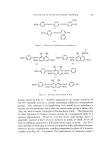
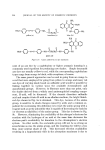
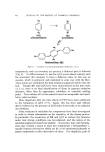
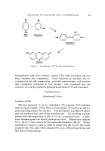
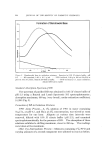
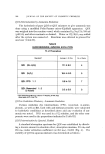
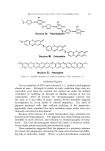
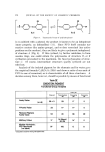
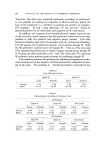
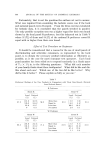
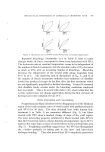
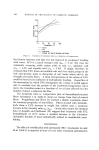
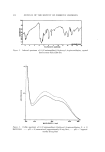
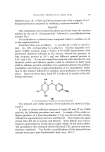
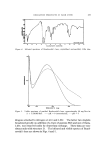
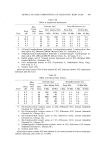
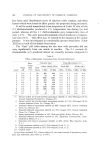
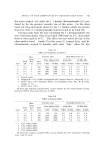
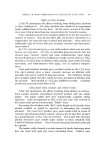
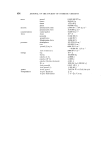
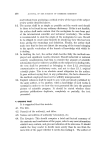
37O JOURNAL OF THE SOCIETY OF COSMETIC CHEMISTS A mixture of 648 g (6.00 moles) PPD, 600 g (6.00 moles) resorcinol, 9 1. water, 3 1.20% Na.2C0a, and 1.2 1. 35% H202 (13.6 moles) was stirred together in a stainless steel kettle for 26 hours without tempera- ture control pH 9.5. This mixture contained 4.4% by weight of PPD, 4.5% resoreinol, 4.1% Na2C0a, and 3.2% HsOs. The temperature rose to 90 øC in the first half hour and thereafter fell to room temperature. At the end of the time period, the clear brown solution was adjusted to pH 7.8 with HC1. The precipitate was filtered off, washed with 5 1. water, and milled with water for 16 hours. The pigment was recovered by filtration and dried under vacuum at 70 øC to constant weight. The yield was 467 g when corrected for water and ash content, it was 398 g, equivalent to 31% of theory for C•sHsN202. Properties of Pigment Water Uontent.--Karl Fischer method gave low results because of the insolubility of the pigment in the methanolic medium. Found by vacuum drying at 150 øC, 11.2% water still present gave a Karl Fischer value of 1.6% total water found, 12.8%. Elementary Analysis.--Calcd. for C1•HsN20•'2H•0: C, 58.1 H, 4.84 N, 11.3 O, 25.8. Found: C, 58.7 H, 4.96 N, 11.1 0, 25.4 ash (inorganic), 2.0%. Solubility.--The pigment was insoluble in water at neutrality but soluble in strong acid or alkali insoluble in most organic solvents slightly soluble in glacial acetic acid, pyridine, or dimethyl formamide soluble (about 10%) in carbitol or dimethyl sulfoxide (DMS0). Chromatography.--On thin layer of silica gel (developed with most solvents, eg, chloroform-methanol, 9:1), the pigment showed mostly residue at origin with about 12 minor bands moving freely. Develop- ment with chloroform-DMS0 (3: 1) showed six major yellow-brown bands of same shade close to origin and poorly resolved plus minor bands moving freely. Acetyl Value of A cetylated Pigment For determination of total acetylatable groups (NH2 NH, and OH), the following method was used (10): The pigment (1 g) was allowed to stand in 25 ml of a pyridine-acetic anhydride reagent (3:1) for three days at room temperature. (Alterna- tively, the mixture was heated on the steam bath for four hours.) A 25-ml blank reagent was carried along at the same time. Both solutions were then treated with 25 ml of water, and the excess acetic acid was

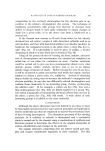
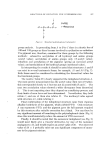
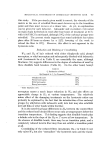
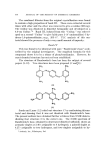
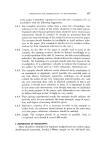
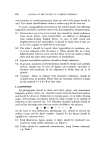
REACTIONS OF OXIDATION DYE INTERMEDIATES 371 titrated with standard 1 N ethanolic NaOH. The difference of titers gave the acetyl groups bound to pigment. The weight of pigment was corrected for its water content (12.8%) and ash content (2.0%). The acetyl value was expressed as per cent acetyl (CHACO) in the acetylated pigment. This method was validated against known samples of resorcinol and PPD. N-Acetyl Value For determination of the NH2 and NH groups only, the pigment (20 g) was first exhaustively acetylated in acetic anhydride (80 ml), glacial acetic acid (150 ml), and perchloric acid (a few drops) at the boil for 48 hours. The acetylated pigment was isolated by pouring the mixture on ice, filtering the precipitate, and drying. It was then partially hydrolyzed to cleave only the O-acetyl (ester) groups, leaving the N-acetyl (amide) groups intact. This was done by stirring the acetylated pigment (10 g) in 2N Na2COa for 24 hours at room temperature. By adjusting the pH to 7.5, the N-acetylated pigment was precipitated it was filtered, washed with copious water, and dried over KOH and then over P•Os. The /V-acetylated pigment was then analyzed for its acetyl content by hydrolysis (of 0.5 g) in 25 ml standard 0.373/V NaOH at the boil for one hour the excess caustic was titrated with standard HC1. The/V-acetyl value was expressed as per cent acetyl (CHACO) in the N-acetylated pigment. Reduction and A cetylation The pigment was submitted to simultaneous reduction and acetyla- tion, as follows: A mixture of the pigment (12 g), glacial acetic acid (60 ml), acetic anhydride (60 ml), and a few drops of perchloric acid was heated at reflux for 48 hours. Reduction was carried out by addition of zinc dust at the boil, and boiling was continued for one hour to complete the acetylation. The recovered acetyl product was freed of acetic acid by prolonged extraction with ether, stirring with 20% bicarbonate for six hours, with water for four hours, and drying over KOH for several days. The reduced-acetylated pigment was analyzed for its total acetyl content by hydrolysis in standard NaOH at the boil. The weight of reduced-acetylated pigment was corrected for its ash content (13%). The acetyl value was expressed as per cent acetyl (CHACO) in the reduced-acetylated pigment.
Purchased for the exclusive use of nofirst nolast (unknown)
From: SCC Media Library & Resource Center (library.scconline.org)