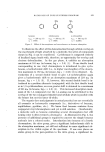
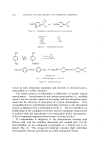
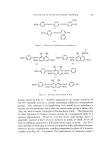
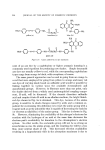
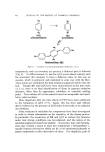
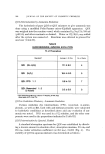
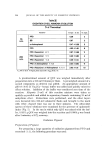
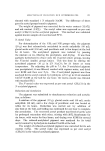
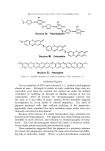
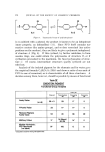
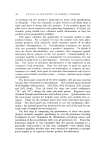
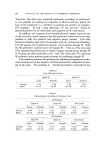
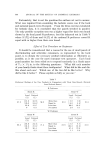
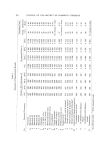
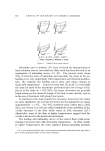
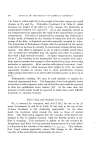
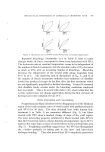
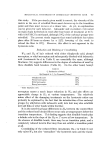
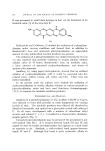
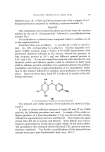
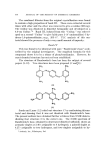
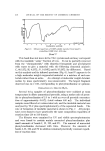
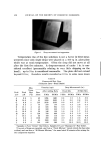
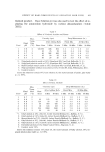
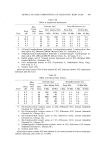
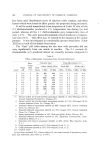
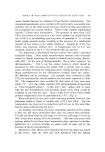
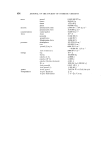
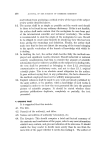
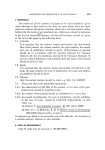
376 JOURNAL OF THE SOCIETY OF COSMETIC CHEMISTS Figure 7. Tautomeric forms of polyindophenol is co-oxidized with a phenol, the product is known to be an indophenol (more properly, an indoaniline) (11). Since PPD itself contains two reactive centers (the amino groups), and so does resorcinol (two active positions on the nucleus), they are likely to give a polymeric indophenol, of structure _4 (Fig. 6). If this cyclized, by further oxidation, to form oxazine rings, one could obtain the polyoxazine of structure B, or if cyclization proceeded to the maximum, the fused polyoxazine of struc- ture C. Of course, intermediate structures (partly cyclized) are not ruled out. Analysis of the isolated pigment for the elements and for water gave the empirical formula C•2HsN202-2H20 and shows a ratio of one mole of PPD to one of resorcinol, as is characteristic of all these structures. A decision among them, however, should be possible by means of functional Table •7' OXIDATION PIGMENT Functional Group Analysis Theo• for Observed Polyindophenol Polyoxazine Polyoxazine (A) (B) (C) Acetyl Value (n=6) 29 + 3 29 17 0 N-Acetyl Value 23 17' 17' 0 Reduced Pigment, Acetyl Value 53 45 38 29 Methoxyl Value 17 14 (Mono) 14' 0 26 (Di) Alkaline Hydrolysis: PPD Recovered 97 100 0 0 (vs. blank) 'Computed for tautomer which gives highest value.

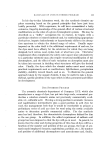
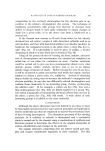
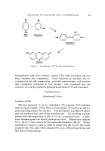
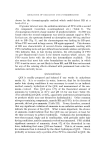
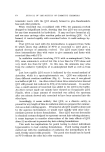
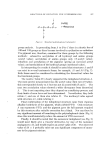
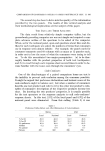
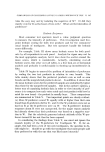
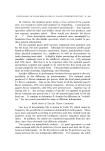
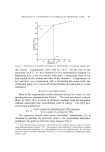
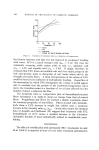
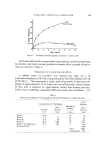
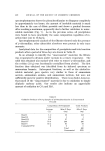
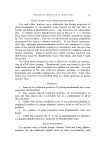
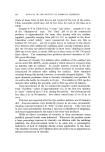
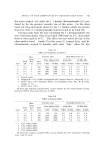
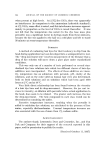
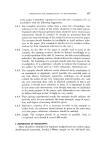
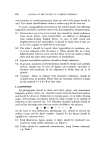
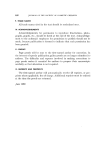
REACTIONS OF OXIDATION DYE INTERMEDIATES 377 I -P-r-P-r-P-r-•-r- i P ! P=PPD r :Resorcinol Figure 8. Branched polyindophenol (schexnatic) group analysis. In proceeding from A to B to C there is a drastic loss of OH and NH groups as these become involved in cyclization or oxidation. The pigment was, therefore, examined for these groups by the following methods: exhaustive acetylation of all hydroxyl and amino groups (acetyl value) acetylation of amino groups only (N-acetyl value) reduction and acetylation of the pigment (giving an increased acetyl value) and methylation of the hydroxyl groups (methoxyl value). In interpreting the results it should be noted that structures A and B can exist in several tautomeric forms, for example, A 1 and A • (Fig. 7). Both forms must be considered in calculating the theoretical values for the functional groups. The results (Table IV) clearly supported the indophenol structure A. The most precise measurement was the acetyl value (first row of Table) this corresponded closely to A but was not in accord with B and C. The next two acetylation values showed a wider divergence from theoretical A. This is not surprising since they depend on a multistep process, and their limits of error have not been determined. Nevertheless, they both refute C, and one of them also refutes B. The methoxyl value agreed with structure A 1, while refuting C. Final confirmation of the indophenol structure came from vigorous alkaline hydrolysis of the pigment, which yielded PPD. Only structure A can regenerate PPD, and the pigment gave the full amount required by this structure after suitable correction for a blank. Nor can there be any significant amount of branching in the polyindophenol chain (Fig. 8) since this would materially reduce the amount of PPD recovered. Finally, it should be noted that the toohomeric indophenol (see Fig. 2) would most likely give a triacetyl derivative, by way of the tautomer analagous to A 8, and would require an acetyl value of 38. The observed value of 29 4- 3 probably rules out any significant component of mono- mer in the pigment mixture.
Purchased for the exclusive use of nofirst nolast (unknown)
From: SCC Media Library & Resource Center (library.scconline.org)