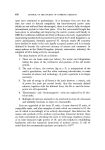
EFFECT OF BASE COMI'ONIoeNTS ()N OXIDATION flAiR DYES 445 REFERENCES (1) Kritchevsky, Wolf, U.S. JPatent 1,665,202 (March 20, 1928). (2) Cook, Marvin K., Bases for permanent hair dyes, Drug. Cosmetic Ind., 87, 316 (Sept., 1960). (3) Clairol international, 13rit[sh l•alent 995,948 (June 23, 1965). (4) Wolfgang, M. J. E., trod Siegfried, R. P., U.S. l'atent 2,769,748 (Nov. (3, 1[)56). (5) Gallia Ltd., London, U.S. l•atettt 23)42,698 (June 2, 1936). (6) Cook, Marvin K., Modern oxidation dyes, 1)rug. Cosmetic Ind., 99, 52 (November, 1966). (7) Kass, G. S., and Tucker, H. H., private communications.

Book Reviews STEROID HORMONE ANALYSIS, by Hans Carstensen, Vol. I. Marcel Dekker, Inc., New York. 1967. Pp. xiii-493, illustrated. $23.50. Dr. Carstensen, as well as his dis- tinguished contributors, are to be congratulated for their efforts in pre- senting Vol. 1 of "Steroid Hormone Analysis" to the scientific commu- nity. Each of the major techniques of steroid methodology such as IR, NMR, as well as gas and paper chromatography are discussed in a precise and well-organized manner. Two chapters in particular make "Steroid Hormone Analysis" worth- while. One contains the first ex- tensive presentation (of which this reviewer is aware) of double isotope derivative methods for ultra-micro steroid determinations. A detailed discussion of the application of this technique is then given for the analysis of aldosterone, corticosteroids and estrogens. A second chapter concerns itself with the problems pre- sented by steroid conjugates in urine. Valuable discussions on the extrac- tion, purification and hydrolysis of steroid conjugates are among its highlights. 447 This volume is well referenced at the end of each chapter and helpfully illustrated throughout. It should prove quite valuable to any researcher or physician concerned with steroid analysis .--CARL FELGER--Gillette Research Institute. TRACE ELEMENTS IN BIOCHEMISTRY, by H. J. M. Bowen, Academic Press, London/New York. 1966. Pp. ix d- 241. $9.50. The title of this book is somewhat misleading as the author attempts to touch on all of the elements, natural and unnatural, that occur in the bio- sphere. In 241 pages of text this is an ambitious goal that the author has had only modest success in achieving. The first three chapters dealing with the origin of elements, terrestrial geochemistry, and composition of soil provide interesting reading. The ele- mentary composition of plants and animals is discussed next, together with a useful and extensive tabular summary of the occurrence of chemi- cal elements in plants and animals. Other chapters are concerned with a summary of the existing data dealing
Purchased for the exclusive use of nofirst nolast (unknown)
From: SCC Media Library & Resource Center (library.scconline.org)