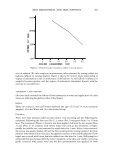
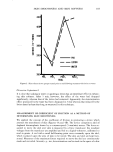
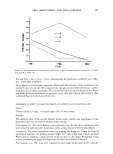
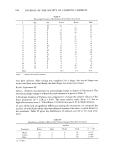
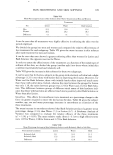
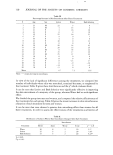
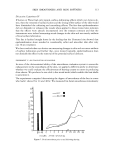
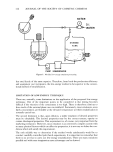
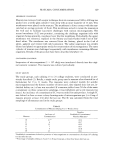
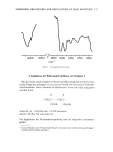
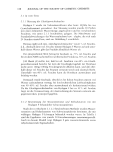
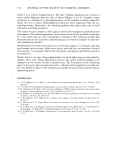
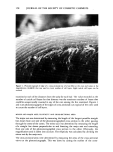
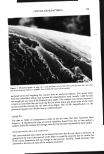
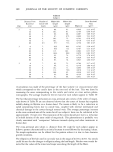
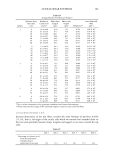
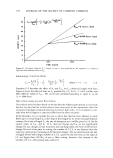
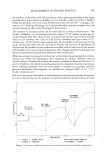
SKIN SMOOTHNESS AND SKIN SOFTNESS 113 Discussion.' Experiment IV If Lotion or Water had only topical, surface-lubricating effects which our devices de- tect, then the removal of surface Lotion and the drying of the surface of the skin would have diminished the softening and smoothing effects. The fact that epidermabrasion did not diminish (or enhance) the results when applied to these treated sites indicates that the effects were already incorporated into the stratum comeurn and that the instruments were indeed measuring actual changes in the skin and not merely artifacts of local surface lubrication. This fact is further brought home by the finding that the Untreated site showed that epidermabrasion alone resulted in considerably softer and smoother skin after only one 30-sec treatment. We thus conclude that our devices are measuring changes in skin and not mere artifacts of surface lubrication and further that, once treated topically, epidermabrasion does not diminish the effect by the removal of the potential surface lubricant. EXPERIMENT V: AN EVALUATION OF SHAVING In view of the demonstrated ability of the smoothness evaluation system to assess the enhancement in the smoothness of the skin, we applied a different probe to determine whether we could evaluate the effectiveness of shaving creams or razors in producing close shaves. We produced a new sled (a fine metal mesh) which enables the hair shafts to penetrate it. The experiment comprised determining the degree of smoothness of the face in a man who hadn't shaved for 24 and 48 hr. We measured his facial smoothness immediately Z , LEFT ..... RIGHT 2448 012 3 4 '2• 2.'4 2• 2'•5 HOURS AFTER SHAVING Figure 7. Facial smoothness prior to and following shaving

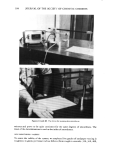
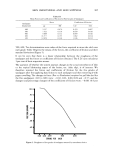
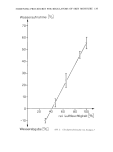
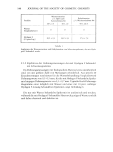
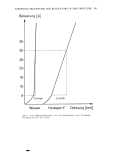
114 JOURNAL OF THE SOCIETY OF COSMETIC CHEMISTS following shaving and after 1, 2, 3, 4, 5, 23, 24, 25 and 26 hr. The results, which are rather clearcut, are depicted in Figure 7. This indicates that there is differential hair growth on the two sides of the face, which is monotonic with time. The growth of hair can be measured almost hourly and the effec- tiveness of shaving can be assessed. COMPARISON OF SMOOTHING AND SOFTENING SKIN The series of correlations (see above) has demonstrated that three skin treatments produced smoothing and softening effects on the skin. This finding should not be of surprise. However, since the methods are operationally distinct, one can concei•ve of producing a smooth skin, e.g., by mechanically removing surface roughness, but not necessarily by softening it. Conversely, one might be able to soften a surface, leave it rough, or indeed, even roughen it additionally in the process. Comparison of the results of Experiments I and II illustrated that such a dissociation may have indeed oc- curred. Thus, Figure 3 shows that water had an immediate softening effect which was dissi- pated after 5 min while the lotion maintained its effect. Figure 6, however, shows that even 10 min after treatment and after forced drying with heated air, the Water Treat- ment group still showed significant smoothness. We believe moisturization of the stratum corneum to be one major cause of smoothing and softening the skin epidermabrasion is another. We are, therefore, considering a study to assess the direct effects of varying degrees of moisturization or epidermabrasion on the smoothing and softening of the skin. CONCLUSIONS We have described the development of two systems for assessing, in vivo, the softness and smoothness of skin. These methods have high retest reliability, precision and validity, and can be applied on various skin surfaces to determine the effectiveness of skin treatments in softening or smoothing the skin. The system for assessing skin smoothness has also been adapted to measure the degree of facial smoothness as a function of efficacy of shaving creams or razors. The two systems are capable of assess- ing the beneficial effects of various skin treatments and must be considered measures of separate effects. ACKNOWLEDGMENTS The author wishes to thank Dr. Norman Orentreich and his staff for helpful criticisms of this report, and for suggesting study of the potential artifact of lotion as an external lubricant. Dr. Orentreich suggested the study of the effect of lotion on sandpaper and the study of the softening and smoothing effects of epidermabrasion. We are grateful to the Orentreich Medical Group for making available a sufficient supply of Buf-Puf, a polyester fiber web, to study the effects of epidermabrasion on softening and smooth- ing skin. Most of the tests and analyses were capably done by Peter Filosi, Curt
Purchased for the exclusive use of nofirst nolast (unknown)
From: SCC Media Library & Resource Center (library.scconline.org)