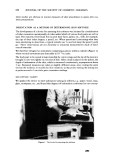
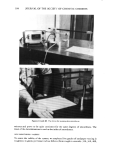
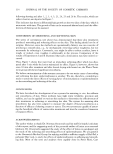
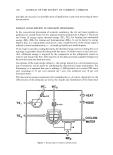
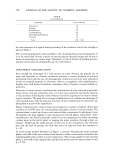
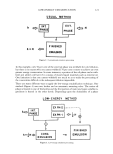
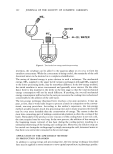
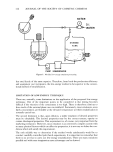
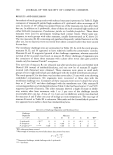
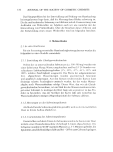
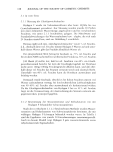
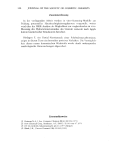
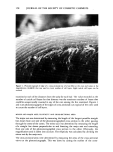
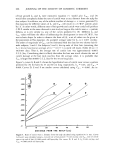
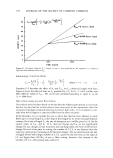
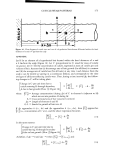
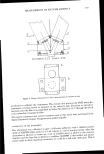
122 JOURNAL OF THE SOCIETY OF COSMETIC CHEMISTS ME• ME 2 METER [• 4---D.I. WATER Figure 4. Two-kettle low-energy emulsion processing inversion, the oil phase can be added to the aqueous phase or vice versa to form the emulsion concentrate. While the concentrate is being cooled, the remainder of the cold aleionized water can be metered in to complete emulsification. The saving of thermal energy is quite obvious in such a technique. The mechanical energy, ME•, supplied to the upper kettle remains unchanged, although ME•, supplied to the lower processing kettle, may be somewhat different. In the low-energy method, the initial emulsion is more concentrated and generally more viscous. On the other hand, there is less material in the kettle in the first stage so that the total mechanical energy consumption will not be much different. If anything, the over-all mechanical energy consumption will be less for the new process since the cooling time is shortened considerably by the addition of the cold water. The low-energy technique illustrated here involves a two-step operation. It may ap- pear, at first, that it would take longer to process a batch in comparison to the conven- tional, one-step procedure. According to the author's experience, the low-energy method actually requires much less processing time and in many situations this benefit may be even more desirable than the conservation of energy. The reason is that the most time-consuming part of making a commercial emulsion is often the cooling of the batch. Particularly if the product is very viscous or if the cooling water is not very cold, the time required may be very long. In the new process, the addition of less energy at the beginning means removal of less heat during the cooling period, resulting in a substantial shortening of the heating and cooling time. Moreover, the dilution step can be carried out during the cooling stage by simply metering the cold, deionized water so that there is no extra time consumed in the second stage. APPLICATION OF THE LOW-ENERGY METHOD IN PRODUCTION EXPANSION In addition to saving energy and processing time, the low-energy technique described here may be applied in some instances to save capital expenditure in planning a produc-

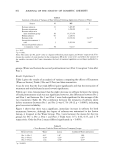
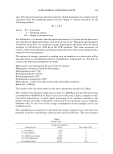
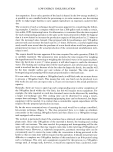
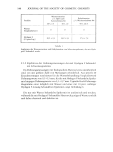
LOW-ENERGY EMULSIFICATION 12 3 tion expansion. Since only a portion of the batch is heated in the low-energy method, it is possible to use a smaller kettle for processing or, in some instances, use the existing kettle to make larger batches to save capital expenditure on expensive, jacketted ket- tles. The economy of such a technique should become apparent by considering the follow- ing examples. Consider a company which now has a 200-gallon tank to make a certain, low-solids, O/W moisturing lotion. For illustration, it is assumed that the time required for each compounding operation is the same as the time presented in Table II. Suppose that it is now desired to increase the production capacity of this product by 2.5 times to meet the increased sales demand. One proposal calls for purchasing a new 500-gallon process tank and increase the batch size by 2.5 times. However, a careful engineering study would soon reveal that the purchase of a new kettle alone would not guarantee a proportional increase in the actual production if the conventional emulsification tech- nique is used. The reason should become apparent if the time required for each operation (Table II) is carefully examined. The preparative time includes the time required for weighing the ingredients and for metering or weighing the deionized water in the aqueous phase. Since the batch size is now 2.5 times greater, it will take longer to catch the deionized water. The heating and cooling times will be much greater, not only because more ma- terial is involved but also because of the fact that the larger the kettle, the smaller will be the heat transfer surface per unit volume of the material. The time spent on homogenizing and pumping will increase proportionally to the batch size. If it now takes 4 hr to complete a 200-gallon batch, it will likely take six or more hours to process a 500-gallon batch. This means that only one batch can be produced in an 8-hr work day and one can expect only a 25 per cent increase in the actual production capacity. Naturally, there are ways to speed up each compounding step to allow completion of the 500-gallon batch within the 4-hr limit, but this will require more equipment. For example, the time required to catch the deionized water can be shortened by installing a larger ion-exchange unit. The cooling time can be shortened by using a rotary, scraper heat exchanger. The homogenizing/pumping time can be shortened, but larger equipment will be needed. It is evident that a considerable capital expenditure will be required for the proposed production increase. By far the more economical way of meeting the need would be to adopt a modified, low-energy technique (Figure 5). The idea presented here is to make an emulsion concentrate in the existing 200-gallon kettle and then dilute it in a 500-gallon storage tank equipped with a mixer. The method is particularly ideal if the emulsion has a relatively small internal/external phase ratio. Since only 200 gallons of the material is heated, the heating and cooling times will not increase. The time needed for pumping and homogenizing will be the same. The only operation that may require extra time is the metering of 300 gallons of deionized water. However, a relatively inexpensive, automatic metering valve can be conveniently used to meter the water while the concentrate is being processed in the kettle so that no extra time will be required in this operation. It should not present any difficulty to complete two 500-gallon batches of this emulsion in an 8-hr period using such a technique. The only new equipment required for this process is a 500-gallon storage tank. A storage tank, however, is much less expensive than a jacketted, stain-
Purchased for the exclusive use of nofirst nolast (unknown)
From: SCC Media Library & Resource Center (library.scconline.org)