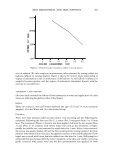
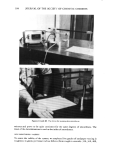
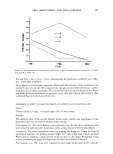
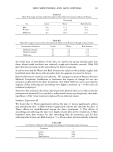
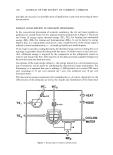
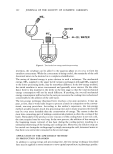
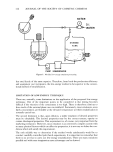
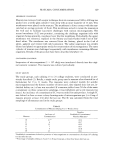
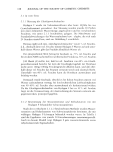
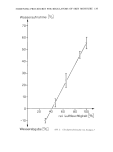
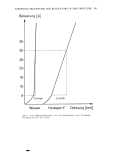
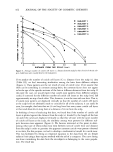
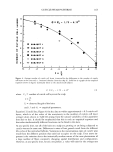
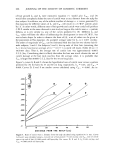
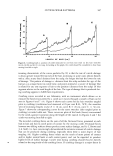
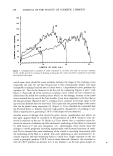
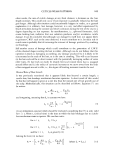
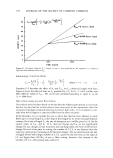
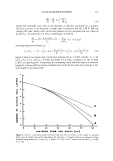
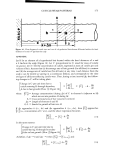
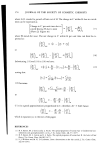
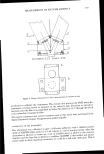
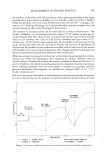
MEASUREMENT OF ENZYME KINETICS 179 CHAMBER SIZE 21mmX 5mm 0 o B 0 Figure 1. Design of instrument for direct measurement of enzymes on skin conducted to calibrate the instrument. The closure also protects the PMT instrument is being moved or adjusted on the subject's skin. Provision to introductheblockthewhen reactants onto the skin is accomplished by holes (N) drilled at 22.5 ø thorough to accommodate 22-gauge needles. All enzyme substrates and control enzymes used in this study were purchasedfrom Sigma Chemical Company. Reagents were analytical grade. The instrument was calibrated to give a full-scale deflection with 1 millimicro (/aM) of NADPH when added in 0.1-ml volume to 2 ml of reaction media. After instrument is allowed to warm up, 2 ml of distilled water is added to the reactiotheadjust-isThis chamber and the base line is allowed to stabilize. NADPH is then added and ments made to allow maximum sensitivity of 1 /aM for a full-scale deflection.

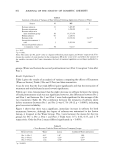
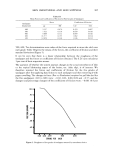
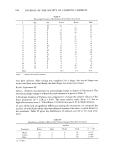
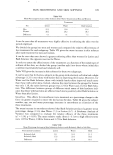
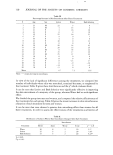
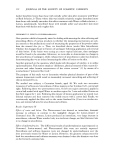
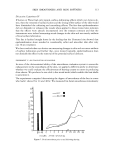
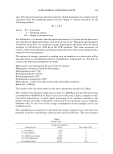
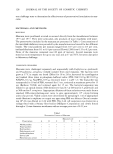
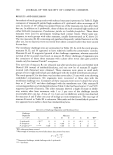
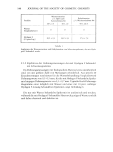
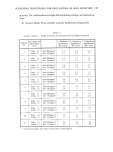
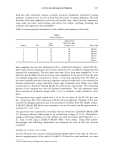
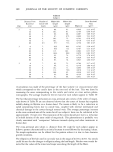
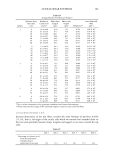
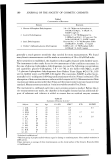
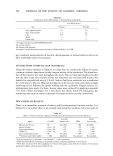
180 JOURNAL OF THE SOCIETY OF COSMETIC CHEMISTS Table I Concentration of Reactants Enzyme Reactants 1. Glucose-6-Phosphate Dehydrogenase 2. Isocitric Dehydrogenase 3. Lactic Dehydrogenase 4. Uridine 5-diphospho-glucose dehydrogenase 5.8 x 10-aM glucose-6-phosphate in 0.063M, Tris MgC12 0.1M pH 7.4, NADP 1 mg/5 ml Isocitrate 3 x 10⁻⁴M Manganese C12 0.1MMnCI.., in NAC1 0.15 per cent, Tris buffer 00063M pH 7.5, NADP 1 mg/ml Pyruvate Na 2 x 10-aM, Phosphate buffer 0.05MpH 8.5, NADHo. 0.5 mg/ml UDPG 6.28 x 10-aM Phosphate buffer 0.05M pH 7.0, NAD 1 mg/ml generally a much greater sensitivity than needed for most measurements. We found many kinetic measurements could be made at a sensitivity of 20 to 60/xM full scale. After sensitivity is established, the chamber is thoroughly cleansed with distilled water. The instrument is then ready for an in vitro assessment of the conditions necessary. In the case of glucose-6-phosphate dehydrogenase, we used the following concentrations and quantities: glucose-6-phosphate, 5.8 x 10⁻³M, in tris buffer with MgCI•, at pH 7.4 glucose-6-phosphate dehydrogenase from Bakers Yeast (Sigma #G-6378), 0.05 unit in distilled water and NADP, 0.04 mg/ml. The coenzyme, NADP, is added incre- mentally by 0.1-ml aliquots (0.004 mg) until amaximum velocity (Vmax) is obtained. (The absorption of this reaction mixture without added enzyme is 0.01). Measurements of skin reactions are taken as rates rather than Vmax and the yeast enzyme is not used as an internal standard. Measurements are made at 1-min intervals for a total of 5 to 20 min. The instrument is calibrated each time a new enzyme system is studied. Before the in vivo measurements are made, the chamber is thoroughly cleansed and an additional ali- quot of substrate and cofactor is added to ensure that no residual enzyme remains Table II Summary of Enzyme Activity* Subject Sex Age G~6-PD LDH** ICD UGDPD 1. L.M. F 20 2.0 0.5 2. M.R. F 20 1.6 8.0 3. M.H. F 20 0.9 0.1 4. G.G. F 20 1.0 0.7 5. J.P. F 45 2.9 3.5 6. T.A. M 31 1.0 3.2 7. S.S. F 41 2.1 7.1 8. P.P. M 49 2.4 5.0 9. M.S. M 36 1.9 2.7 10. S.G. F 31 1.5 2.5 11. B.B. M 22 1.2 3.0 12. J.C. F 37 1.9 1.4 0.5 2.7 3.O 1.5 2.0 0.5 3.4 *Calculated in/aM/rain cmL **Random group of people studied without regard to fasting or nonfasting states. Note marked variations in LDH activity. Values represent an average of three determinations on the dorsal surface of the forearm. Reproducibility + 0.4/zM/min/cmL
Purchased for the exclusive use of nofirst nolast (unknown)
From: SCC Media Library & Resource Center (library.scconline.org)