J. Soc. Cosmet. Chem., 29, 127-131 (March 1978) Mascara contamination: in use and laboratory studies D. G. AHEARN, J. SANGHVI and G.J. HALLER Georgia State University, Atlanta, Georgia 30303,' and L. A. WILSON Emory University, School of Medicine, Atlanta, GA 30322. Received May 16, 1977. Presented at Annual Seminar Meeting, Society of Cosmetic Chemists, May 1977, Montreal, Canada. Synopsis Eye area cosmetics are subject to varied levels of microbial CONTAMINATION during their normal use. Selected MASCARAS with known preservative formulations were compared for their resistance to mi- crobial colonization DURING USE by study groups and following a laboratory challenge test. A few products supported active growth of microorganisms after less than two weeks of normal use and after LABORATORY challenge. In study groups, the establishment of reproducing populations of microorganisms in certain mascaras occurred consistently with select individuals. Mascaras containing only parabens or imidazolidinylurea appeared to be less effective in retarding microbial growth than those containing formalin donors or mercurials. Effectiveness of preservative formulations may gradually decrease with the age of the product. INTRODUCTION Most mascaras contain antimicrobials to maintain the integrity of the product and to protect the consumer from the development of potentially harmful contaminants. Nevertheless, certain mascaras examined during use have been found to be overgrown with microorganisms and in some instances to be associated with eye infections (1-3). Ramp and Witkowski (4) have reviewed typical procedures for testing preservative systems in cosmetics. These involve the introduction of microorganisms, usually about 1 x 10⁶ cells, into a 1-ml or 1-g sample of product. Effectiveness is determined by the recovery of less than 0.1 per cent of the inoculum after seven days. Sampling intervals may be extended for several months. Bruch (5) expressed concern about the lack of comparative data published on the various testing procedures. Yanagi (6) recom- mended that the challenge test for cosmetics be carried out in the commercial containers in which they are s01d to the consumer. Laboratory evaluation of the effec- tiveness of the preservatives in mascaras by the usual microbiological procedures is difficult as many formulations are not readily solubilized by water. Dilution procedures used for enumerating microorganisms in mascaras may require the use of solvents or emulsifiers which may be toxic to the challenge microorganisms (7,8). At present, there is no standard procedure for evaluating the resistance of mascara formulations to microbial degradation. This report compares "in use" study-group analysis with labora- 127

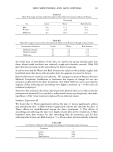
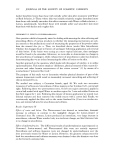
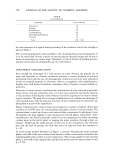
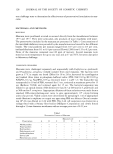
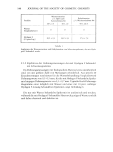
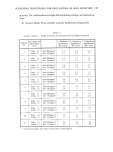
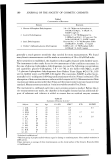
128 JOURNAL OF THE SOCIETY OF COSMETIC CHEMISTS tory challenge tests to determine the effectiveness of preservative formulations in mas- caras. MATERIALS AND METHODS MASCARAS Mascaras were purchased at retail or secured directly from the manufacturer between 1975 and 1977. They were semi-solid, oily products of poor miscibility with water. The preservatives included in the mascaras are presented in Table 1. Concentrations of the microbial inhibitors were provided by the manufacturer and varied for the different brands. The total parabens per mascara ranged from 0.15 per cent to 0.5 per cent, imidazolidinylurea from 0.3 to 0.4 per cent and Dowicil 200 from 0.15 to 0.2 per cent. None of the mascaras contained over 60 ppm of mercury. Several mascaras were stored at room temperature for up to one year and at 37 and 56øC for seven days prior to laboratory challenge. CHALLENGE ORGANISMS Mascaras were challenged separately and sequentially with Staphylococcus epidermidis and Pseudomonas aeruginosa initially isolated from used mascaras. The bacteria were grow at 37øC in tryptic soy broth (Difco) for 18 to 24 hr, harvested by centrifugation and washed three times in phosphate-buffered saline (PBS NaC1 8.0 g, KCI 0.20 g, KH•PO4 0.12 g, Na2HPO4 0.91 g, deionized water 1 1, pH 7.2). The final pellet was resuspended in 10 ml of PBS, vortexed for 15 sec, sonicated at maximum power for 15 sec (Ratheon 5120A) and vortexed again for 15 sec. The bacterial suspension was diluted to an optical density (OD) between 0.4 and 0.7 at 600 nm for S. epidermidis and at 500 nm for P. aeruginosa. Appropriate dilutions of these solutions were made from a standard OD-colony-forming-unit curve to give approximately 106 colony-forming units (cfu) per mi. Viable counts were determined by spreading 0.1 ml of appropriate serial dilutions in triplicate on tryptic soy agar using PBS as a diluent. One ml contain- ing 106 cfu was diluted to 6 ml with PBS. The 6-ml cell suspension was drawn into a syringe fitted with a Swinny filter holder (Millipore Corporation) and slowly forced through a 13-mm diameter membrane with an average pore size of 0.22/•m. Table I Preservative Content of Mascaras Mascara Code Preservatives A B C D E F G H Methyl paraben - + + - - + + + Propyl paraben + + + + Butyl paraben ..... + - - Dehydroacetic acid - + - - + - + - Imidazolidinylurea + + + ..... Dowicil 200 .... + + + - Phenylmecuric acetate + - + - - - + -
Purchased for the exclusive use of nofirst nolast (unknown)
From: SCC Media Library & Resource Center (library.scconline.org)