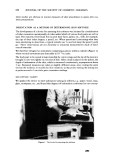
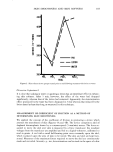
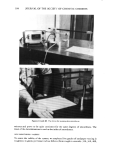
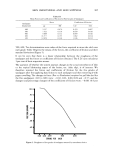
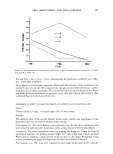
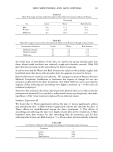
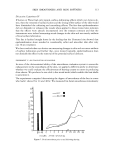
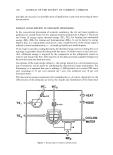
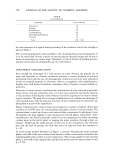
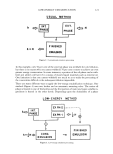
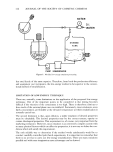
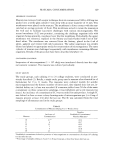
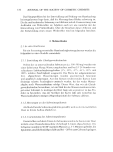
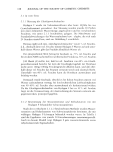
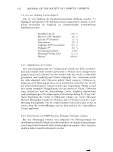
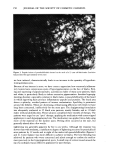
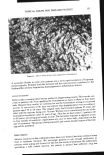
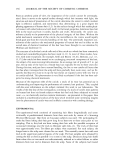
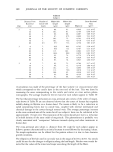
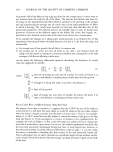
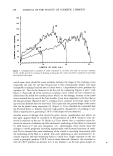
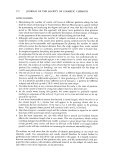
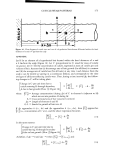
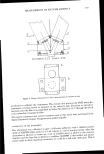
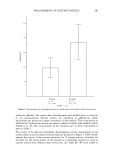
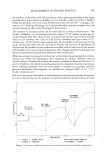
118 JOURNAL OF THE SOCIETY OF COSMETIC CHEMISTS principle and to point out possible areas of application in practical processing of emul- sion products. ENERGY CONSUMPTION IN EMULSION PROCESSING In the conventional processing of cosmetic emulsions, the oil- and water-soluble in- gredients are usually heated in two separate kettles as illustrated in Figure 1. There are two forms of energy input: thermal energy (TE•, TE•) for hearing and mechanical energy (ME1, ME•) for mixing and homogenizing (ME3). It can be shown by energy balance that, in a typical plant production, only a small fraction of the energy input is utilized in actual emulsification, i.e., to break up liquids into small droplets. If city water is used for cooling the batch, the thermal energy removed during the cool- ing stage is generally discarded along with the water. If chilled water is used and recy- cled, additional energy is required by the compressor in the refrigerated system to remove and discard the heat. The majority of mechanical energy supplied dissipates as friction and turns into heat and noise. An estimate of the total energy utilized vs. the energy wasted in a conventional process- ing of emulsions can be made by calculating the theoretical energy requirement. For illustration, it is assumed that one is making a 1,000 kg batch of a certain O/W emul- sion consisting of 25 per cent mineral oil, 5 per cent surfactant and 70 per cent deionized water. The theoretical energy requirement for emulsification is, of course, dependent on the effectiveness of the surfactant as well as the droplet size distribution of the final emul- TEl "- MEi MEg ,x•R r- :• HEAT •[• r- :•NOISE MIXER TEz , "." .- i-"l: .. COOLING ""OMO,,•-•Z g" • •WATER ME] Figure 1. Energy input in emulsion manufacturing

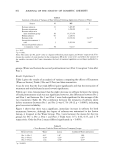
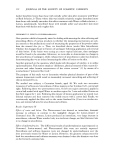
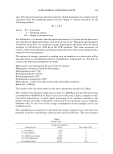
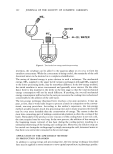
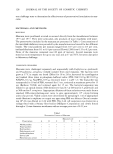
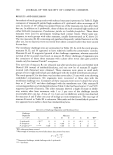
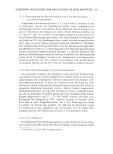
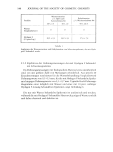
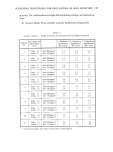
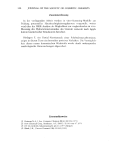
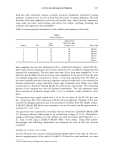
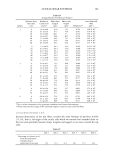
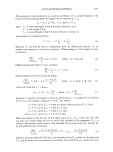
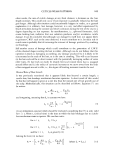
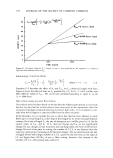
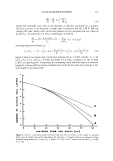
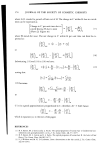
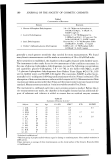
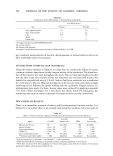
LOW-ENERGY EMULSIFICATION 119 sion. The theoretical amount of work required to break the liquids into droplets can be calculated from the interfacial tension and the change in surface area given by the following equation: W =•/AS where W =workdone •y = interfacial tension AS = change in interfacial area For illustration, it is assumed that the interfacial tension is 2 dyn/cm and the final emul- sion droplets are spherical, having a uniform diameter of 1/•. Taking the specific gravity of mineral oil as 0.85, the minimum energy requirement calculated from the above equation is 0.84 Kcal per 1,000 kg of the O/W emulsion. This value represents, of course, a theoretical minimum assuming no internal friction. The actual requirement is expected to be much greater. The amount of energy consumed in making such an emulsion in a plant scale will be also dependent on emulsification method, emulsification temperature, etc. For this cal- culation, the following assumptions are made: Mixer power: one horsepower for each of the two mixers Mixing time: 90 rain per batch for both mixers Homogenizer power: 5 hp Homogenizing time: 20 rain Room temperature: 20øC Emulsification temperature: 80øC Heat capacity: 1 cal/g, øC for all raw materials and finished emulsion Batch size: 1,000 kg The results of the calculation based on the above parameters are given in Table I. The combined mechanical energy input is close to 3,000 Kcal and the thermal energy consumption is 60,000 Kcal or about 95 per cent of the total. Clearly, compared to the theoretical requirement, a typical plant processing of an emulsion consumes a far greater amount of energy. It should be evident that if one can devise a way to make the emulsion cold, 95 per cent of the energy consumption in this example can be im- mediately saved. Hot emulsification is wasteful not only from the energy viewpoint but, even more im- portantly, from the consideration of production time and efficiency. The time required Table I Energy Input Energy Consumption Energy Source (Kcal) Percentage Total (a) Two Mixers 1,920 -- (b) Homogenizer 1,067 -- Total Mechanical Energy 2,987 5 Total Thermal Energy 60,000 95 Total Energy Input 62,987 100
Purchased for the exclusive use of nofirst nolast (unknown)
From: SCC Media Library & Resource Center (library.scconline.org)