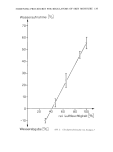
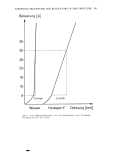
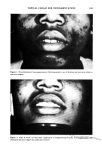
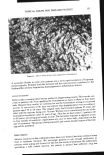
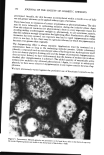
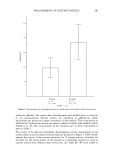
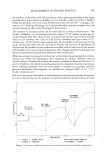
154 JOURNAL OF THE SOCIETY OF COSMETIC CHEMISTS easier it is to achieve depigmentation. The skin of blacks, paradoxical as it seems, is more readily lightened than the skin of whites (Figures 5 and 6). Complete depig- mentation in comparison to hypopigmentation, can be attained in deeply pigmented blacks but not in whites. Hyperpigmented areas are more responsive than the sur- rounding terrain. Fortunately, the blending problem thus rather takes care of itself with some individual exceptions. The reason for poor results in older patients with senile lentigines is presently under investigation. The clinical appearance of the lesions in the fourth and fifth decade may be a time when they are more susceptible to treatment. The dynamics of older skin functions may not be receptive to pharmacological intervention designed to alter mel- anin synthesis and transfer. Modifications of the basic formulation are now being evaluated. It is already clear that good results can be secured, albeit more slowly, with half the concentration of steroid and tretinoin. A less greasy vehicle will certainly be developed a gel form has much to recommend it. Finally, there is one type of hyperpigmentation in which lightening is an impossibility, namely, when some sharp inflammatory process has caused melanin granules to be dumped into the dermis, literally a melanin tatoo. The formulation is not a bleaching agent in the sense that hydrogen peroxide is. Already formed pigment is not affected. It is the inhibitors' effect on the synthesis and transfer of melanin that underlies the de- pigmending action. REFERENCES (1) A.M. Kligman and I. Willis, A new formula for depigmenting human skin, Arch. Dermato/., 111, 40(1975). (2) P. A. Riley, Hydrooxyanisole depigmentation: in vitro studies, J. Patho/. Bacterio/., 97, 193 (1969). (3) H. Hennings and K. Ebgjo, Hydrocortisone: inhibition of DNA synthesis and mitotic rate after local ap- plication to mouse epidermis, Virchows Arch. (Ze//pathol.), 8, 42(1971). (4) K. Kaidbey, A.M. Kligman and J. Yoshida, Effects of intensive application of retinoic acid on human skin, Brit. J. Dermatol., 92,693(1975). (5) A.M. Kligman, O. H. Mills and J. J. Leyden, Acne vulgaris: a treatable disease, Postgrad. Med., 55, 99(1974). (6) P. Ehrilich and T. K. Hunt, Effect of cortisone and vitamin A on wound healing, Ann. Surg., 167, 324(1968). (7) O. H. Mills and A.M. Kligman, Assay of Comedolytic Agents in the Rabbit Ear, in "Animal Models in Dermatology," H. Maibach Ed., Churchill Livingstone, New York, 1975, pp 176-183. (8) O. H. Mills and A.M. Kligman, Acnegenicity of corticosteroids: mode of action, Clin. Res., 22, 330A (1974).

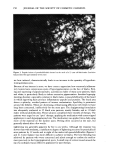
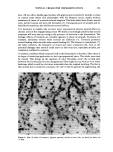
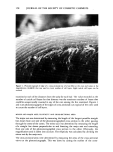
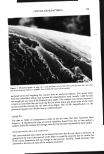
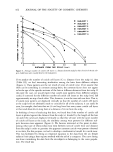
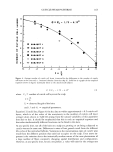
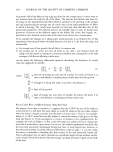
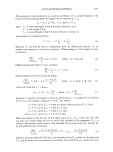
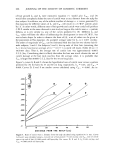
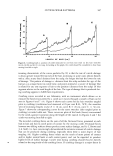
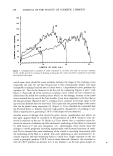
J. Soc. Cosmet. Chem., 29, ! 55- ! 75 (March) Normal cuticle-wear patterns in human hair MARIO L. GARCIA, JOSEPH A. EPPS and ROBERT S. X/ARE Clairol Inc., Research Labs., 2 Blachley Road, Stamford, CT 06902,' and LEROY D. HUNTER Present address John H. Breck, Inc., IVayne, NJ 074 70. Received October 1 O, 19 77. Presented at ,4 nnual Seminar Meeting, Society of Cosmetic Chemists, May 1977, Montreal, Canada. Synopsis A quantitative study of CUTICLE-WEAR PATTERNS in HUMAN HAIR from six Caucasian subjects whose hair had only been subjected to normal wear--i.e., no chemically reactive cosmetic treatment--is presented. The data was collected by counting the number of cuticle cell layers at different positions along the length of hair fibers. The counting was done on cross-sectional cuts by means of a Scanning Electron Microscope. Results are analyzed in terms of a mathematical model of cuticle wear. The similarity among the cuticle-wear patterns from the different subjects suggests that, under normal wear conditions, there is a common general pattern of cuticle wear in human hair. A theoretical rate of cuticle wear versus dis-' tance from the scalp expression was derived. This expression excludes ageperse as a major factor in cuticle wear, and points instead to a source of hair surface wear which accelerates as we get closer to the hair ends. An analysis of combing forces showed that the type of damage known to be produced by combing can account for the shape of the observed cuticle-wear patterns. It was also found that beyond a certain length human hair should appear to be growing slower due to a cuticle-loss-fracture mechanism, a conse- quence of this being that, under otherwise equal conditions, the care with which hair is treated and han- dled directly affects the maximum length that it can attain. INTRODUCTION It is well known that the cortex of human hair is surrounded by layers of cuticle cells. These cells, which are flat and very thin, are wrapped around the cortex, building up a system of concentric layers that overlap in telescopic fashion. This assembly of cells is referred to as the cuticle. By virtue of being the outermost section of {he hair, the cuticle is subjected to a multitude of environmental influences which cooperate towards its gradual destruction. Many of these, such as exposure to the sun and washing, are the same ones that contribute to the deterioration of the surface of fibers in fabrics. Others, such as combing, brushing, setting and cosmetic chemical treatments, are more unique to hair. Fortunately, the multilayer structure of the cuticle is such that, when under nor- mal mechanical and chemical wear small fractions of the cuticle cells fracture and sepa- rate from the hair, they leave behind a fresh uneroded surface belonging to the cell below. This clever scheme of nature allows hair that has been on a living head for two or three years to still have an appealing unworn surface. 155
Purchased for the exclusive use of nofirst nolast (unknown)
From: SCC Media Library & Resource Center (library.scconline.org)