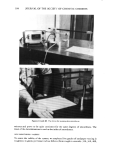
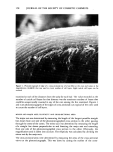
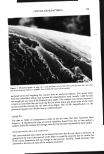
156 JOURNAL OF THE SOCIETY OF COSMETIC CHEMISTS From an aesthetic point of view, the importance of the cuticle cannot be overempha- sized. Since it serves as the optical surface through which hair interacts with light, the structure and state of preservation of the cuticle determine the extent to which incident light is reflected, scattered, and transmitted, thus determining to a great degree the pleasing appearance of human hair (1,2). As the surface through which hair makes physi- cal contact with other bodies and with itself, its frictional properties determine how hair feels to the touch and how it combs, handles and styles. Structurally, the cuticle con- tributes critically to the preservation of the physical integrity of hair fibers. Without the radial mechanical constraint of the cuticle, the micro fibers in the cortex would rapidly break apart just from the everyday handling of the hair. The potentially important con- tribution of the cuticle to the mechanical properties of human hair and its effect on the overall rates of chemical treatment of the hair have been brought to our attention by Wolfram and Lindeman (3). The structure of individual cuticle cells and of the cuticle as a whole has been extensively studied and considerable progress has been made (4-12). In most of these studies, how- ever, with some exceptions [for example, Swift and Brown-(14,16), Bottoms, eta/. (13, 15,17)] the cuticle has been treated as an unchanging structural component of the hair the subject of its wear receiving little attention. At an average rate of growth of 5 in. per year, the tip ends of the hairs on a female head can typically be two to three years old. During this time, and just due to normal handling, the five to ten cuticle cell layers that hair has when it emerges from the scalp will have gradually been worn away, and we fre- quently find that very close to its tip the hair shows an exposed cortex with very few or no cuticle cells left. This phenomenon is very likely accelerated if the hair has been sub- jected to strong chemical treatments. Because of the important roles of the cuticle, a study of its wear has potential use in understanding and improving the performance of cosmetic hair products. This, coupled with the scant information on the subject, initiated this work in our laboratories. The results of the first •tep of this investigation, consisting of a study of cuticle-wear patterns on human hair from six female subjects whose hair had only been subjected to normal wear--i.e., no chemically reactive cosmetic treatments--are presented in this paper. Also included is a mathematical analysis of the data which rendered some interesting insights into the phenomena of cuticle wear and its likely connection with combing damage. EXPERIMENTAL The experimental work consisted of examining hair fibers longitudinally and cross- sectionally at predetermined distances from their root ends by means of a Scanning Electron Microscope. Hair from six Caucasian subjects was used. The participating fe- males had been letting their hair grow long for at least two or three years prior to our sampling. That is, they had not been cutting their hair with the possible exception of occasional trimmings near the ends to eliminate split ends, etc. The ends of their hair were approximately even. Ten fibers per subject were examined. For each subject, the longer hairs in the scalp were chosen for our work. This normally meant hair with root ends in the uppermost parietal regions of the scalp. The hair samples were obtained by cutting the hair as close as possible (1 to 2 mm) to the scalp. Distances along hair shafts from where this cut was made are indiscriminately referred to in what follows as either distances from root end or distances from the scalp. None of the subjects had treated

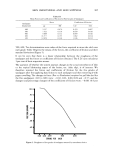
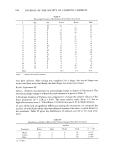
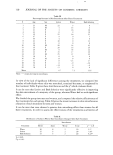
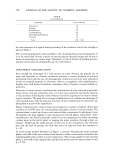
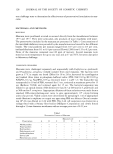
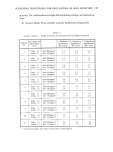
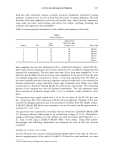
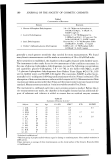
CUTICLE-WEAR PATTERNS 15 7 their hair with chemically reactive cosmetic products (lighteners, permanent waving products, oxidation dyes, etc.) for at least five years prior to sample gathering. The hair had thus only been subjected to what we call normal wear, which includes shampoos, soap, water, sea water, water settings, hair dryers, hot rollers, combing, brushing, sun exposure and exposure to the atmosphere. Table I contains general information on the subjects participating in this study. Table I Subject Summary Approximate Age Maximum Hair Subject Sex (Years) Length (cm) Hair Color ! F 25 60 Blonde 2 F 30 60 Blonde 3 F ! 5 40 Blonde 4 F 29 40 Brown 5 F 8 30 Brown 6 F 20 30 Brown After sampling, the hair was shampooed with a commercial shampoo •, rinsed with dis- tilled water at room temperature for 10 min, allowed to dry at ambient temperature and prepared for examination. The hair fibers that were 30 cm long were sampled at 15-cm intervals, and the fibers 40 and 60 cm long were sampled at 10-cm intervals from the root end. Sample preparation consisted of cutting 1.5-cm-long segments from the fibers at the above intervals and then from each segment cutting•50-•m-thick cross sections for internal examination, using hand-held, single edge industrial razor blades and aided visually with an American Optical Model 46 stereoscopic microscope. The remaining portion of the segment was used for external examination. The hair specimens were then mounted on aluminum sample stubs !.4 cm in diameter, using conductive silver paint. The specimens were metal coated with a 10 to 20 nm layer of Au-Pd (60 per cent Au--40 per cent Pd). This continuous uniform coating suppresses charging of the non- conductive biological specimen and increases electron emission from the sample surface. AJEOLCO ModelJEE-4B vacuum evaporator was used to metal coat the specimens at a vacuum of 4 x 10 -5torr. The specimens were examined by secondary electron emission in aJEOLCO Model JSM U-3 Scanning Electron Microscope at an accelerating voltage of 15 kv. Photomicro- graphs of the image displayed on the cathode ray tube were taken with Polaroid 4 x 5 in., Type 52 film using a JEOLCO Model SMU 3-CS! camera. Using these photo- micrographs, the following information was obtained for each of the hair sections examined. NUMBER OF CUTICLE CELL LAYERS Cuticle cell layers were counted, using photomicrographs taken at the edge of cross sec- tions at magnifications of the order of 10,000 X. At least five cross-sectional cuts were •Clairol herbal essence shampoo for normal to dry hair.
Purchased for the exclusive use of nofirst nolast (unknown)
From: SCC Media Library & Resource Center (library.scconline.org)