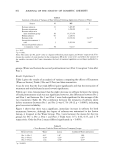
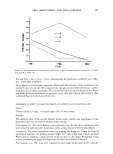
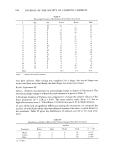
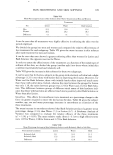
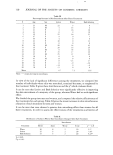
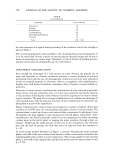
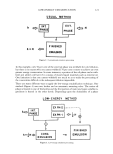
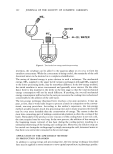
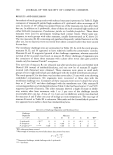
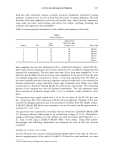
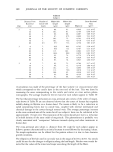
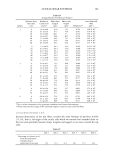
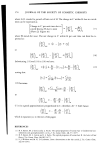
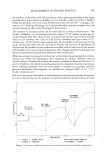
MASCARA CONTAMINATION 131 Ramp and Witkowski (4) defined a well preserved cosmetic as one which would reduce a microbial challenge by at least 99.99 per cent in a relatively short period of time. If introduction of inocula directly into mascara containers is used to determine preserva- tive effectiveness, the 99.99 per cent guideline may be obtainable as was shown in this study. This test, however, may not reflect the stability of the preservative system under conditions of use. In this preliminary analysis, the membrane test (Table III) appeared to correlate more closely with the in-use, study-group results (Table II) than with the container challenge test. The membrane test was designed specifically for anhydrous products, but it appeared also to function with emulsion mascaras. The test permitted the sequential challenge of an aliquot of mascara with different microorganisms. Previous studies have suggested that contamination with S. epidermidis may make mascaras more susceptible to sub- sequent attack by pseudomonads (3). In this study, P. aeruginosa grew on mascara B following but not prior to challenge with S. epidermidis. Mascaras are applied frequently in humid bathrooms and condensation may occur in the mascara container. Cidal activity in this moisture layer appears necessary for the proper preservation of emul- sion and anhydrous mascaras. Rapid death of the challenge organisms on the membrane may reflect the ability of the microbial inhibitors to diffuse and function in the microlayer of water on the surface of the cosmetic. ACKNOWLEDGEMENT This study was supported in part by funds awarded by the FDA (Contract #233-74- 2016) to Emory University. REFERENCES (1) D. G. Ahearn and L. A. Wilson, Microflora of the outer eye and eye area cosmetics, Dev. Ind. Microbiol., 17, 23(1976). (2) L. A. Wilson, A. J. Julian and Donald G. Ahearn, The survival and growth of microorganisms in mascara during use, Am.J. Ophthalmol., 79, 719(1975). (3) L. A. Wilson and Donald G. Ahearn, Pseudomonas-induced corneal ulcers associated with contaminated eye mascaras, Am. J. Ophthalmol., 84, 112(1977). (4) J. A. Ramp and R. J. Witkowski, Microbiological parameters and preservative testing, Dev. Ind. Mi- crobiol., 16, 48(1975). (5) C. W. Bruch, Cosmetics: sterility versus microbial control, Amer. Perfum. Cosmet., 86, 45(1971). (6) M. Yanagi, Microbiology, in "The Chemistry and Manufacture of Cosmetics," vol. 3, 2nd ed, M. G. deNavarre, Continental Press, Orlando, Florida, 1975, pp 67-84. (7) X. Bfilhman, Method for microbiological testing of non sterile pharmaceuticals, Appl. Microbiol., 16, 1919(1968). (8) J. F. McConville, C. B. Anger and D. W. Anderson, Method for performing aerobic plate counts of anhydrous cosmetics utilizing tween 60 and arlace180 as dispersing agents, Appl. Microbiol., 27, 3(1974).

J. Soc. Cosmet. Chem., 29, 133-146 (March 1978) Hydagen F, ein neuer Hautfeuchtigkeits- regulator - Methoden und Ergebnisse des Wirkungsnachweises RAINER OSBERGHAUS, CHRISTIAN GLOXHUBER, HANS-GEORG van RAAY und SIEGFRIED BRAIG* Synopsis -- Screening procedures for the in vitro testing of potential regulators of skin moisture are proposed. In addition, FMIR analysis has the potentml for comparing the in vivo hydration condition of stratum comeurn after the application of cosmeuc emulsions. Hydagen F, a partial sodium salt of a polyhydroxycarboxylic ac•d, performed positively in these tests. Good tolerance for this new cosmetic ingredient is expected •n view of extensive toxicological studies. 1. Einleitung Die Erforschung der Gmndlagen der Hautfeuchtigkeitsregulation hat Artfang der 50er Jahre dutch die Derrnatologie cntscheidenden Auftrieb erhalten. Es konnte nachgewiesen wetden, daf• dutch ein Gernisch wasser- 16slicher Verbindungen, das als Hauptkornponenten 2-Pyrrolidon-5-car- bons•iure, Aminosauren, Lactate, Hamstoll und verschiedene Zucker cnt- halt, Feuchtigkeit in den obersten Hautschichten festgehaltcn wird. In der Kosmetikliteratur ist dieses Systern unter dern Begriff Natural Moisturi- zing Factor INMF} bckannt. Weiterhin ist erwiesen, daf• die Erscheinungsform der im kosrnetischen Sinne trockenen, rauhen und rissigen Haut nicht vorn Fettgehalt, sondem in besonderern Maf•e vorn Wassergehalt des Stratum comeurn abh:,ingt. Nachdem dieset Zusarnrnenhang erkannt war, hat es zahlreiche Vcrsu- che gegeben, dutch kosrnetische Wirkstoffe in diesen Mcchanisrnus einzu- greifen. Auf dern Markt wurden Praparatc rnit ,,Feuchtigkeitsfaktoren" und "rnoisturizing cremes" angebotcn, deren Anzahl eine st•indig stcigende Tendenz aufweist. * Aus den Laboratorien der Henkel KGaA, Dtisseldorf. 133
Purchased for the exclusive use of nofirst nolast (unknown)
From: SCC Media Library & Resource Center (library.scconline.org)