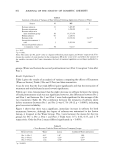
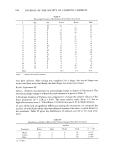
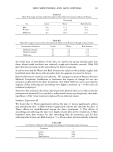
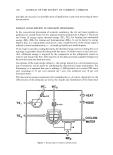
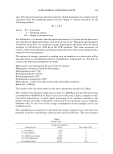
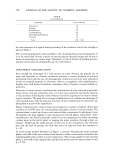
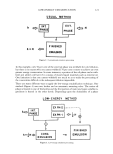
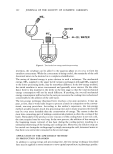
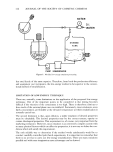
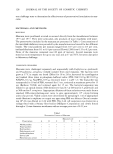
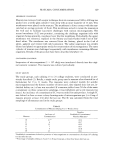
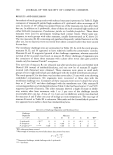
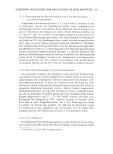
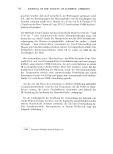
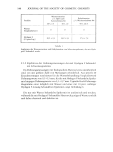
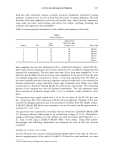
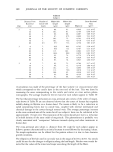
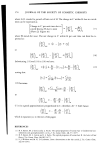
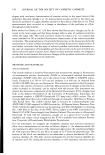
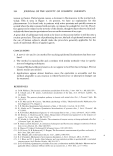
120 JOURNAL OF THE SOCIETY OF COSMETIC CHEMISTS Table II Processing Time Operation Time (minutes) Preparation 50 Heating 30 Emulsification 30 Cooling/Mixing 60 HomogenizingJPumping 30 Clean-up 40 Total 240 = 4 hr for each operation in a typical batch processing of the emulsion cited in the example is given in Table 2. The total processing time in this example is 4 hr, including clean-up and preparation. It is to be noted that 30 min is spent on introducing the thermal energy and 60 min is spent on removing it at a latter stage. Therefore, a total of 90 rain of valuable process- ing time can be saved by adopting the use of a cold method. LOW-ENERGY EMULSIFICATION Even though the advantages of a cold process are quite obvious, the popular use of waxy raw materials in cosmetic emulsions presents a serious problem in practical processing. Even with the use of a homogenizer, stearic acid and most waxy substances would not emulsify properly in cold water. Hence, a completely cold emulsification is feasible only with limited emulsions consisting solely of liquids or liquid-soluble in- gredients. However, in most cosmetic emulsions the total amount of waxy material is generally below 20 per cent and sometimes only 3 or 4 per cent a question can thus be raised as to the necessity of heating the entire 100 per cent of the ingredients in order to obtain a good emulsion. The basis of low-energy emulsification is to combine the advantage of cold emulsification with the practical necessity of hot emulsification by selectively ap- plying heat to a part of the ingredients. Figure 2 illustrates the common batch processing of a cosmetic emulsion. If the final emulsion is an O/W type, the internal phase generally consists of oils and waxes. The external phase is made up of water and water-soluble components. In this figure, h and H represent the heat supplied to the internal and external phases respectively. After emulsification, the batch is generally cooled to room temperature by either circulating cooling water in the kettle jacket or passing the warm emulsion through a heat ex- changer. Neglecting the small amount of heat lost to the atmosphere, the frictional heat and the heat of mixing, the heat that must be removed from the emulsion is h+H. In a low-energy method illustrated in Figure 3, instead of heating the entire external phase, only half of the water phase is first heated to make a concentrated emulsion the remaining half is then added at room temperature. The energy supplied to the external phase is now half of the original value and the heat which must be removed later is only h +0.5H.

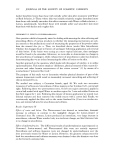
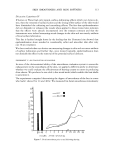
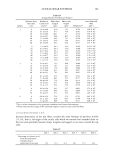
LOW-ENERGY EMULSIFICATION 121 USUAL METHOD -- _ h • iPHASE j h+H • FINISHED EMULSION i EXT. PHASE ! Figure 2. Conventional emulsion processing In this example, only 50 per cent of the external phase was withheld for cold dilution, but there is no reason why one cannot withhold 70 per cent or more to achieve an even greater energy conservation. In some instances, a portion of the oil phase can be with- held and added cold later if it consists of mostly liquid materials such as mineral oil. One limitation is that one cannot withhold too much so as to make the processing of the concentrate difficult or the subsequent dilution impossible. There are many different ways to apply the low-energy emulsification technique. One method (Figure 4) uses two kettles and an automatic metering valve. The entire oil phase is heated in one of the kettles and the first portion of water and water-soluble in- gredients is heated in the other kettle. Depending upon the desirability of a phase LOW-'ENERGY METHOD h• ! EX. PH.'2 '.t -'-- I PHASE EX. PH.-I • • H I h +•-H• CONC. EMULSION FINISHED EMULSION Figure 3. Low-energy emulsion processing
Purchased for the exclusive use of nofirst nolast (unknown)
From: SCC Media Library & Resource Center (library.scconline.org)